If you buy through our links, Amazon pays us a small commission at no extra cost to you. That’s how we keep the site running. How we choose.
Contents
Our top 3 picks
Stock checked on October 6, 2026


kids' life jackets comparison, in stock
Body Glove® Paddle Pals USCG Kids Learn-to-Swim Life Jacket PFD

Stearns Child Life Jacket with Heads-Up Flotation, USCG Approved Type II Kids Life Vest for Pool, Beach, Lake, Boating…
Stearns Infant Life Vest, USCG Approved Type III Life Jacket for Babies & Kids Under 30lbs, Youth PFD for Boat, Beach…
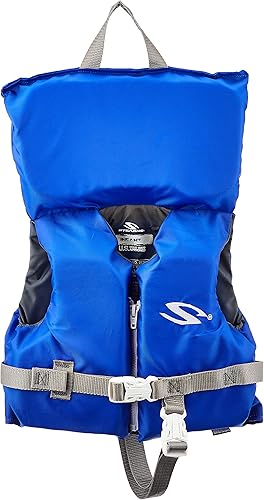
Stearns Infant Life Vest, USCG Approved Type III Life Jacket for Babies & Kids Under 30lbs, Youth PFD for Boat, Beach…
Aqua Oceans 7 Life Jacket for Kids - US Coast Guard Approved Life Vest for Infant, Child & Youth Boys and Girls…

Aqua Oceans 7 Life Jacket for Kids - US Coast Guard Approved Life Vest for Infant, Child & Youth Boys and Girls…

Aqua Oceans 7 Life Jacket for Kids - US Coast Guard Approved Life Vest for Infant, Child & Youth Boys and Girls…
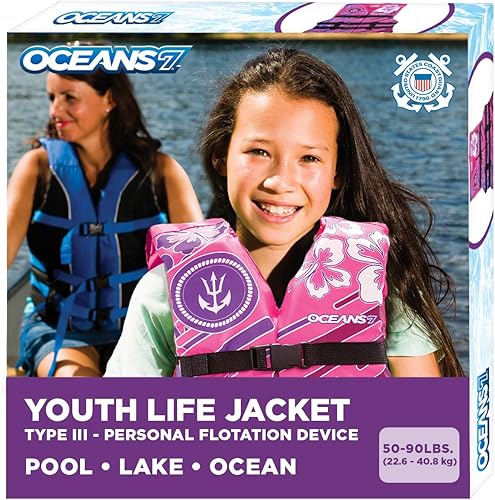
Aqua Oceans 7 Life Jacket for Kids - US Coast Guard Approved Life Vest for Infant, Child & Youth Boys and Girls…
BarcoEquipado score: combines the average rating and the number of buyer reviews on Amazon. No brand pays to be featured.
How to choose a life jacket for kids
Aboard, a child does not behave like an adult: they move more, panic, thrash and do not know what to do. A child's PFD is not a shrunken adult jacket. It has to keep the head clear of the water, stay on, and let you lift the child with one hand.
Size by weight, not age
The label gives a weight range, and that is what counts. Two kids of the same age can need different sizes. A jacket that is too big slips off over the head; one that is too small will not float well.
| Category | Typical weight | Key features |
|---|---|---|
| Infant | Under about 30 lb (14 kg) | Head support collar, crotch strap, rescue handle behind the neck. |
| Child | About 30-50 lb (14-23 kg) | Crotch strap, high collar and handle. |
| Youth | About 50-90 lb (23-41 kg) | More arm freedom. Keep the crotch strap fastened. |
The exact ranges vary by model, so always follow the label on the jacket you buy.
Approval and buoyancy
In the United States, look for the US Coast Guard approval label and the child or infant size marking. Outside the US, look for CE marking and conformity with ISO 12402. For small children, foam jackets are the safe choice: no cylinder, no trigger, no upkeep. For infants and non-swimmers, pick the highest buoyancy rating the weight range allows.
Warning: swim wings, pool floats and pool noodles are toys, not life jackets. They do not keep the head up and can deflate or slip off. USCG-approved inflatable PFDs are meant for older users, so do not put a young child in one.
Must-have features
- Crotch strap: keeps the jacket from riding up toward the face. The single most important fit feature.
- Grab handle: lets you pull the child out of the water with one hand.
- Head support collar: on infant models, it holds the head tilted back.
- Bright color and reflective tape: easier to spot.
- Simple buckles: easy for you to open, hard for the child to undo alone.
- Whistle: useful for older kids who understand how to use it.
How to test the fit
- Fasten every buckle and the crotch strap.
- Lift the jacket by the shoulders. It should not rise above the ears or leave a gap over the chin.
- Lift the child by the grab handle. They should not slide out.
- Try it in shallow water with an adult beside them and check that the face stays above the surface when the child relaxes.
Tip: let your child wear it at home and on land before the first trip. If they link it with play instead of punishment, they will keep it on without a fight.
Using it aboard
A life jacket only works when it is worn. Federal rules require children under 13 to wear an approved PFD on a recreational vessel that is underway, except below deck or in an enclosed cabin, and some states set their own age limits. Check your state's rules.
- Keep it on whenever the child is on deck, in the dinghy or on the dock.
- Carry several sizes aboard if you host friends with kids.
- A life jacket does not replace constant adult supervision.
- Show the child how to float on their back in the jacket, in a safe place.
Care
Rinse with fresh water after use, dry in the shade and store with airflow. Retire the jacket if the foam is hard or crumbly, the fabric is torn or the buckles are loose. Kids grow fast: check the size every season.
Common mistakes
- Buying a big size "so it lasts longer".
- Using an adult inflatable. For adults, see automatic life jackets.
- Skipping the crotch strap and finding the jacket up at the child's face.
- Assuming a child who swims well in the pool will swim the same in open water, clothed and scared.
- Forgetting a throwable ring buoy and deck rules. Within safety gear, a properly fitted child's jacket is the basic item.
Frequently asked questions
What size life jacket does my child need?
Choose by weight, not age. Check the weight range on the manufacturer's label and make sure that, with every buckle and the crotch strap fastened, the jacket does not rise above the ears when you lift it by the shoulders.
Can a child wear an inflatable life jacket?
Inflatable PFDs carry minimum weight and age limits, and USCG approval for inflatables is for older users. For children, a foam jacket with a crotch strap and grab handle is the right choice.
Are water wings the same as a life jacket?
No. Water wings and pool floats are toys, not safety equipment. They do not keep the head above water and can slip off or deflate.
Do kids have to wear a life jacket on a boat?
Under federal rules, children under 13 must wear an approved PFD on a recreational boat underway, except below deck or in an enclosed cabin. States can add their own rules, so check where you boat.