If you buy through our links, Amazon pays us a small commission at no extra cost to you. That’s how we keep the site running. How we choose.
Contents
More and more boaters take their dog out on the water, and a well-prepared dog makes a great crew member. But a boat isn't a living room: there are slippery decks, hot sun with no shade, waves, engine noise and the challenge of hauling a wet 70-pound animal back aboard. This guide covers what actually matters so outings are safe and fun for both of you.
Tip: the short version is a well-fitted dog life jacket with a top handle, shade and fresh water at all times, a way to get your dog out of the water, and short trips at first.
Before the first trip
Not every dog loves boats. Some get seasick, others panic at engine noise or waves, and the most excitable may jump overboard at the worst moment. Know your dog before deciding how far to go.
- Health: check with your vet if your dog is a puppy, a senior, a short-nosed breed (like bulldogs or pugs) or has heart or joint problems. These dogs suffer more from heat and exertion.
- Vaccines and paperwork: carry vaccination records and make sure the microchip is registered. If you cross borders, check each country's entry rules.
- Basic obedience: "stay," "come" and "wait" are worth more than any gadget.
Getting your dog used to the boat
- Start at the dock: let them climb aboard, explore and eat a treat with the boat tied up.
- Engine running, going nowhere: so they get used to the noise and vibration.
- Short trips in calm water, with the life jacket on from the dock, so they link it with something good.
- A spot of their own in the shade, with a towel or non-slip mat.
- Practice getting them back aboard in a quiet cove, before you ever need to.
Treats and patience beat forcing it. If your dog gets seasick, skip the meal right before leaving and ask your vet before giving any medication.
Choosing a dog life jacket
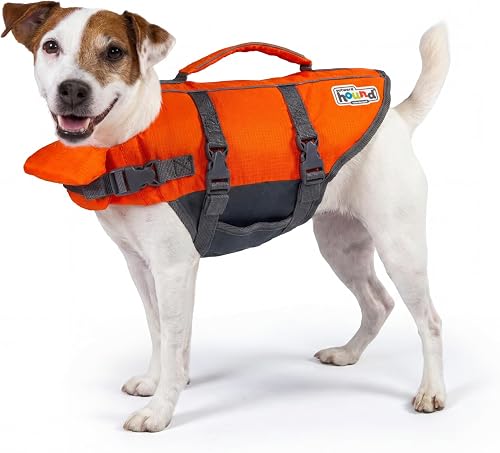
The Coast Guard approval you see on human PFDs doesn't cover pet life jackets, so judge a dog vest on its design and fit. Even so, a vest is strongly recommended any time your dog is on deck underway. Plenty of dogs swim well, but waves, current or distance from the boat wear them out, and the handle lets you lift them out.
What to look for in a dog life jacket:
- A sturdy top handle: the most important feature. It has to hold a wet dog's full weight.
- Flotation under the neck and chest: keeps the head above water.
- Bright color and reflective trim: so you can spot your dog from the boat.
- A leash ring: handy on docks and when going ashore.
- A snug fit: adjustable straps and sizing by chest girth. A loose vest rolls in the water.
How to size it
Size by chest girth, measured at the widest point behind the front legs, and by weight, using the maker's chart. With the vest buckled you should fit only two fingers between the straps and the body. If your dog falls between sizes, try both.
| Dog size | Approx. weight | What to prioritize |
|---|---|---|
| Small | Under 22 lb (10 kg) | Light vest with chin support and a handle |
| Medium | 22-55 lb (10-25 kg) | Reinforced handle and wide straps |
| Large | Over 55 lb (25 kg) | Very sturdy handle, strong front flotation and a ramp for getting aboard |
Getting your dog back aboard
A dog in the water can swim back, but hauling them aboard is another matter, especially on boats with high freeboard. Decide how you'll do it before you leave the dock.
- Always lift by the vest handle, never by the collar.
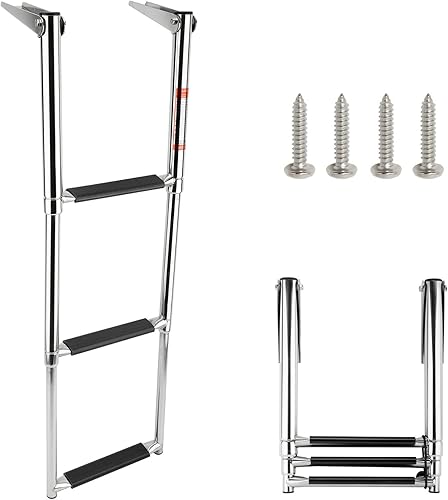
- A floating ramp hooked to the swim platform or a boarding ladder with wide rungs makes it far easier.
- Without a ramp, it takes two people: one on the handle and one supporting the hindquarters.
- Shut off the engine and make sure the prop is not turning before anyone, dog included, is in the water.
Shade, heat and fresh water
Heat is the number one enemy. A sunbaked deck gets hot enough to burn paw pads, and a panting dog with no shade can suffer heatstroke quickly.
- Permanent shade: a bimini top or an anchoring awning. A wet towel helps in summer.
- Fresh water always available, in a stable bowl that won't tip. Dogs shouldn't drink seawater.
- Non-slip surface: EVA foam decking grips far better than wet gelcoat and is gentler on paws.
- Midday hours: skip long outings between noon and 5 pm in midsummer.
Potty breaks and cleanup aboard
The most practical setup is a patch of artificial turf in a corner of the cockpit or on the foredeck, with a familiar smell so your dog knows what it's for. Rinse it with a bucket of water. On short trips, a stop ashore before and after is enough.
Keep towels, waste bags and a brush separate. Rinse salt out of the coat with fresh water when you get back, since it irritates skin. A cooler lets you carry cold water and your dog's food without spoilage.
Common mistakes when boating with a dog
Watch out: these oversights cause the most trouble.
- Lifting by the collar: it can hurt the dog or slip off.
- Leaving the dog loose on deck during docking or anchoring.
- Forgetting shade and water during midday hours.
- Tying the dog up short on deck: if it goes overboard, it can end up hanging.
- Assuming a good swimmer doesn't need a vest.
Marina and beach rules
Marinas, parks and beaches have their own rules about pets, and many beaches don't allow dogs at all or only on leash. Check ahead before going ashore and always carry waste bags, a leash and your dog's records. Before casting off, run through the pre-departure checklist and, if kids are aboard, read up on children's life jackets.
Recommended gear for this guide


Frequently asked questions
Does a dog need a life jacket on a boat?
Pet life jackets aren't covered by the Coast Guard approval that applies to human PFDs, and rules for pets vary, so check where you boat. Even so, a vest with a top handle is strongly recommended whenever your dog is on deck underway. Many dogs swim well, but waves tire them out, and the handle lets you lift them out.
How do you get a dog back on a boat from the water?
Lift by the vest handle, never by the collar. For big dogs, a floating ramp hooked to the swim platform or a ladder with wide rungs helps a lot. Without a ramp, it takes two people: one on the handle and one supporting the hindquarters.
Where does a dog go to the bathroom on a boat?
The easiest setup is a patch of artificial turf in a corner of the cockpit or on the foredeck, with a familiar smell so the dog recognizes it. Rinse it with a bucket of water. On short trips, a stop ashore before and after is enough.
How do I keep my dog from getting seasick or overheating on a boat?
Start with short trips in calm water, skip the meal just before leaving, and always provide shade and fresh water. A bimini and a wet towel make a big difference in summer. If your dog gets seasick often, talk to your vet.
What size life jacket does my dog need?
Size by chest girth and weight, using the manufacturer's chart. The vest should be snug: with it buckled, only two fingers should fit between the straps and the body. If your dog is between sizes, try both.