If you buy through our links, Amazon pays us a small commission at no extra cost to you. That’s how we keep the site running. How we choose.
Contents
Our top 3 picks
Stock checked on October 6, 2026


boat eva foam and faux teak decking comparison, in stock
Abahub EVA Foam Boat Flooring Self-Adhesive Decking Surfboard Traction Pad

OCEANBROAD Boat Flooring with Self-Adhesive Strip Cut Groove Marine Decking
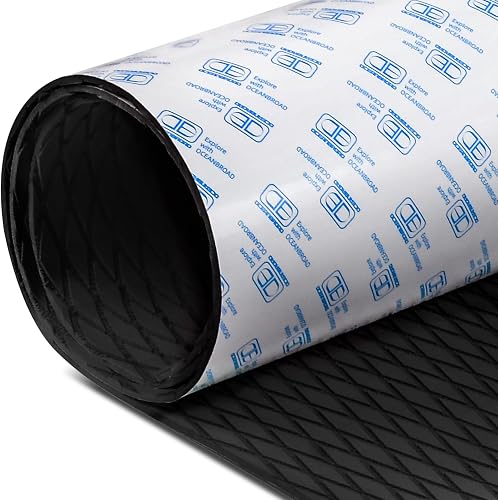
OCEANBROAD Camouflage Boat Flooring Traction Pad 96''x16''/23.5''/38''/47''
VEVOR Boat Flooring, EVA Foam Boat Decking 94.5" x 17.7", Non-Slip Self-Adhesive Flooring, 11.6 sq.ft Marine Carpet for…

Boat Flooring EVA Foam Boat Decking Camo 94"x45"/35"/23" Non-Slip Boat Mat Self-Adhesive Foam Boat Deck Flooring Carpet…
OCEANBROAD Boat Flooring 96''x16.8''/28.8''/36''/45.6''

OCEANBROAD Boat Flooring 96''x16.8''/28.8''/36''/45.6''

OCEANBROAD Boat Flooring 96''x16.8''/28.8''/36''/45.6''
BarcoEquipado score: combines the average rating and the number of buyer reviews on Amazon. No brand pays to be featured.
How to choose EVA foam or faux teak decking
A non-slip floor changes life aboard: you walk safely when it's wet, it doesn't burn bare feet, it cushions impacts when fishing or with kids, and it keeps the gelcoat from getting scratched. Two families are often confused, so decide which fits how you use the boat.
- EVA foam: closed-cell foam sheets, usually self-adhesive, that you cut with a utility knife. Soft, light and inexpensive, with diamond, honeycomb or teak-grain textures.
- Faux teak (PVC, rubber or composite): stiffer planks with seams that imitate real teak. More durable and better looking, but more expensive and more work to install.
The models above change with stock, so compare thickness, sheet dimensions and adhesive type in each listing.
EVA versus faux teak
| Criteria | EVA foam | Faux teak |
|---|---|---|
| Price per sq ft | Budget to mid-range | Mid-range to premium |
| Comfort underfoot | Very soft, cushioning | Firm, closer to wood |
| Heat in direct sun | Gets hot, especially dark colors | Somewhat cooler in light colors |
| Durability | A few seasons; marks and fades | Many years if properly installed |
| Installation | Easy: cut and stick | More work, templating and seams |
| Best for | Center consoles, fishing, tenders, swim platforms | Sailboats, large decks, classic finish |
Thickness and texture
For walking and protection, 1/4 in (5-6 mm) is a good balance. Beyond 5/16 in (8 mm) the pad cushions more but wears faster at the edges and can feel awkward in traffic areas. Raised textures grip better when wet; smooth ones are easier to clean.
Installation step by step
- Clean and degrease the surface with isopropyl alcohol or a degreaser. Any wax or silicone residue will stop it sticking.
- Make a template from cardboard or kraft paper and transfer it to the sheet. Cut with a sharp utility knife.
- Dry-fit and mark the position with painter's tape before peeling the backing off the adhesive.
- Stick it down from one end, pressing with a roller to push out air and avoid bubbles.
- If the sheet's adhesive is weak, reinforce the edges with a thin bead of marine adhesive sealant, taking care not to smear the visible surface.
- Let it cure for 24 hours before getting it wet or walking on it hard.
Warning: don't glue onto very rough surfaces, degraded gelcoat or flaking paint. The decking will come off along with them. Scuff lightly, clean and test a small piece.
Maintenance
Clean with fresh water, mild soap and a soft-bristle brush. Avoid solvents and harsh cleaners; they dry out the foam and fade the color. For rust, grease or sunscreen stains, use a gentle cleaner and rinse well (hull and deck cleaners).
Real teak decks need a different kind of care: scrubbing, oil and dedicated cleaning. If you're torn between the two options, read teak care aboard and think about how much time you want to spend on it.
Common mistakes
- Choosing a dark color for a deck in full sun: it burns bare feet and warps.
- Gluing without a template, with pieces cut by eye and uneven seams.
- Installing when it's damp or below about 50°F (10°C), when the adhesive won't bond.
- Leaving no expansion gaps on large faux teak decks.
- Covering areas you need access to, such as deck plates or hardware you will have to remove later.
Tip: buy 10% extra for offcuts and mistakes. It costs less than ordering another sheet from a different batch with a slight color difference.
If you're redoing the deck anyway, think about the teak care products you still have and how they will coexist with the new flooring.
Frequently asked questions
What is better for a boat, EVA foam or faux teak decking?
EVA is cheaper, softer and easy to install, ideal for center consoles, fishing boats and swim platforms. Faux teak is firmer, more durable and better looking, made for sailboats and large decks, but costs more and takes more work to fit.
How long does EVA foam decking last on a boat?
It depends on sun, traffic and care. With normal use it often lasts several seasons before marking, fading or lifting at the edges. Light colors and gentle cleaning extend its life.
How do I glue EVA decking to the deck?
Start with a clean, dry, degreased surface and press the self-adhesive sheet down with a roller from one end. If the adhesive is weak, reinforce the edges with marine adhesive sealant. Allow about 24 hours to cure.
Does EVA decking get very hot in the sun?
Yes, especially dark colors. If your deck sits in direct sun, choose light gray or beige, which stay cooler than black or dark brown.