If you buy through our links, Amazon pays us a small commission at no extra cost to you. That’s how we keep the site running. How we choose.
Contents
Our top 3 picks
Stock checked on October 6, 2026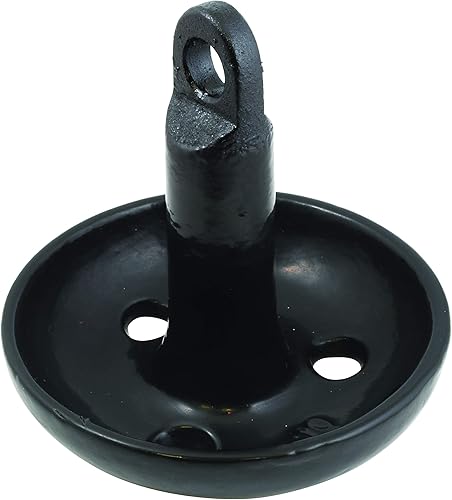

boat anchors comparison, in stock
Attwood Boat Mushroom Anchor, Secure Holding Power for Mud & Weed Bottoms
Attwood Boat Mushroom Anchor, Secure Holding Power for Mud & Weed Bottoms

Seachoice Mushroom Anchor – Vinyl-Coated Cast Iron – Black – Multiple Sizes
Seachoice Deluxe Anchor – Hot-Dipped Galvanized Steel – Multiple Sizes

Seachoice Deluxe Anchor – Hot-Dipped Galvanized Steel – Multiple Sizes

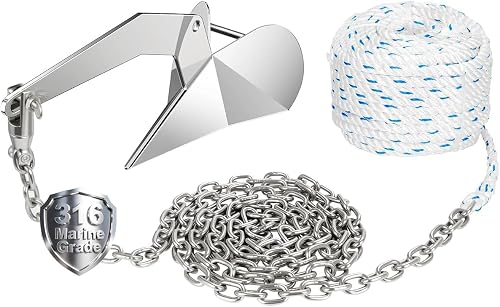
Young Marine Galvanized Fluke Style Anchor Kit Includes Galvanized Fluke Anchor, Rope, Shackles, Chain 8LB 10LB 13LB
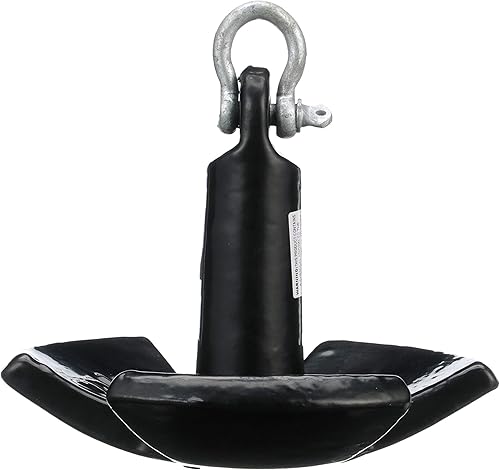
Seachoice River Anchor, Black Vinyl Coated Cast Iron, 12 Lbs.

Seachoice River Anchor, Black Vinyl Coated Cast Iron, 30 Lbs.
BarcoEquipado score: combines the average rating and the number of buyer reviews on Amazon. No brand pays to be featured.
How to choose an anchor for your boat
Choosing an anchor is about fit, not brand. Match the weight to your boat's length, displacement and windage, the design to the bottoms you actually anchor in, and the build to saltwater. Then check that it fits your bow roller.
Listings often show an optimistic "maximum boat length." Treat it as a minimum and go up a size if you sleep on the hook, your boat is heavy for its length, or it has a flybridge, hardtop or bimini that acts like a sail.
Anchor types and the bottoms they suit
- New-generation (Rocna, Vulcan, Spade and similar): high holding power per pound and good at resetting when the wind shifts. The cruiser's choice.
- Delta (plow, one piece): versatile and easy to stow on a bow roller. A common pick for boats from 16 to 40 ft anchoring in sand and mud.
- Danforth (fluke): excellent in sand and mud for the price and light weight. Popular on center consoles, as a stern anchor or a spare. Poor in rock and weed.
- Bruce (claw): good in gravel and mixed bottoms, though it needs more weight than a Delta to match it in sand.
- Grapnel or folding: for inflatables, kayaks and rocky bottoms. Not a primary anchor for a cabin boat.
Tip: if you anchor in a mix of bottoms, a Delta or a new-generation anchor covers most situations, and a Danforth makes a great second anchor.
Approximate anchor weight by boat length
The weights below are a practical guide for high-holding anchors in normal use. Interpolate for in-between sizes and add about a third for classic designs such as a Bruce or a hinged plow. Always follow the anchor manufacturer's sizing chart and check your local requirements for your cruising area.
| Boat length | High-holding anchor | Classic anchor | Chain (approx.) |
|---|---|---|---|
| 14 ft (4 m) | 7-9 lb | 11 lb | 1/4 in |
| 18-20 ft (5.5-6 m) | 11-13 lb | 18 lb | 1/4 in |
| 23-26 ft (7-8 m) | 18-22 lb | 29 lb | 1/4-5/16 in |
| 30-33 ft (9-10 m) | 26-31 lb | 40 lb | 5/16 in |
| 40 ft (12 m) | 35-44 lb | 57 lb | 5/16-3/8 in |
Material: hot-dip galvanized or 316 stainless
Hot-dip galvanized steel is the sensible choice: strong, affordable and it digs in well. Stainless is bought mostly for looks and because it will not streak your bow with rust. If you go stainless, make sure it is 316; 304 pits in saltwater. Be wary of untreated steel or thin galvanizing that flakes off.
Rode and bow compatibility
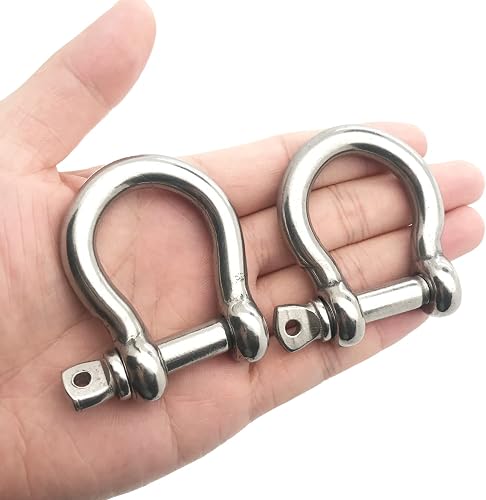
An anchor alone will not hold; it needs chain to keep the shank down. Size your anchor chain together with the anchor and join them with a correctly rated shackle, ideally moused with stainless wire. If you plan to add a windlass, the anchor plus the hanging chain sets the pulling power you need.
Measure your bow roller before buying: some anchors with a roll bar will not fit narrow bows, and the shank should sit in its cradle without force. For the technique itself, see how to anchor step by step.
Common mistakes when buying an anchor
- Buying a light anchor "because I only anchor for lunch." The day it blows, weight matters.
- Using a folding grapnel as the main anchor of a boat that anchors in sand.
- Forgetting the chain, or fitting a shackle weaker than everything else. It is the first link to fail.
- Anchoring on protected seagrass: look for a clear sandy patch instead.
Warning: inspect the galvanizing, welds and shackle at least once a season. An anchor with deep rust or a bent shank should be replaced.
One last maintenance note: rinse the anchor with fresh water at the end of the season, mark your chain every few feet so you know how much you have paid out, and keep a spare anchor where you can actually reach it rather than buried in a locker. If you lose your main anchor as the wind builds, the spare is what saves your evening.
Our team compares spec sheets, verified reviews and real-world criteria but does not physically test products. Use the models above as a starting point and always confirm dimensions and weight on the listing.
Frequently asked questions
What is the best anchor for a boat?
There is no single answer: it depends on the bottom and your boat's weight. For general use, new-generation anchors hold the most per pound, a Delta is very versatile, and a Danforth works well in sand and mud for little money.
What size anchor do I need for a 20 ft boat?
As a practical rule, a Delta or similar of roughly 11 to 18 lb for normal use. For a classic design like a Bruce, add about a third. Always follow the manufacturer's sizing chart and size up if you anchor overnight.
Is a Delta or a Bruce anchor better?
A Delta usually holds more per pound in sand and mud and stows better on a bow roller. A Bruce does better in gravel and mixed bottoms but needs more weight to match a Delta in sand.
Galvanized or stainless steel anchor?
Hot-dip galvanized is just as effective and costs far less. 316 stainless is bought for looks and to avoid rust streaks on the bow. Avoid 304 stainless in saltwater.