If you buy through our links, Amazon pays us a small commission at no extra cost to you. That’s how we keep the site running. How we choose.
Contents
Our top 3 picks
Stock checked on October 6, 2026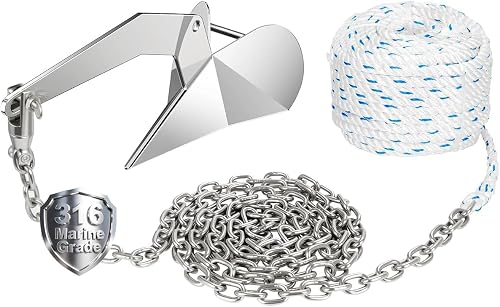

anchor windlasses comparison, in stock
Boat Anchor Kit - 9 Lb 316 Stainless Steel Delta Anchor, 1/2" Anchor Rope 100ft,1/4" G4 Marine Anchor Chain 10ft &…


Horizontal Boat Anchor Windlass Kit FO3442 900 Watts 12V DC
US Stainless Stainless Steel Windlass 1/4" G4 Anchor Chain 316 by 15' Long Including 5/16" Bow Shackles

MARINE SYSTEM Delta Boat Anchor Kit with G4 Short-Link Chain, 3-Strand Nylon Rope & Shackle Compatible with Anchor…

Excalibur Vertical or Horizontal Windlass Anchor Systems - 600W-900W, 12V DC, 992-1452 lbs Pulling Power, 316 Stainless…

Excalibur Vertical or Horizontal Windlass Anchor Systems - 600W-900W, 12V DC, 992-1452 lbs Pulling Power, 316 Stainless…
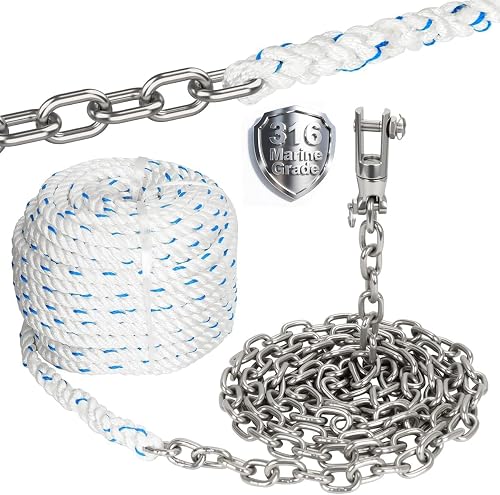
Windlass Anchor Rode, 1/2" Anchor Rope/line 100ft with 1/4" Anchor Chain 10ft and Swivel Connector, G4 316 Stainless…
BarcoEquipado score: combines the average rating and the number of buyer reviews on Amazon. No brand pays to be featured.
What pull rating does your windlass need?
The practical rule is that the windlass's maximum pull should be at least three times the weight of the anchor plus the chain you will haul. The working load, the pull it can sustain continuously, is typically about a third of the maximum. This table is a guide.
| Boat length | Typical anchor + chain | Approx. weight | Minimum max pull | Typical power |
|---|---|---|---|---|
| Up to 23 ft (7 m) | 18 lb + 100 ft of 1/4 in | About 70 lb | 220 lb | 0.4-0.7 HP |
| 23-30 ft (7-9 m) | 26 lb + 130 ft of 1/4-5/16 in | 100-155 lb | 460 lb | 0.7-0.9 HP |
| 30-36 ft (9-11 m) | 35 lb + 165 ft of 5/16 in | About 190 lb | 570 lb | 0.9-1.3 HP |
| 36-43 ft (11-13 m) | 44 lb + 200 ft of 5/16 in | About 230 lb | 700 lb | 1.3 HP |
| 43-52 ft (13-16 m) | 73 lb + 230 ft of 3/8 in | About 410 lb | 1,235 lb | 2 HP |
Your anchor chain size and anchor weight drive the whole decision: work those out first and the windlass second.
How to choose an anchor windlass
Vertical or horizontal
A vertical windlass is the most common on modern recreational boats: only the gypsy and the capstan show on deck, while the motor and gearbox sit below in the anchor locker. It needs headroom under the deck. A horizontal windlass mounts entirely on deck, is easier to fit in shallow lockers and keeps the motor protected, but takes more room on the foredeck.
Gypsy and rode type
The gypsy, the toothed wheel that grips the chain, is made for a specific chain size and grade. Some are chain only, others are combination gypsies that handle spliced rope and chain. Before buying, confirm your chain size and grade (for example proof coil, BBB or high test) against the windlass specs.
Freefall and materials
Freefall windlasses let you drop the anchor by gravity, saving battery and time. The parts that touch water should be 316 stainless, bronze or marine-grade anodized aluminum; cheap models with painted parts deteriorate quickly at sea.
Tip: for small powerboats and fishing boats there are electric drum capstans that haul rope rather than chain. They are inexpensive and need no anchor locker, but are limited by the anchor weight they can handle.
Wiring: what you cannot skip
- Properly sized cable: calculate the total round-trip length from the battery; on a 33 ft boat it is easy to exceed 50 ft.
- Circuit breaker sized to the motor's draw, and a battery switch.
- Solenoid or relay box with up and down, close to the windlass.
- A healthy battery, ideally with the engine running while you haul.
- Controls: deck foot switches, a wired helm switch or a wireless remote. Two control points are ideal.
If you do the install yourself, good terminals and a marine crimping tool make the difference in reliability.
Using it correctly when anchoring
A windlass hauls, but it should not carry the load of an anchored boat. Once you are set, secure the chain on a chain stopper or snubber and take the strain off the windlass. For a refresher on the maneuver, see how to anchor step by step. Keep the emergency handle aboard and know where it goes.
Maintenance
- Rinse it with fresh water after you boat.
- Check the gearbox oil at least once a season, if the model has one.
- Clean and protect electrical terminals with a marine corrosion inhibitor.
- Take off the gypsy now and then to grease the shaft.
Common mistakes with windlasses
- Using it to drag the boat up to the anchor: that is the job of the boat's engine.
- Leaving the boat anchored with the load on the windlass instead of a chain stopper.
- Buying chain that does not match the gypsy.
- Undersizing the cable: the motor overheats, loses power and the breaker trips.
Warning: keep hands and feet clear of the gypsy and the chain while it is running. It is one of the most serious accident causes on board.
Our team compares spec sheets, verified reviews and real-world criteria but does not physically test products. Always confirm pull rating, chain size and voltage on the listings above.
Frequently asked questions
What windlass do I need for my boat?
It depends on the weight of your anchor and chain. The rule of thumb is a maximum pull of at least three times that weight. For boats from 23 to 30 ft, a windlass of about 0.7 to 0.9 HP with a 1/4 or 5/16 inch gypsy is usually enough.
Is a vertical or horizontal windlass better?
A vertical windlass is more compact on deck and common on modern boats, but needs headroom below deck. A horizontal one is easier to fit in shallow anchor lockers, though it takes up more space on the foredeck.
Can a windlass haul both chain and rope?
Yes, if it has a combination gypsy and the splice between chain and rope is good quality. Confirm the exact size of both with the windlass manufacturer.
What wire size does a windlass need?
It depends on the power and the cable run. Because runs are often long, size the wire for the total round-trip distance and protect the circuit with a breaker. Check the manufacturer's manual.