If you buy through our links, Amazon pays us a small commission at no extra cost to you. That’s how we keep the site running. How we choose.
Contents
Our top 3 picks
Stock checked on October 6, 2026

kayak and dinghy anchors comparison, in stock
Kayak Anchor Kit - 3.5 lb, Green - Folding Grapnel Anchor with 25 ft Rope

Compact Anchor Kit for Kayak, Canoe, SUP, Inflatables or Small Boats, Foldable Storage Bag, Ideal for Fishing Kayak…

YakAttack LeverLoc Anchor Trolley Kit - Easy Install - Made in USA
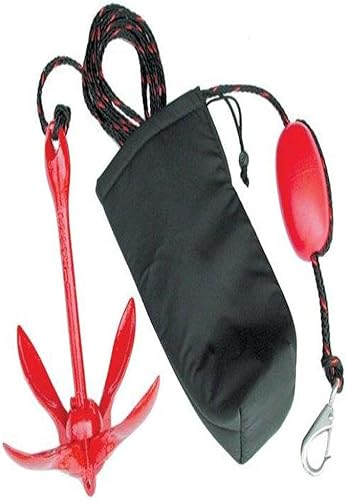
AIRHEAD Grapnel Anchor System
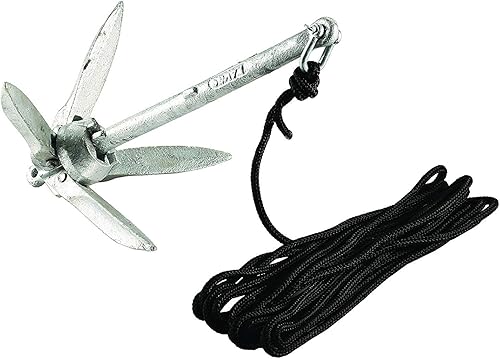
Attwood 11959-1 Universal 3 lb Folding Grapnel Anchor Kit with Rope

MarineNow 3.5 lb Folding Grapnel Anchor Kit with 25 ft Rope for Kayak, Jet Ski & Paddle Board

BeGrit Small Kayak Anchor w/Rope, Folding Marine Anchor for Paddle Board
BeGrit Small Kayak Anchor w/Rope, Folding Marine Anchor for Paddle Board
BarcoEquipado score: combines the average rating and the number of buyer reviews on Amazon. No brand pays to be featured.
How to choose a small anchor
A kayak or dinghy anchor is not chosen like a boat anchor. It has to be light, compact, easy to haul by hand, and kind to the hull or board. And it has to hold in the bottom where you anchor: sand, gravel, weed, or rock.
- Weight: just enough to stop the boat; more does not improve holding if the rode is right, it only makes retrieval harder.
- Folding: a folding grapnel packs into a bag and will not puncture an inflatable.
- Rode: floating or with a buoy, long enough for the depth.
- Materials: galvanized or stainless steel; avoid bare metal parts that rust in a season.
Types of anchor for kayaks and dinghies
Folding four-prong grapnel
The standard choice. It grips well in rock, gravel and weed, takes little space, and trips out by pulling backward. Kits with line, float and carabiner solve the purchase in one go.
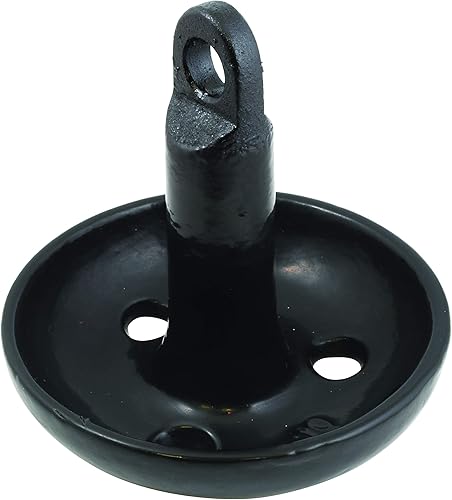
Mushroom anchor
Works by weight in mud and calm water and never snags, but holds poorly in hard sand or current. Best for lakes and sheltered bays.
Sand bag
A tough fabric bag you fill with sand on the beach and use as an anchor. It will not scratch the hull or damage the bottom, and weighs nothing when empty. It only works in shallow water over sand; popular with personal watercraft.
Danforth or light Delta
For large inflatables and RIBs with outboards that already behave like a small powerboat. They hold much better and are used with a few feet of chain.
What weight for what boat
| Craft | Anchor type | Approx. weight | Rode |
|---|---|---|---|
| Paddleboard | Folding | 1.5-3 lb | 1/4 in., 30-50 ft |
| Recreational kayak | Folding | 1.5-3 lb | 1/4 in., 50-65 ft |
| Fishing kayak | Folding or grapnel | 3-5.5 lb | 1/4-5/16 in., 65-100 ft |
| Inflatable tender to 10 ft | Folding | 3-5.5 lb | 5/16 in., 50-65 ft |
| Inflatable 10 to 13 ft | Folding or Danforth | 5.5-9 lb | 5/16-3/8 in., 65-100 ft |
| RIB 13 to 16 ft | Danforth or Delta + 6 ft chain | 9-13 lb | 3/8 in., 100 ft or more |
| Personal watercraft | Sand bag or stake | Depends on sand | Short elastic line |
For RIBs and larger inflatables that behave like small boats, use a proper anchor: see the table by length in what anchor you need and our overview of boat anchors.
How much rode you need
A practical rule is 3 to 5 times the depth. To anchor in 15 to 30 ft of water, 65 to 100 ft of line is ideal. A 30 ft kit only suits shallow water. More wind or current calls for more line. Floating rode keeps it from fouling the outboard prop or the kayak's pedal drive.
Anchoring safely
- Always anchor from the bow or stern, never from the side: the current can flip or broadside the boat.
- Use an anchor trolley so you can move the attachment point without leaving your seat.
- Carry a knife or a quick-release carabiner so you can drop the line in an emergency.
- Do not anchor in strong current or surf without experience: on a kayak, a taut line is a hazard.
- Lower the anchor rather than throwing it, and pull slowly to set it.
Warning: never tie the anchor line to a fixed point on a kayak without a quick release. If the anchor snags and the current pushes, the kayak can capsize.
Maintenance and common mistakes
- Rinse the anchor and line with fresh water and dry them before storing.
- Check the arm pins and the kit's connecting bolt.
- Buying a big anchor "just in case": it only makes retrieval harder on a kayak.
- Leaving the line without a secure knot at the anchor eye.
Tip: add about 3 ft of light chain between anchor and line to improve holding without adding much weight. If you are new to anchoring, start with how to anchor step by step.
Frequently asked questions
What size anchor does a kayak need?
For a kayak or paddleboard, a folding anchor of 1.5 to 3 lb is enough. In current or wind, or on a loaded fishing kayak, go for 3 lb. More weight makes retrieval harder and adds little if the rode is right.
What anchor for an inflatable boat?
A tender up to 10 ft works well with a folding anchor of 3 to 5.5 lb. For inflatables of 10 to 13 ft, 5.5 to 9 lb. Beyond 14 ft, especially RIBs with an outboard, a 9 lb Danforth or Delta with a few feet of chain is better.
How much rode do I need for a kayak?
Three to five times the depth. For fishing in 15 to 30 ft of water, 65 to 100 ft of line is ideal. A 30 ft kit only suits shallow water.
Is anchoring a kayak dangerous?
It can be if you anchor from the side or in strong current: the kayak can flip or end up broadside. Always anchor from the bow or stern, ideally with an anchor trolley, and carry a knife or a quick-release carabiner.
Folding or mushroom anchor for a kayak?
A folding anchor holds better in rock, gravel and weed and takes less room. A mushroom holds by weight in mud and calm water and never snags, but holds poorly in hard sand or current. At sea, folding is the usual pick.