If you buy through our links, Amazon pays us a small commission at no extra cost to you. That’s how we keep the site running. How we choose.
Contents
inflatable kayaks comparison, in stock
We don’t currently have verified in-stock products on Amazon.com. Here are all the available options:
BarcoEquipado score: combines the average rating and the number of buyer reviews on Amazon. No brand pays to be featured.
How to choose an inflatable kayak
An inflatable kayak is the easiest way to add sport and exploration to your boat: it packs into a bag, inflates in a few minutes and lets you reach coves, creeks and river mouths a bigger boat can't. But they aren't all built for the same job. Before you buy, define where you'll use it: calm water, open water with some chop, rivers or fishing.
Then decide how many people will paddle and how much gear you'll carry. Solo models are lighter and more agile; tandems offer more capacity and stability, and can be paddled solo with the seat moved to the center.
Weight, transport and stowage aboard
A solo inflatable kayak weighs between 18 and 33 lb (8 to 15 kg) and a tandem between 26 and 44 lb (12 to 20 kg). That sounds light, but you notice it when you lift it out of the water onto the swim platform or carry it across a rocky beach. Measure the packed bag and make sure it fits in the stern locker or the trunk. On a small sailboat, a model that packs into a bag of about 31 x 16 inches changes everything.
Types of inflatable kayaks
- Recreational: wide, very stable and affordable. Great for calm coves and beginners, but slow in wind or current.
- Touring: longer and narrower, with a keel or skeg. Tracks straight and fast; takes a bit more technique.
- Sit-on-top: you sit on top, with drain holes in the hull. Easy to climb back on after a swim, and great in summer.
- Fishing: with mounting points, rod holders and lots of stability. See our guide to kayak anchors if you fish at anchor.
- Whitewater: with reinforced chambers and self-bailing floors. Only if you know what you're doing.
Hull material and construction
Hull quality determines durability and stiffness. You'll mostly find PVC, and on higher-end models fabrics reinforced with nylon or Hypalon.
- 0.9 to 1.2 mm PVC: the standard. More thickness means more weight and better resistance to scraping on rocks or sand.
- Double-layer or drop-stitch floor: a high-pressure floor feels almost like a rigid board and improves paddling a lot.
- Independent air chambers: with three or more, a puncture doesn't leave you without buoyancy.
- Quality valves: Boston-type or high-flow screw valves inflate faster and leak less.
Capacity and recommended use
| Model | Approx. length | Typical max load | Best for |
|---|---|---|---|
| Solo | 8-10.5 ft (2.5-3.2 m) | 220-310 lb (100-140 kg) | Coves, rivers and outings with little gear |
| Tandem | 11-13 ft (3.3-4.0 m) | 400-550 lb (180-250 kg) | Couples, families with kids, day trips |
| Triple or family | 14-15.5 ft (4.2-4.8 m) | 550-700 lb (250-320 kg) | Families and small groups; lots of cargo |
| Solo touring | 11-13 ft (3.4-4.0 m) | 285-400 lb (130-180 kg) | Long crossings and choppy water |
Tip: add up your weight, your partner's and the gear, and stay under 75% of the stated max load. The kayak floats higher and is much more stable.
Inflation, paddles and accessories
A good inflation pump saves you a lot of effort: a double-action hand pump takes about 8 minutes, and a 12 V electric pump does the job on its own. Check that the kit includes an aluminum or carbon paddle (plastic ones are heavy and flex), a seat with a backrest, a tracking fin and a carry bag.
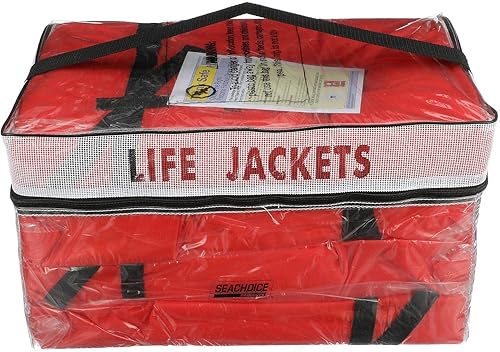
Never launch without a life jacket: a USCG-approved life jacket is just common sense. In cold water, add a wetsuit and a dry bag for your phone, documents and a change of clothes.
Watch out: an inflatable kayak is very exposed to offshore wind. Don't go out in a breeze that pushes you away from the shore, always tell someone your route and carry a whistle and a phone in a waterproof case.
Maintenance and common mistakes
After each outing, rinse the kayak with fresh water, let it dry well in the open air (not in strong sun) and store it with a little air in it or folded without forcing the creases. Don't leave it inflated in the sun: the pressure rises and can split seams or valves.
Common mistakes: inflating to the maximum in midsummer, dragging the hull along the ground, forgetting the pump and getting a puncture without a patch kit. If it happens, see how to repair an inflatable boat; the method is the same.
Frequently asked questions
Is an inflatable kayak safe in the sea?
Yes, in suitable conditions: light wind, calm water and close to shore. It isn't recommended in offshore wind or strong currents. Always wear a life jacket, carry a whistle and tell someone your route.
How long does it take to inflate an inflatable kayak?
Between 5 and 15 minutes with a double-action hand pump, depending on the model. With a 12 V electric pump it can take only 3 to 6 minutes.
What pressure should I use?
Whatever the manufacturer specifies, typically 0.15 to 0.25 bar (2 to 3.5 psi) in low-pressure chambers and more in drop-stitch floors. Adjust for temperature and check with a gauge.
Is an inflatable or a hardshell kayak better?
The inflatable wins on transport and storage; the hardshell on speed and stiffness. If you don't have room for a 10 to 13 foot kayak or you carry it on a boat, the inflatable is the practical choice.