If you buy through our links, Amazon pays us a small commission at no extra cost to you. That’s how we keep the site running. How we choose.
Contents
inflatable paddle boards comparison, in stock
We don’t currently have verified in-stock products on Amazon.com. Here are all the available options:
BarcoEquipado score: combines the average rating and the number of buyer reviews on Amazon. No brand pays to be featured.
How to choose a paddle board
Stand up paddleboarding (SUP) is one of the best fits for life aboard: an inflatable board packs into a backpack, inflates in minutes and lets you explore coves, get some exercise or simply cruise at sunset from the anchorage. To buy well, think about three things: your weight and skill level, the kind of water you'll paddle and the space you have to store it.
If this is your first board, skip the small, fast ones: a wide, stable board will have you enjoying it from day one. Speed and maneuverability can wait.
Size, volume and paddler weight
Three numbers rule: length, width and thickness, which together set the volume in liters. More volume and width mean more stability and load capacity; a longer, narrower board is faster.
| Use | Length | Width | Typical max load |
|---|---|---|---|
| Cruising and beginners | 10-11 ft (3.0-3.4 m) | 32-34 in (81-86 cm) | 200-285 lb (90-130 kg) |
| All-round (recommended) | 11-12 ft (3.3-3.6 m) | 31-33 in (78-84 cm) | 220-330 lb (100-150 kg) |
| Touring and crossings | 12-14 ft (3.6-4.3 m) | 28-31 in (71-80 cm) | 240-350 lb (110-160 kg) |
| Yoga and family | 11-12 ft (3.3-3.7 m) | 34-36 in (86-92 cm) | 265-375 lb (120-170 kg) |
| Surf and waves | 8.5-10 ft (2.6-3.0 m) | 31-34 in (78-86 cm) | 155-240 lb (70-110 kg) |
Tip: add your weight to your gear and stay under 80 to 85% of the board's maximum load. When it's fully loaded, the board sits lower and loses stability.
Types and construction
- Single-layer inflatable: the lightest and cheapest. Fine for occasional use in calm water, but it flexes more.
- Double-layer (laminated) inflatable: stiffer and tougher, with the best weight-to-durability ratio. The most balanced choice.
- High-pressure drop-stitch: thousands of internal threads hold the board flat when inflated up to 15 PSI. This is what gives modern inflatables their stiffness.
- Hardboard (epoxy or foam): better glide and performance, but bulky and in need of a permanent storage spot. Rarely practical on a recreational boat.
What a complete package includes
Most packages include the board, the paddle (adjustable, aluminum, fiberglass or carbon), a carry backpack, a hand pump, a safety leash and a center fin. Check the paddle: it's the part you'll notice most, and plastic ones are heavier and tire you out sooner. A 12 V electric pump saves you the effort of inflating by hand.
Safety and recommended gear
- Safety leash: always attached to your ankle or calf and to the board. In open water, the board is your float.
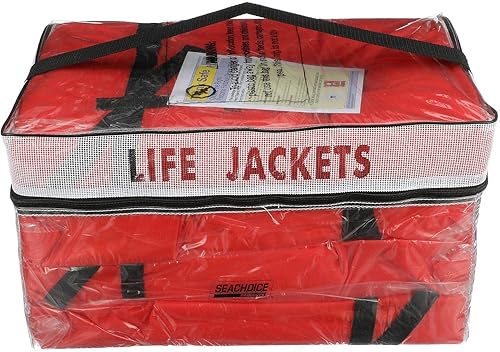
- Life jacket or belt pack: a low-profile, USCG-approved life jacket gives you a safety margin if you drift away from the boat.
- Wetsuit: in cold water, a wetsuit completely changes the experience.
- Dry bag: a dry bag for your phone, keys and documents.
- Sun protection: a cap, sunglasses with a strap and water-resistant sunscreen.
Watch out: in offshore wind or current, the board can carry you away from shore or from the boat faster than you can paddle. Go out only in light breezes, tell whoever stays aboard and never go farther than you could swim back.
Use from a boat, maintenance and common mistakes
On a recreational boat, the easiest routine is to inflate the board on deck, lower it into the water from the swim platform and climb on slowly, starting on your knees. Make sure the pressure matches the manufacturer's spec, usually 12 to 15 PSI: a soft board folds and becomes very unstable.
- Rinse the board with fresh water after each outing and dry it well before folding.
- Don't leave it inflated in the sun: heat raises the pressure and can burst seams or valves.
- Store it rolled up, without forced creases, in a cool place.
- Carry a patch kit: it works just like on an inflatable boat (how to repair an inflatable boat).
The most common mistake is choosing a board that is too narrow because it looks more athletic, then falling in with every wave. If you're torn between two sizes, pick the wider one.
Frequently asked questions
What's the best paddle board for beginners?
An inflatable board around 10.5 to 11.5 feet long and 32 to 34 inches wide, with double-layer drop-stitch construction. It's stable, easy to store and suits almost every use.
What PSI should an inflatable paddle board be?
Whatever the manufacturer specifies, normally 12 to 15 PSI. With less pressure the board flexes and loses stability, and with more you risk damaging valves or seams.
Can I use an inflatable paddle board in the ocean?
Yes, in calm water, light wind and close to shore. Always wear a leash and a life jacket, avoid offshore-wind days and tell someone where you're going. In heavy swell, stay in.
How long does an inflatable paddle board last?
With good care (rinsing, drying and proper storage) it can last many years. Double-layer boards made with better materials hold up better to sun and abrasion.