If you buy through our links, Amazon pays us a small commission at no extra cost to you. That’s how we keep the site running. How we choose.
Contents
Boat tools are not garage tools. Aboard, everything gets wet, everything moves, and when something fails the nearest shop may be miles away. A screw working loose on a fitting, a corroded battery terminal, a leaking cooling hose or a shackle you cannot open are small problems that, without the right tool, turn into a lost day or a call for a tow. This guide covers what to carry for your type of boat and cruising, how to store it so corrosion does not eat it, and which spares are worth having.
If you only buy one thing: a good stainless multi-tool, a basic tool kit in a waterproof box, a simple multimeter, self-fusing silicone tape and a corrosion-inhibiting spray. That covers most of what goes wrong on a day trip.
The basic list: what every boat needs
Whether you have a 14-foot inflatable or a 40-foot sailboat, there is a core set of tools that handles most onboard repairs.
- Multi-tool or sailor's knife with pliers, blade and screwdrivers. It lives on your belt or in a pocket and is the first thing you reach for. On a sailboat, choose one with a marlinspike for freeing shackles and knots (see sailing knives).
- Flat and Phillips screwdrivers (Phillips and Pozidriv) in at least three sizes. The wrong tip chews up the head of a stainless screw.
- Combination wrenches from 5/16 to 3/4 in (8 to 19 mm) plus an adjustable wrench of 6 to 10 in.
- Socket set with a ratchet, 1/4 in and 3/8 in drive, for the engine and through-bolts.
- Pliers: slip-joint, needle-nose and diagonal cutters strong enough for zip ties and shackle seizing wire.
- Metric hex keys: many fittings, blocks and engine mounts use socket-head screws.
- Utility knife and sturdy scissors for line and canvas.
- Waterproof headlamp: half of all repairs happen in a dark locker.
- Self-fusing tape, duct tape and zip ties in several sizes.
- Corrosion-inhibiting lubricant spray and a rag.
If you would rather buy it assembled, our boat tool kits comparison covers cases and bags.
What to add by boat type
| Boat type | Add to the basic list | Priority |
|---|---|---|
| Inflatable or RIB with a small outboard | Spark plug wrench, spare plugs and prop cotter pin, inflation pump, patch kit | Engine and airtightness |
| Powerboat of 16 to 26 ft with an outboard | Multimeter, crimper and terminals, fuses, spare impeller | Electrics and engine |
| Sailboat of 20 to 33 ft | Knife with marlinspike, cutters for fine rigging wire, sail repair kit, rivet tool, turnbuckle wrenches | Sail handling and rigging |
| Cruising sailboat or powerboat over 33 ft | Full socket set, wrenches from 1/4 to 1-1/4 in, clamp-on DC multimeter, cable cutters, hacksaw | Self-sufficiency |
| Boat with an inboard diesel | Filter wrench, bleed pump, shaft and stuffing box wrenches, inspection mirror | Engine |
If your boat has an outboard, the specific tools are in outboard tools and how to use them in our guide to outboard maintenance.
The electrical kit: the most common failure
Most breakdowns that keep a boat tied to the dock are electrical: a dead battery, a loose or corroded terminal, a blown fuse, a corroded connection at the bilge pump or navigation lights. Salt air attacks copper relentlessly, so the electrical kit is almost as important as the mechanical one.
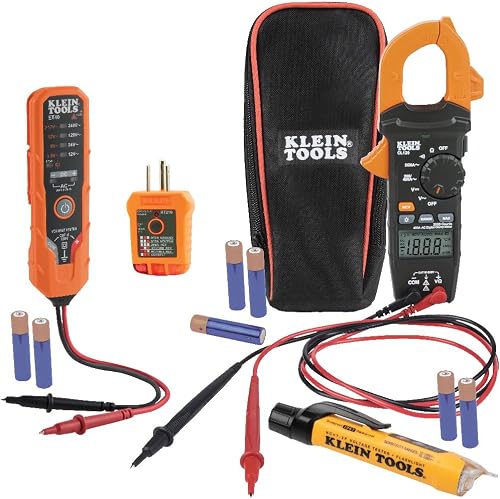
- Multimeter: essential to measure battery voltage, check continuity and find a voltage drop (see multimeters for boats).
- Ratcheting crimper and adhesive-lined heat-shrink terminals: the reliable way to splice wire on a boat (marine crimpers and electrical terminals).
- Wire strippers, adhesive-lined heat-shrink tubing and a heat gun or lighter.
- Spare fuses for every amperage on the panel, plus a spare navigation bulb or LED.
- Contact cleaner spray and terminal grease.
Emergency repairs: tapes, lubricants and sealing
Some failures cannot be fixed at sea; you contain them until you reach port. A roll of self-fusing silicone tape can stop a leaking cooling hose, insulate a wet splice or reinforce the end of a line. Good duct tape holds a loose stanchion or closes a tear in the bimini until you get home. More in self-fusing and repair tape.
Corrosion-inhibiting lubricant matters just as much: a regular spray on shackles, snap hooks, hatch latches and terminals keeps them from seizing. For stainless fasteners on aluminum (mast, boom, brackets), use an anti-seize paste such as Tef-Gel to prevent galvanic corrosion; we explain it in our guide to marine stainless fasteners.
How to protect tools from corrosion
The number one enemy of an onboard toolbox is not use, it is salty humidity. A good chrome-vanadium wrench can last years in a shop and be covered in rust after a single season on a boat.
- Choose the material carefully. Stainless tools (multi-tools, knives, pliers) are the most resistant, though tool-grade stainless is martensitic: harder, but less corrosion-resistant than the 316 used for hardware, so it needs care too. Chrome-vanadium tools with good plating hold up if kept dry and oiled. Avoid cheap black-oxide or uncoated tools; they rust almost immediately.
- Waterproof box and desiccant. Keep the toolkit in a box with a gasket or at least in a dry bag. Add two or three silica gel packets and replace them when they change color.
- Oil after every use. If a tool touched salt water, rinse it in fresh water, dry it and spray it with a water-displacing lubricant (see marine lubricants and anti-corrosion products).
- Location. Never in the bilge or in a cockpit locker that can flood. The best spot is a low interior cabinet near the center of the boat, reachable without emptying half the cabin.
- Annual check. Use the spring commissioning or winter layup to open the box, clean, oil, restock consumables and replace anything rusted.
Spares and consumables worth carrying
A tool without the right spare is of little use. This is the minimum inventory we recommend.
| Spare | Why | Suggested quantity |
|---|---|---|
| Fuses (every amperage on the panel) | Leading cause of electrical failure | 2 or 3 of each |
| Spark plugs | Gasoline outboard that will not start | 1 set |
| Water pump impeller | Engine overheating | 1 |
| Stainless hose clamps in several sizes | Cooling hoses and drains | 6 to 10 |
| Shackles, cotter pins and rings | Sail handling, anchoring and rigging | Assortment |
| A4 stainless fasteners | Deck hardware | Sizes used on your boat |
| Terminals and tinned wire | Electrical repairs | Small kit |
| UV-resistant zip ties | Temporary fixes | Mixed bag |
Common mistakes
- Bringing the garage toolbox with no protection: it will be rusty in three months.
- Not tethering tools when working over water or aloft: what goes overboard does not come back. Use a lanyard or wrist strap.
- Using worn screwdrivers on stainless screws: they round the head and then it will not come out.
- Trusting splices made with electrical tape or hardware-store wire nuts: on a boat they always fail.
- Not carrying spares for what fails most: fuses, spark plugs, impeller and terminals.
Watch out: in the US, required safety gear such as USCG-approved life jackets, fire extinguishers and visual distress signals is set by regulation and depends on boat size. Tools are not part of that list, but a basic kit keeps small problems from turning into a tow.
Before each outing, check that the box is complete and dry. And if you are about to mount a fitting, the first step is choosing the right fastener, which is covered in our guide to marine stainless fasteners.
Recommended gear for this guide



Frequently asked questions
What tools are required on a recreational boat?
There is no required toolbox. Regulations cover safety gear such as USCG-approved life jackets, fire extinguishers and visual distress signals, depending on boat size, and you should check the rules where you boat. In practice, a basic tool kit is essential for fixing problems that would otherwise end in a tow.
How do I keep tools from rusting on a boat?
Store them dry in a waterproof box with silica gel packets, spray a corrosion inhibitor or light oil after every exposure to salt water, favor stainless or quality chrome-vanadium and check the contents at least once a season. Never leave loose tools in the bilge.
Is a plastic or metal toolbox better for a boat?
Plastic. A metal box rusts, marks the gelcoat and weighs more. The ideal is a polypropylene box with a gasket and stainless latches, or a heavy canvas tool bag if your storage space is irregular.
What tools should I carry on an inflatable or RIB?
At minimum: a multi-tool, spark plug wrench and spare plugs, an adjustable wrench, flat and Phillips screwdrivers, self-fusing tape, zip ties, a propeller cotter pin and a spare line. Keep it all in a dry bag.
Do I need a multimeter on a boat?
Yes, if the boat has a 12-volt system with a house battery, navigation lights, a bilge pump or electronics. A basic multimeter diagnoses most electrical failures: dead battery, blown fuse, corroded terminal or broken wire.