If you buy through our links, Amazon pays us a small commission at no extra cost to you. That’s how we keep the site running. How we choose.
Contents
Our top 3 picks
Stock checked on October 6, 2026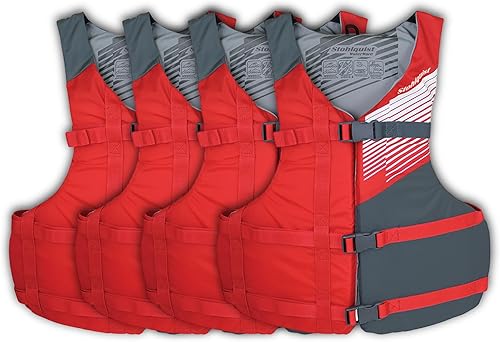
automatic inflatable life jackets comparison, in stock
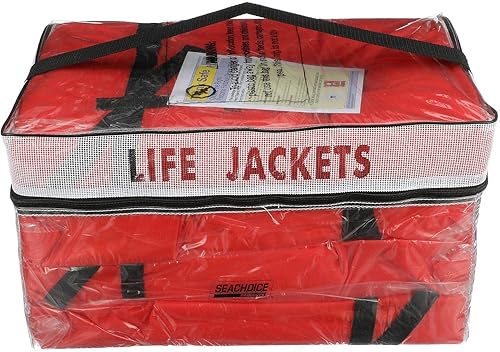
Seachoice Life Vest, Type II
Stohlquist Universal Fit Adult Life Jacket PFD (4 Pack) Coast Guard Approved, for Men and Women 90+ lbs, Lightweight…

MUSTANG SURVIVAL High Visibility HIT Inflatable PFD - Fluorescent Yellow Green, Single

Stohlquist FIT Adult Life Jacket, US Coast Guard Approved Type III Life Vest, PFD for Men and Women, Easily Adjustable…
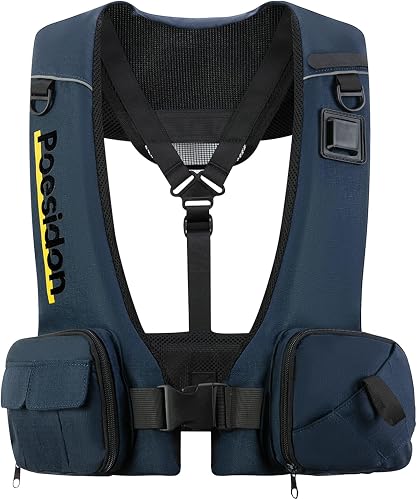
Adjustable Lightweight Breathable Water Safety Life Jacket | Classic Unisex Design | Multi-Functional Dual Storage…

Thurso Surf Horizon Life Jackets for Adults – USCG Approved Life Vest for Kayaking Boating Fishing PFD Personal…

Onyx Air Span Angler USCG Approved Fishing Life Jacket

BLUESTORM Universal General Boating Life Jacket for Adults | US Coast Guard (USCG) Approved Type 3 Universal Foam Life…
BarcoEquipado score: combines the average rating and the number of buyer reviews on Amazon. No brand pays to be featured.
How to choose an automatic inflatable life jacket
The gap between a good jacket and one that lets you down comes down to four things: buoyancy, trigger type, fit and upkeep. Start there and leave the extras for last.
Buoyancy and approval
Internationally, ISO 12402 grades life jackets by buoyancy in newtons (N), and 150 N is the usual level for offshore and coastal cruising. In the United States, what counts for your boat is that the PFD is approved by the US Coast Guard and used according to the label. Check whether the label shows the jacket as approved only when worn, and what size and weight range it covers.
| Level | Buoyancy | Typical use |
|---|---|---|
| Buoyancy aid (ISO 12402-5) | 50 N (about 11 lb) | Sheltered water, help close at hand, strong swimmers. Will not turn an unconscious person. |
| ISO 12402-4 | 100 N (about 22 lb) | Inshore and sheltered water. May fall short with heavy clothing. |
| ISO 12402-3 | 150 N (about 34 lb) | Coastal and offshore sailing in foul-weather gear. The usual choice. |
| ISO 12402-2 | 275 N (about 62 lb) | Open sea, heavy foul-weather gear or a lot of gear on your body. |
For cruising or offshore fishing, 150 N is a sensible starting point. Go to 275 N if you wear heavy gear or carry tools on a harness.
Trigger type
- Hydrostatic: fires on water pressure a few inches under the surface. The most dependable aboard, because rain and spray do not set it off.
- Salt-tablet (dissolving bobbin): simpler and cheaper, but humidity and constant spray can cause accidental inflation if the unit is not well protected.
- Manual: all of them also have a pull cord. Make sure you can reach it with one hand.
Tip: if you ride a PWC, paddle or get soaked constantly, prefer a hydrostatic trigger. Between two similar jackets, choose the one with simpler upkeep and rearm kits that are easy to find.
Features worth having
- Crotch strap: stops the jacket riding up over your head when it inflates. Without one, an inflatable can slip off. Treat it as mandatory.
- Spray hood: keeps your airway clear in chop. Worth it offshore.
- Integrated harness and D-ring: lets you clip a tether. Confirm it is rated to take load; a decorative ring will not do.
- Light and whistle: an automatic light and reflective tape help rescuers find you at night.
- Beacon pocket: some jackets take a personal locator beacon or AIS MOB device.
Fit and comfort
A jacket that annoys you ends up in the locker. Try it on over the clothes you will really wear. Tighten the belt until the jacket cannot be pulled up over your shoulders, and check that it does not restrict your arms when you trim sheets, paddle or cast.
- Check the manufacturer's chest and weight range.
- Be wary of one-size models if you sit at either end of the range.
- Slim-strap designs tend to be cooler in summer.
Maintenance and yearly checks
An automatic jacket has a CO2 cylinder and a firing mechanism that ages. Treating it like a foam vest is the most common mistake.
- Every outing: check that the indicator is green and the cylinder is hand-tight.
- Every year: orally inflate it and leave it for 24 hours to find slow leaks. Inspect the cylinder (weight and corrosion) and the expiry date of the bobbin or hydrostatic unit.
- After it fires: fit a rearm kit from the same manufacturer, never mixed brands.
- Professional service: makers recommend periodic servicing by an authorized center; follow the manual's schedule.
Warning: store the jacket dry and ventilated, never wet or in a closed, damp locker. Moisture trips bobbins and corrodes cylinders.
Common mistakes
- Buying 100 N "because it is comfier" and heading offshore in heavy gear.
- Leaving the crotch strap unclipped.
- Ignoring the cylinder for years and finding it expired when you need it.
- Putting an inflatable on a child. The US Coast Guard does not approve inflatable PFDs for young children, and manufacturers set minimum ages and weights. Look at children's life jackets instead.
- Not clipping the harness to a jackline on deck in bad weather. See harnesses and tethers.
On regulations: under federal rules, recreational boats must carry a wearable USCG-approved PFD for each person aboard, and states add their own requirements. Check your state rules and the label on every jacket. Within safety gear, it is the most important personal item you own.
Frequently asked questions
What buoyancy do I need: 100N, 150N or 275N?
For most boaters going coastal or offshore, 150 N is the standard. 100 N suits sheltered water and 275 N suits open sea with heavy gear. When in doubt, take the higher buoyancy.
How often should I service an automatic life jacket?
Do a quick visual check before every trip and a full inspection at least once a year: leak test, cylinder condition and mechanism expiry date. Always follow the manufacturer's manual.
Can children wear inflatable life jackets?
Manufacturers set a minimum weight, and US Coast Guard approval of inflatables is limited to adults and older teens. For children, a foam jacket with a crotch strap and grab handle is the right choice.
What if it inflates by accident?
Replace the cylinder and trigger with an original rearm kit from the same manufacturer and repack the jacket following the manual. Do not mix parts from other brands.