If you buy through our links, Amazon pays us a small commission at no extra cost to you. That’s how we keep the site running. How we choose.
Contents
Our top 3 picks
Stock checked on October 6, 2026


personal locator beacons (plb and ais mob) comparison, in stock
ACR GlobalFix V6 EPIRB with RapidDitch Express Bag, RLB-43, Waterproof

ACR GlobalFix V5 AIS EPIRB Survival Kit with RapidDitch Abandon Ship Bag

ACR ResQLink 410 RLS GPS PLB SOS Emergency Safety & Survival Kit

ACR ResQLink View RLS PLB, Satellite SOS GPS Personal Locator Beacon - 2932
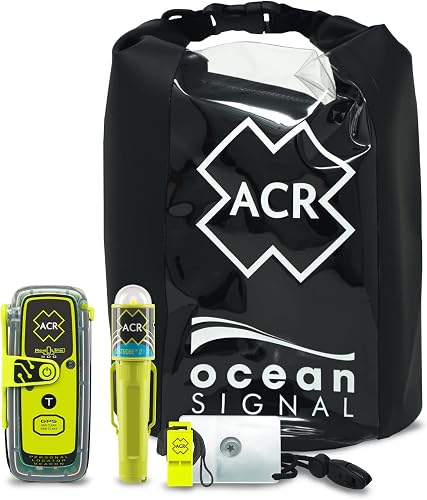
ACR ResQLink 400 GPS Personal Locator Beacon SOS Survival Kit

ACR ResQLink View GPS Personal Locator Beacon SOS Survival Kit
ACR ResQLink View PLB425 - Buoyant GPS Personal Locator Beacon - 2922
Ocean Signal rescueME PLB1 - Compact Satellite SOS Personal Locator Beacon
BarcoEquipado score: combines the average rating and the number of buyer reviews on Amazon. No brand pays to be featured.
PLB or AIS MOB: what each one does
Both help you get found, but they work differently and do not replace each other: they alert different audiences.
| Feature | 406 MHz PLB | AIS MOB |
|---|---|---|
| Who it alerts | Search and rescue authorities via the Cospas-Sarsat satellite system | Nearby vessels with an AIS receiver or compatible chartplotter |
| Range | Global, with satellite coverage | Limited: on the order of a few nautical miles (depends on the antenna) |
| Location | Built-in GPS on most; also a 121.5 MHz homing signal | Built-in GPS; transmits position over AIS |
| Registration | Required in most countries (in the US, with NOAA) | Needs its own MMSI identifier for this type of device |
| Best for | Offshore passages, remote waters, low-traffic areas | Boats with AIS where crew can react fast |
Some MOB devices combine AIS with digital selective calling (DSC) to a DSC-equipped VHF, so the alert reaches your own boat and others nearby. Confirm what receivers you have before buying.
Tip: if you sail solo or with a small crew, a GPS PLB is the most complete option. If you cruise in company with AIS, an AIS MOB in your life jacket alerts everyone almost at once.
What to look for
- Built-in GPS: shortens the time to an alert with your position. Standard on current PLBs.
- Transmit time: marine PLBs typically offer at least 24 hours of operation; check the manufacturer's figure.
- Buoyancy: some beacons float; others need a floating pouch. Alternatively, attach it to your life jacket.
- Antenna: it must point up when you are in the water. Some deploy by themselves.
- Activation: manual with protection against accidental activation; some AIS models also activate when the jacket inflates.
- Battery life: a PLB's battery is replaced every few years; check how many and whether the manufacturer does it.
- Waterproofing and size: it should fit in the jacket pocket and resist salt water.
Registration and rules
A 406 MHz beacon transmits a unique ID. Registering it is what lets rescue services know who you are and who to call; unregistered, an alert is much less useful. In the United States, you register a PLB with NOAA. Elsewhere, register with your country's authority. Before you buy, check what rules apply to using and registering one.
An AIS MOB device also has to be identified correctly with its own MMSI. Do not program it with your boat's MMSI unless the manufacturer or the rules say so.
How and where to carry it
- On the life jacket or belt, so it cannot be lost.
- With the lanyard the manufacturer specifies, so it does not float away if you go in.
- Always outside bags and packs: in a fall, only what you are wearing counts.
- With the antenna free of obstructions.
- One per crew member. A shared beacon does not help the person in the water.
Warning: never activate a beacon "just to test it". Use the self-test mode in the manual. A false alert mobilizes rescue resources.
Maintenance and testing
- Run the self-test at the interval the manufacturer gives.
- Check the battery expiry date and plan its replacement before it lapses.
- Rinse with fresh water after each trip and inspect the seals.
- Update the registration if you change boats, contact details or sell the beacon.
Common mistakes
- Buying a beacon and never registering it.
- Leaving it in the cabin instead of wearing it.
- Relying on an AIS MOB without checking that your boat, or boats nearby, receive AIS.
- Letting the battery expire.
- Thinking a beacon replaces a life jacket. The beacon signals for help, but the jacket keeps you afloat.
A personal beacon is an addition, not a substitute. Also consider a handheld VHF and a life ring in your safety gear. Check the carriage requirements for your boat and waters with the US Coast Guard or your local authority.
Frequently asked questions
What is the difference between a PLB and an AIS MOB?
A PLB sends a distress alert by satellite to rescue services anywhere in the world. An AIS MOB alerts nearby vessels with an AIS receiver. They do different jobs, and some boaters carry both.
Do I need to register a personal locator beacon?
Yes. A 406 MHz PLB should be registered so rescuers know who it belongs to; in the US, that is done with NOAA. An AIS MOB device also needs its own identifier.
How long does the battery last?
It varies by model: a PLB battery is replaced every few years, and transmit time is typically at least 24 hours. Check the manufacturer's figures.
Where should I wear the beacon?
Attached to your life jacket or belt, with the antenna free and the manufacturer's lanyard in place. What matters is that you are wearing it when you go in the water.