If you buy through our links, Amazon pays us a small commission at no extra cost to you. That’s how we keep the site running. How we choose.
Contents
"A boat is a hole in the water you pour money into." Every dock has someone who says it, and there's truth in it. Here we break down the line items that make up a recreational boat's yearly budget in the US and where you can trim them without cutting corners on safety.
Heads up: every figure below is a rough range. Costs swing widely with region, marina, boat length and condition. Use them to get a feel for the numbers and always get real quotes.
The quick rule: 10% to 20% of the boat's value
A common starting point is 10% to 20% of the boat's value per year. An older, cheaper boat often lands above that, because slip fees and insurance barely drop with the purchase price. A newer, expensive boat usually lands below it.
In absolute terms, a 15-20 ft (4.5-6 m) boat kept on a trailer might run roughly $1,500 to $5,000 a year. A 26-33 ft (8-10 m) boat in a wet slip easily passes $6,000 and can top $15,000 in expensive marinas.
Rough annual costs by boat size
Approximate ranges in US dollars per year for normal recreational use: a summer season plus a few outings the rest of the year.
| Item | 15-20 ft (trailer) | 21-26 ft | 27-40 ft |
|---|---|---|---|
| Slip, mooring or dry storage | 400 - 2,000 | 2,000 - 6,500 | 4,500 - 16,000 |
| Insurance | 150 - 450 | 350 - 1,000 | 700 - 2,200 |
| Haul-out, cleaning and bottom paint | 0 - 400 | 500 - 1,300 | 1,000 - 2,800 |
| Engine maintenance | 200 - 500 | 400 - 1,200 | 800 - 2,800 |
| Fuel | 300 - 1,000 | 700 - 3,000 | 1,500 - 7,000 |
| Repairs and surprises | 150 - 700 | 400 - 1,600 | 1,000 - 4,000 |
| Safety gear and consumables | 75 - 250 | 150 - 500 | 250 - 1,000 |
Add up the columns and you see the spread: roughly $1,300 to $5,500 for the small boat and $10,000 to $30,000+ for the big one. If you're still shopping, cross-check this with our guide on choosing your first boat: a slightly shorter boat, or an outboard instead of an inboard, can save thousands a year.
Slip fees and storage: the biggest line item
Marinas usually charge by the foot, per month or per season, and rates depend heavily on the region and the amenities. Coastal Florida, California, the Northeast and big-city marinas run well above small-town harbors and inland lakes. Ways to cut the bill:
- Dry stack or yard storage: the boat sits on land and is launched on request. It cuts bottom paint and anode wear.
- Trailer at home: cheapest up to roughly 22-24 ft. Factor in the trailer, ramp fees, a tow vehicle and the wear from launching and retrieving.
- Mooring ball where available, often cheaper than a slip, though you'll need a dinghy.
If the boat lives in the water, spend on proper dock lines and the right fenders. They're cheap compared with repairing gelcoat.
Insurance and coverage
Insurance isn't federally mandated for most recreational boats, but marinas, lenders and many states require liability or proof of coverage, so check the rules where you boat. A small boat with liability only is usually inexpensive. Adding hull coverage, theft, towing and uninsured boater protection raises the premium with the boat's value and the region, particularly in hurricane-prone areas.
Get at least three quotes and compare deductibles, whether the outboard is covered against theft, whether trailer and road towing are included, and what cruising area the policy covers.
Haul-out, hull cleaning and bottom paint
A boat that lives in the water usually comes out once a year to have the bottom cleaned, anodes checked and fresh antifouling bottom paint applied. The bill combines travel lift or crane, days on the hard, pressure washing, labor and materials. A 26-33 ft boat may need a gallon or two per coat, so pick a paint suited to your water and how often you use the boat.
Doing it yourself saves labor, not the lift or the paint. Check the sacrificial anodes at the same time: they're cheap and protect the prop, shaft and engine from galvanic corrosion.
Engine, fuel and consumables
On a four-stroke outboard, the yearly service usually includes oil and filter, lower-unit gear oil, spark plugs, anodes, grease and, every one or two years depending on the maker, the water-pump impeller. At a dealer shop a small or mid-size outboard commonly lands in the $200 to $600 range. A diesel inboard or a big outboard costs a good deal more.
Doing the basics yourself removes the labor. You need the manual, a few tools and the right outboard oil. Fuel scales with hours and cruising speed; running faster burns much more per mile.
Costs people forget
- Safety gear with an expiry date: flares, inflatable PFD rearm kits and servicing, life raft service, fire extinguishers.
- Batteries and electronics: a house battery lasts a few years; a new charger or an electrical fault belongs in the budget.
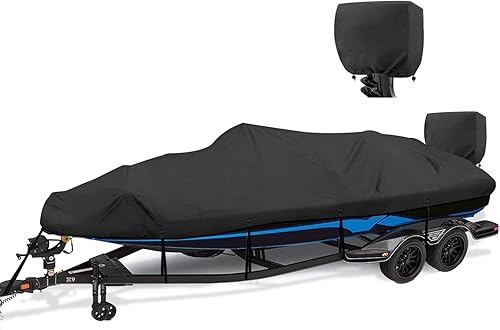
- Canvas and covers: sun and salt wear out biminis and boat covers; replacing them on time prevents bigger damage.
- Winterizing or storage: doing it right costs less than a spring repair.
- Registration and taxes: state registration, sales or use tax and property tax rules differ by state, so check yours.
Common budgeting mistakes
- Counting only the summer slip fee and forgetting the rest of the year.
- Not setting aside 10-15% for surprises: they always show up.
- Buying a big, cheap boat without pricing its slip and engine.
- Putting off maintenance: a cheap impeller prevents an overheated engine.
How to lower the cost of boat ownership
- Pick the right length: every extra foot costs you in slip fees, insurance and bottom paint.
- Consider trailering or dry storage if you only boat in summer.
- Learn basic maintenance: oil, filters, anodes and cleaning.
- Buy consumables off-season and in bulk when it makes sense.
- Split costs with a trustworthy co-owner, with a written agreement.
- Wash the hull and deck regularly. Cleaning beats repairing.
Recommended gear for this guide

Frequently asked questions
How much does it cost to own a boat per year?
A common rule of thumb is 10% to 20% of the boat's value per year. A 15-20 ft boat on a trailer often runs $1,500 to $5,000, while a 26-33 ft boat in a wet slip commonly starts around $6,000 and can exceed $15,000. These are rough ranges, and the marina and region matter enormously.
What is the most expensive part of owning a boat?
Usually slip or storage fees. In popular coastal marinas, a seasonal or annual slip for a mid-size boat can cost thousands of dollars. Next come annual haul-out with bottom paint and engine maintenance.
Is it cheaper to keep a boat on a trailer?
Generally yes. Trailer storage or dry stack costs much less than a wet slip and cuts the need for bottom paint and anodes. The trade-off is that you launch and retrieve the boat every time you want to go out.
How much is a haul-out and bottom paint job?
As a rough guide, between $500 and $2,500 a year for boats from about 20 to 35 ft, combining the lift, time on the hard, cleaning and paint. Doing the work yourself saves labor but not the lift or the materials.