If you buy through our links, Amazon pays us a small commission at no extra cost to you. That’s how we keep the site running. How we choose.
Contents
boat bottom paint (antifouling) comparison, in stock
We don’t currently have verified in-stock products on Amazon.com. Here are all the available options:
BarcoEquipado score: combines the average rating and the number of buyer reviews on Amazon. No brand pays to be featured.
Types of bottom paint: ablative vs. hard
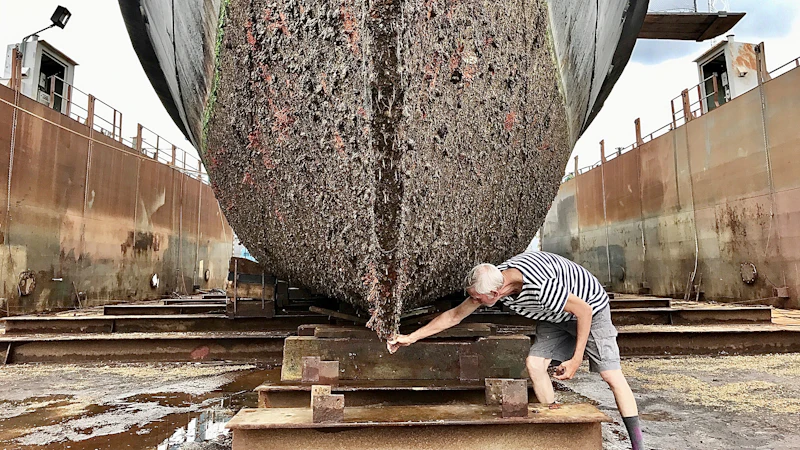
A clean bottom means better fuel economy, more speed and an engine that works less. A hull covered in slime, weed and barnacles can lose several knots and force a mid-season haul-out. In warm, bright water, growth is especially fast.
| Type | How it works | Pros | Best for |
|---|---|---|---|
| Ablative (self-polishing) | Wears away gradually and releases biocide at a steady rate | No paint build-up; tolerates haul-outs and relaunches | Boats that sail regularly and stay in the water |
| Hard (modified epoxy) | The film stays in place and biocide leaches out of it | Handles high speed and scrubbing | Fast powerboats and boats that are hauled and cleaned often |
| Hybrid (semi-hard) | Between the two | Good balance of durability and ease of recoating | Mixed use, mid-size boats |
| Copper-free, aluminum-safe | Biocides other than copper oxide | No galvanic corrosion | Outboard and sterndrive legs, aluminum hulls |
Watch out: the copper in regular bottom paint attacks aluminum through galvanic corrosion. On aluminum hulls and drive legs, use only aluminum-safe products, and do not paint zincs or propellers indiscriminately: see our sacrificial anodes page.
How much paint you need
Estimate the wetted surface: waterline length × (beam + draft) × a coefficient. Use 0.85 for powerboats, 0.75 for full-keel sailboats and 0.5 for fin-keel sailboats (any consistent unit works, then convert). Multiply by the number of coats and divide by the coverage on the data sheet, which is often around 300 to 400 square feet per gallon per coat, though it varies by product.
As a rough guide, a 20-foot powerboat needs about 3/4 gallon (roughly 2.5 to 3 liters) for two coats. Buy a little extra: some paint is always lost in the roller, the tray and the high-wear areas. And check the data sheet of the exact product, because coverage varies.
Prep and application step by step
- Haul out and pressure-wash the bottom as soon as possible, before growth dries and hardens.
- Scrape and sand growth and loose paint. Wet-sand the bottom until it is a uniform dull finish.
- Repair the gelcoat if there are blisters or pinholes. A good gelcoat repair stops water from getting under the paint.
- Prime bare or unknown surfaces with the primer the manufacturer specifies. If you do not know what paint is underneath, use a barrier coat.
- Tape off the waterline, zincs, through-hull fittings and propeller.
- Apply two full coats, respecting the recoat window. Add a third at the waterline, the bow and the leading edges of keel and rudder.
- Launch within the maximum time on the data sheet. Some paints lose effectiveness if left dry too long.
Wear nitrile gloves, a suitable respirator and work with good ventilation: bottom paint contains biocides. A boat trailer or launching dolly or a good cradle makes the keel easier to reach.
Common bottom paint mistakes
- Hard paint over ablative: the layer underneath wears away and the top coat peels. The opposite, well sanded, usually works.
- One thin coat: the boat fouls before the season is over.
- Skipping the sanding: paint will not grip a chalky, loose old coat.
- Forgetting primer on bare hull or paint of unknown origin.
- Skimping at the waterline: it takes the most wear and sun and needs more film thickness.
- Painting a wet hull or in hard cold: the paint will not cure properly.
- Letting dust and leftovers hit the ground or water: collect sanding dust and leftover paint and dispose of them properly at the yard.
Upkeep, schedule and rules
In temperate water the usual cycle is a fresh coat every season, or every 12 months. Some premium ablatives last two seasons if enough film is applied and the boat is used regularly. In between, a diver's scrub or a clean while hauled extends the paint's life.
Use winterizing to inspect the bottom, the condition of the paint and the prop area. Biocides are regulated, and some areas restrict copper, so use only products approved for marine use where you keep the boat and check local rules, which vary by state and country. Wash water and sanding dust should never end up in the water. Above the waterline, a good hull cleaner looks after the gelcoat without touching the bottom paint.
Frequently asked questions
What is the best bottom paint for my boat?
For most boats that sail regularly and stay in the water, a good ablative. For fast powerboats or boats hauled often for cleaning, a hard paint. On aluminum hulls and drive legs, always use a product that is safe for aluminum.
How many coats of bottom paint do I need?
Two full coats are standard, with a third on the highest-wear areas: waterline, bow and leading edges of keel and rudder. Always check film thickness and recoat times on the data sheet.
How often should I repaint the bottom?
In temperate water, usually every season or every 12 months. Some premium ablatives can last two seasons if enough film is applied and the boat is used regularly.
Can I apply bottom paint over old bottom paint?
If they are compatible, yes: ablative over ablative, or over well-sanded hard paint. Hard paint over ablative, no, because the layer underneath wears away and the top coat peels. If you do not know what is on the boat, apply a barrier coat first.


