If you buy through our links, Amazon pays us a small commission at no extra cost to you. That’s how we keep the site running. How we choose.
Contents
Our top 3 picks
Stock checked on October 6, 2026


dock lines for boats comparison, in stock
4 Pack 1/2” X 15’ Dock Lines|Marine-Grade Double-Braided Nylon Dock Line with 12” Eyelet.Hi-Performance Boat Rope…
RainierSupplyCo Dock Lines 2-Pack - Boat Rope for Docking with Loop - 15 ft x 3/8 Inch Premium Double Braided Nylon…

RainierSupplyCo Dock Lines 1, 2 & 4 Pack - Boat Rope for Docking with Loop - Premium Double Braided Nylon Marine Rope…

RainierSupplyCo Dock Lines 2-Pack - Boat Rope for Docking with Loop - 15 ft x 1/2 Inch Premium Double Braided Nylon…

2 Pack Premium Navy Blue Dock Lines - 15' / 25'/35' with Eyelet.Double Braided Nylon Dock Line/
2 Pack Premium Navy Blue Dock Lines - 15' / 25'/35' with Eyelet.Double Braided Nylon Dock Line/

Dock Lines for Boats 3/8" x 15ft, 2 Pack Double Braided Nylon Boat Rope
AIRHEAD AHDL-4 Bungee, Dockline For Watercraft 4 Feet
BarcoEquipado score: combines the average rating and the number of buyer reviews on Amazon. No brand pays to be featured.
How to choose dock lines
Choosing well is simple if you focus on three things: the material (nylon or polyester), the diameter for your boat size, and the length for each job. Then look at construction: a pre-spliced eye with a thimble saves time and avoids failures.
The practical rule is not to go skinny. The problem with thin line is not the weight of the boat, it is the snatch loads that waves and wind create at the dock.
Line diameter and length by boat length
| Boat length | Diameter | Bow and stern lines | Spring lines | Minimum set |
|---|---|---|---|---|
| Up to 20 ft (6 m) | 3/8 in | 15-20 ft | 20-25 ft | 4 lines |
| 20-26 ft (6-8 m) | 1/2 in | 20-25 ft | 25-40 ft | 4 lines |
| 26-33 ft (8-10 m) | 1/2-9/16 in | 25-33 ft | 33-50 ft | 4-6 lines |
| 33-40 ft (10-12 m) | 5/8 in | 33-40 ft | 40-60 ft | 6 lines |
| 40-50 ft (12-15 m) | 3/4 in | 40-50 ft | 50-65 ft | 6 lines |
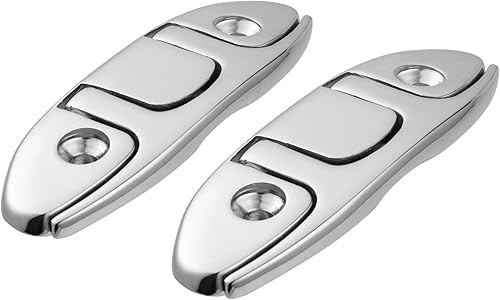
Check that the diameter fits comfortably in your cleats and chocks: a small cleat with a fat line will not hold well, and thin line can slip.
Nylon, polyester and other materials
- Double-braid nylon: stretches under load and returns to length, acting like a spring. The most common choice for dock lines, ideal where there is surge, wake or big tidal range.
- Three-strand nylon (twisted): very elastic and easy to splice by hand. Popular for anchor rodes and as a shock absorber.
- Polyester (double braid): low stretch, excellent UV and chafe resistance, does not kink. Comfortable in sheltered marinas, though it transmits more of the jerk.
- Polypropylene: floats, but breaks down in sunlight and chafes quickly. It suits rescue lines, not permanent mooring.
Tip: in busy or surgy harbors, pair nylon with snubbers. The line suffers less and so do your cleats.
How to tie up your boat properly
Alongside a dock you normally use four lines: bow, stern and two springs, one leading forward and one aft, which stop the boat from surging back and forth. If your marina uses mooring pilings or a pier with finger slips, lines run from both sides of the boat to the pilings, crossed where needed.
Always hang your fenders at dock height and leave some slack in the lines where there is tide. To make fast you need a cleat hitch, a bowline and a clove hitch; we cover them in basic boating knots.
Looking after your dock lines
- Rinse with fresh water at the end of the season and dry in the shade.
- If stiff with salt, wash with mild soap; the line regains flexibility.
- Use chafe guards at chocks and dock edges, because chafe can cut a line in weeks.
- Check the eye splices: if the splice opens or the thimble falls out, replace the line.
Replace lines when they are stiff, faded, have broken fibers or show the core at chafe points. One check per season is enough.
Common mistakes when mooring
- Lines that are too thin "because the boat is small."
- Using hardware-store polypropylene for permanent mooring.
- Tying up so tight that the lines cannot cope with tide or boat movement.
- Tying up alongside without spring lines: the boat surges and bangs.
Warning: chafe is the number-one killer of dock lines. Look at where each line passes through a chock or around a corner and protect that spot. See more gear in anchoring and mooring.
Our team compares spec sheets, verified reviews and real-world criteria but does not physically test products. Always confirm material, diameter and length on the listings above.
Frequently asked questions
What size dock lines do I need?
As a rule of thumb, 3/8 inch for boats up to about 20 ft, 1/2 inch for 20 to 30 ft, 5/8 inch for 30 to 40 ft and 3/4 inch beyond that. It is better to go slightly larger as long as the line fits your cleats.
Are nylon or polyester dock lines better?
Nylon stretches and absorbs shock better, so it is the standard for exposed docks with surge or wake. Polyester resists sun and chafe and stretches less, so it works well in sheltered marinas.
How many dock lines do I need?
At least four when tied alongside: bow, stern and two springs. On larger boats or in rough weather, add bow and stern breast lines, up to six lines in all.
How often should I replace dock lines?
Inspect them every season. If they are stiff, faded, have broken fibers or the core shows at chafe points, replace them. Chafe guards extend their life considerably.