If you buy through our links, Amazon pays us a small commission at no extra cost to you. That’s how we keep the site running. How we choose.
Contents
Our top 3 picks
Stock checked on October 6, 2026


anchor chain comparison, in stock
Stainless Steel Anchor Chain, Marine Grade Boat Accessories
Stainless Steel Anchor Chain, Marine Grade Boat Accessories
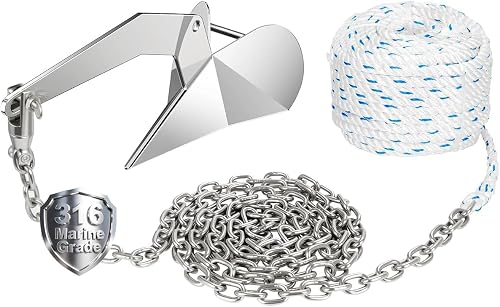
316 Stainless Steel Boat Anchor Chain with 2 Pcs Anti-Off Shackles, Marine Grade
316 Stainless Steel Boat Anchor Chain with 2 Pcs Anti-Off Shackles, Marine Grade
316 Stainless Steel Boat Anchor Chain with 2 Pcs Anti-Off Shackles, Marine Grade
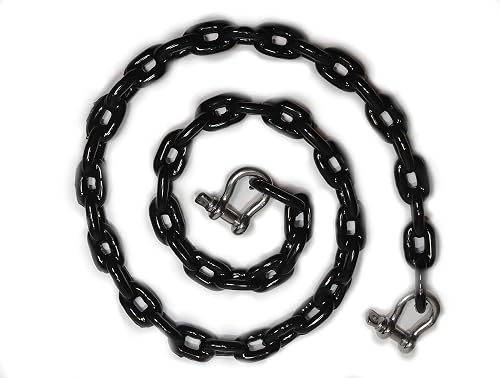
PVC Coated Boat Anchor Chain with Stainless Steel Shackles 4Foot/ 5Foot/ 6Foot/ Black/White

Young Marine Galvanized Fluke Style Anchor Kit Includes Galvanized Fluke Anchor, Rope, Shackles, Chain 8LB 10LB 13LB
Young Marine Galvanized Fluke Style Anchor Kit Includes Galvanized Fluke Anchor, Rope, Shackles, Chain 8LB 10LB 13LB
BarcoEquipado score: combines the average rating and the number of buyer reviews on Amazon. No brand pays to be featured.
How to choose anchor chain
Good chain does three things: it is strong enough for your boat's length and weight, it has a galvanizing that survives years of saltwater, and it matches your windlass gypsy if you have one or plan to fit one. Price per foot varies a lot with finish, but you notice the difference after two winters.
Chain is more than a connector. Its weight keeps the pull on the anchor horizontal, which is why the anchor sets and stays set. A short or too-light chain hurts the performance of any anchor, however good.
Chain size and length by boat length
The chart is a practical guide for typical cruising in normal conditions. Always check the anchor and windlass manufacturers' sizing guidance and your local requirements.
| Boat length | Typical chain size | Useful chain length | Rope rode |
|---|---|---|---|
| Up to 16 ft (5 m) | 1/4 in | 15-30 ft | 3/8 in nylon |
| 20-26 ft (6-8 m) | 1/4 in | 50-100 ft | 3/8-1/2 in nylon |
| 30-36 ft (9-11 m) | 5/16 in | 100-160 ft | 1/2 in nylon |
| 40-46 ft (12-14 m) | 5/16-3/8 in | 160-230 ft | 9/16 in nylon |
| 50 ft (15 m) or more | 3/8-1/2 in | 230 ft or more | 5/8 in nylon |
Galvanized steel and calibrated chain
Hot-dip galvanized steel is the standard: strong, affordable and repairable. Look for an even coating without drips or poorly finished welded links. 316 stainless is more expensive and lighter for the same size, and it is mostly chosen for looks.
If you have a windlass, you need calibrated chain: links made to controlled dimensions that sit properly in the gypsy. Chain that is not calibrated can jump or jam. Before buying, check your windlass for the chain size and grade it accepts. Common grades include proof coil (G30), BBB and high test (G43).
Tip: buy a little more chain than you need today. Adding to your rode when you change boats or anchorages costs far less than replacing all of it.
Connecting chain to anchor and rope
The weak points of any rode are the connections. Between anchor and chain, use a shackle at least as strong as the chain, with the pin tightened and moused with stainless wire. Between chain and rope, a proper splice is far stronger than a knot and passes through the windlass cleanly.
A swivel can keep the chain from twisting, but only if it is a quality one rated to match: a cheap swivel just adds a weak link. See anchor shackles and swivels for guidance.
How much rode to let out
With all-chain, a scope of 3:1 to 5:1 is common, measured from the bow roller to the bottom. With a chain-and-rope rode, plan on 5:1 to 7:1, and more if a storm is forecast. Mark your chain every 25 or 50 feet with paint, zip ties or colored tape so you always know how much is out. The full technique is in how to anchor step by step.
Maintenance and common mistakes
- Rinse the chain with fresh water at the end of the season and let it dry before stowing.
- Check the galvanizing: chain that goes dull and sheds red rust is losing metal.
- End-for-end the chain now and then to spread the wear on the links you use most.
- Make sure the chain locker drains. Trapped mud corrodes more than clean water.
Warning: do not mix sizes without reason. A shackle or link weaker than the rest is where a rode fails, and it always happens in a breeze.
Our team compares spec sheets, verified reviews and real-world criteria but does not physically test products. Always confirm size, grade and length on the listing before buying.
Frequently asked questions
What size anchor chain do I need for my boat?
As a rough guide, 1/4 inch for boats up to about 25 ft, 5/16 inch for roughly 28 to 40 ft, and 3/8 inch from about 40 ft up. If your boat is heavy for its length or you anchor in windy areas, go up one size. Check your anchor and windlass sizing charts too.
How much anchor chain should I carry?
It depends on the depths you usually anchor in. With all-chain you need at least 3 to 5 times the depth. For a 26 ft boat anchoring in 15 to 25 ft of water, 100 ft of chain plus a rope tail is a common setup.
What is calibrated chain and do I need it?
It is chain made to controlled link dimensions so it fits a windlass gypsy. If you have a windlass, yes, because uncalibrated chain can jump or jam. If you pull the anchor by hand, it is not essential.
Galvanized or stainless anchor chain?
Hot-dip galvanized is the usual choice for price and strength. 316 stainless costs more and is chosen for looks and lower weight, but it must be good certified quality.