If you buy through our links, Amazon pays us a small commission at no extra cost to you. That’s how we keep the site running. How we choose.
Contents
"What size anchor do I need?" has a more concrete answer than most people expect. It depends on three things: the length and displacement of your boat, the kind of bottom you usually anchor on, and the design of the anchor itself. Below you'll find a practical sizing chart, a breakdown of each anchor type and the mistakes we see most often.
Quick answer: take the weight in the chart for your boat length if the anchor is a high-holding-power design (Delta, Rocna, Vulcan, Spade). If it's a classic design (Bruce, CQR, folding), add about a third. If you anchor overnight or in wind, go up one size.
Anchor weight by boat length and anchor type
These weights are general guidance for anchoring with a comfortable margin. Always check the sizing chart from your anchor's manufacturer, and keep in mind that the right size also depends on your boat's windage and where you cruise.
| Boat length | Approx. displacement | Delta / new-generation | Bruce / CQR | Danforth (sand) | Chain |
|---|---|---|---|---|---|
| Up to 16 ft | Up to 2,200 lb | 9-13 lb | 13-18 lb | 9-13 lb | 1/4 in |
| 16-23 ft | 2,200-5,500 lb | 13-22 lb | 18-29 lb | 13-18 lb | 1/4 in |
| 23-30 ft | 5,500-11,000 lb | 22-33 lb | 29-44 lb | 18-26 lb | 1/4-5/16 in |
| 30-40 ft | 11,000-20,000 lb | 33-44 lb | 44-60 lb | 26-35 lb | 5/16 in |
| 40-50 ft | 20,000-33,000 lb | 44-73 lb | 60-97 lb | 35-55 lb | 5/16-3/8 in |
Look at displacement as well as length. A light 23-foot powerboat and a 23-foot cruising sailboat with a heavy keel don't need the same gear. Boats with high freeboard, a bimini top or a dodger catch more wind and load the anchor harder. If you fall between two rows, pick the larger one.
Your anchor rode (chain plus line) should be at least five to seven times the water depth at anchoring, with a length of chain at least equal to the boat length where possible. The full details are in our anchor chain guide.
Types of anchors: how each one works
Delta (fixed-shank plow)
The most common anchor on modern recreational boats. A single piece, with a low center of gravity and a weighted tip, so it lands the right way up and sets fast. It works well in sand, mud and gravel and sits neatly on a bow roller. It's the default choice if you're unsure.
Bruce or claw
Sets with little scope and resets well when the boat swings. It does better than most in gravel and rock, but holds less per pound than a Delta in soft sand, so go heavier.
Hinged plow (CQR type)
The classic plow, with a hinged blade. It has a long record on cruising boats, but it takes longer to set in hard bottoms and the hinge can jam. Today it has been largely replaced by the Delta and new-generation anchors.
Danforth (fluke anchor)
Two wide, flat flukes dig deep into sand and mud, with very high holding power per pound. It's flat, light and easy to stow, which is why it's a favorite as a stern or spare anchor. Its weak points are rock, weed and grass, where it skates.
Folding or grapnel
Four arms that fold along the shank. Compact and cheap, ideal for kayaks, inflatables and small skiffs, and useful on rock, where one arm hooks. In sand it holds poorly. Don't use it as the main anchor on a boat over 16 ft; for small craft see kayak and inflatable anchors.
New generation (Rocna, Vulcan, Spade and similar)
These combine a sharp concave blade with a weighted tip. They set almost immediately, reset when the wind shifts, and offer the highest holding power per pound among general-purpose designs. They cost more, but for anyone who sleeps at anchor or sails in breezy areas, they're a safety investment.
| Type | Sand | Mud | Gravel / rock | Weed | Price range |
|---|---|---|---|---|---|
| Delta | Very good | Good | Fair | Fair | Mid |
| Bruce | Good | Fair | Good | Fair | Low-mid |
| CQR / plow | Good | Good | Fair | Fair | Mid |
| Danforth | Excellent | Very good | Poor | Poor | Low |
| Folding / grapnel | Poor | Poor | Good (hooks) | Fair | Very low |
| New generation | Excellent | Very good | Good | Fair | High |
What to choose for your boat size
- Up to 16-20 ft: a Delta of 9 to 13 lb, or a Danforth of the same weight if you mostly anchor on sand. A few feet of 1/4 in chain with nylon rode is plenty.
- 20-26 ft: the range where a good anchor makes the biggest difference. A Delta of 13 to 22 lb or a Bruce of 18 to 29 lb. With a windlass, all of the working rode should ideally be chain.
- 26-40 ft: boats that spend nights at anchor. A new-generation anchor of 22 to 44 lb or a Delta of 35 to 44 lb, with chain matched to the windlass gypsy.
Browse the models available in our selection of boat anchors.
Matching the anchor to your usual bottom
If you almost always anchor on the same kind of bottom, you can fine-tune the choice. In firm sand and mud, a Danforth or a new-generation anchor gives the best holding power per pound. In mixed bottoms of gravel and shell, a Bruce or a Delta behaves better. In rock, no anchor is truly reliable: carry a cheaper spare anchor and a trip line (a rope with a buoy attached to the crown) so you can recover it if it gets stuck.
Cruisers who sail in varied areas often carry two anchors: a main new-generation or Delta anchor, and a light Danforth as a stern or spare anchor. If that's you, split the total weight so the main anchor carries most of it.
Common mistakes when choosing an anchor
- Buying the anchor "that fits the bow roller" without checking the weight. The roller can be adapted; holding power can't.
- Trusting only the maximum boat length on the listing. Many are optimistic.
- Choosing 304 stainless to save money. In salt water it pits and stains. If it's stainless, make it 316 (we explain why in 304 vs 316 stainless).
- Using a folding grapnel as the main anchor on a 20-foot boat.
- Skimping on the connection: a cheap shackle or swivel is the weakest link in the whole rode.
Watch out: an anchor with a poor finish rusts within a season. Hot-dip galvanized steel offers good value and durability, and stainless is only worth it if it's 316.
The anchor is only part of the system
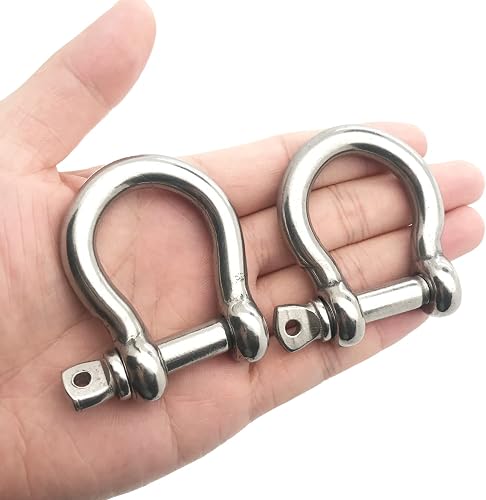
A great anchor with a poorly built rode isn't much use. Chain adds weight and keeps the pull horizontal, and the nylon line absorbs shock loads. The anchor-to-chain connection should use a quality shackle, secured with stainless seizing wire or a cable tie. Have a look at anchor shackles and swivels and, if your boat is big enough, anchor windlasses.
Technique matters as much as gear. In our guide on how to anchor step by step we explain how much scope to use and how to confirm the anchor has set. All the ground tackle is grouped in anchoring and mooring.
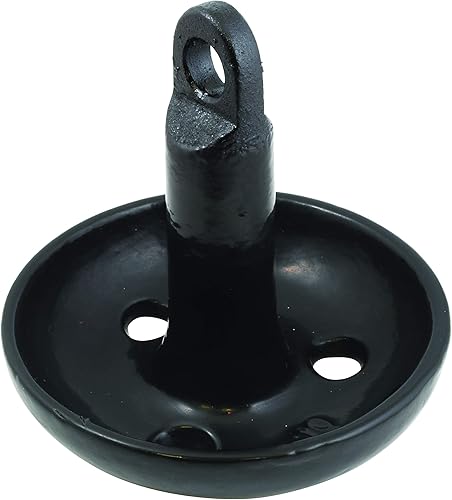
Recommended gear for this guide

Frequently asked questions
What size anchor do I need for a 20-foot boat?
For a boat of about 20 ft, a Delta or new-generation anchor of 13 to 22 lb is a safe choice, with 1/4 in chain and nylon rode. If it's a Bruce, folding or classic design, add about a third to the weight. Always check the manufacturer's sizing chart too.
How heavy should the anchor be on a 30-foot boat?
As a guide, 22 to 44 lb for a Delta or new-generation anchor, with 1/4 to 5/16 in chain. With a Bruce or CQR, go up to about 35 to 60 lb. If you often anchor overnight or in wind, choose the heavier size.
What is the best anchor type for sand?
Most anchors work in sand, but a Danforth offers very high holding power per pound in firm sand and mud. New-generation anchors set quickly and reset well when the boat swings. A Delta is the best all-round option for boats with a bow roller.
Galvanized or stainless steel anchor?
Hot-dip galvanized steel is tough, affordable and the standard choice for anchoring. 316 stainless looks better and doesn't rust, but costs more, and 304 pits in salt water. For most boats, a quality galvanized anchor is the sensible pick.