If you buy through our links, Amazon pays us a small commission at no extra cost to you. That’s how we keep the site running. How we choose.
Contents
A sailboat needs more gear than a powerboat of the same length: there's more rigging to handle, more lines, more hours at sea and, often, sailing in rough weather or at night. This guide runs through the required gear, the must-haves and the extras that make life aboard easier, block by block. It's the list we'd use to prepare a coastal cruising sailboat of 23 to 40 feet (7 to 12 m).
What to put first
The order matters. First, personal safety: automatic inflatable life jackets with built-in harnesses and jacklines. Then a radio, properly sized ground tackle, at least two winch handles and good sailing gloves. Only after that comes comfort (an anchoring awning, solar power, a fridge) and fancy electronics.
Tip: buy first what stops someone from going overboard or helps you get them back. A new chartplotter is worth nothing if the crew isn't wearing life jackets.
1. The required: safety equipment
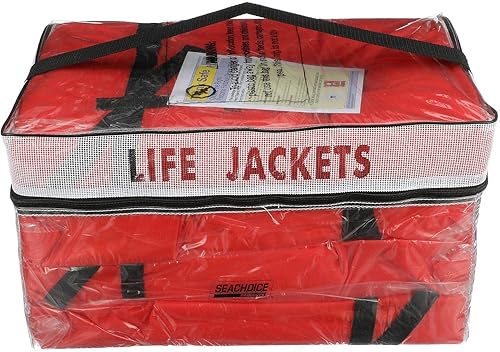
In the US, recreational boats must carry a US Coast Guard-approved wearable life jacket for each person aboard, a throwable flotation device on boats over a certain length, USCG-approved fire extinguishers where required, visual distress signals, a sound-producing device and navigation lights, among other items. Exact requirements depend on boat length and where you sail, so check the current USCG and state rules for your boat. If you sail outside the US, check your own country's rules.
On a sailboat we also recommend at least one fixed manual bilge pump you can operate from the cockpit with all hatches closed. See our guide to boat fire extinguishers to pick the right ones.
2. Deck safety: life jackets, harnesses and jacklines
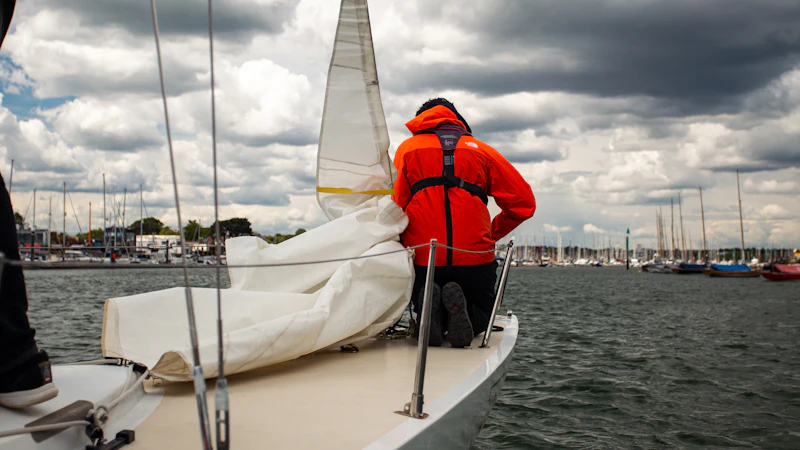
The biggest threat on a sailboat is going overboard and being left behind. That's why deck safety is the first spend.
- An automatic life jacket with a built-in harness for every crew member. Look for jackets that meet ISO 12402 or are USCG-approved, with enough buoyancy for offshore use (150 N / about 34 lb or more). Models with a built-in harness let you clip to the jackline. Service your inflatable life jackets every year: cylinder, bobbin and fabric condition.
- Jacklines from bow to stern and tethers with a double clip: see harnesses and jacklines. Rig them in flat webbing, which doesn't roll underfoot, and run them back to the cockpit.
- Stanchions and lifelines that are solid, with no play or rust (see stanchions and stainless handrails).
- A personal locator beacon if you make passages or sail at night, with a lifering and a strobe at hand.
3. Sail handling: winches, lines and hardware
A sailboat lives on its sail handling. Each season, inspect sheets, halyards and reefing lines; replace sun-baked lines and check that the clutches still grip. Carry at least two winch handles, preferably locking, with one floating: the most common reason for losing them is that they slip out of the winch and sink.
Check the cleats and the rest of the hardware too: on a sailboat they work under high loads, and non-marine fasteners end up failing. These sizes are only a guide and depend on the maker and the material:
| Boat length | Genoa sheets | Dock lines | High-holding-power anchor (indicative weight) |
|---|---|---|---|
| 23 ft (7 m) | 3/8 - 1/2 in | 1/2 in | 22 lb (10 kg) |
| 30 ft (9 m) | 1/2 in | 1/2 - 9/16 in | 31 lb (14 kg) |
| 40 ft (12 m) | 1/2 - 9/16 in | 9/16 - 5/8 in | 44 lb (20 kg) |
| 50 ft (15 m) | 9/16 - 5/8 in | 5/8 - 3/4 in | 73 lb (33 kg) |
Anchor weights are indicative for modern high-holding-power anchors; other types need to weigh about a third more, and plenty of sailors go up a size. When you replace lines, check out dock lines.
4. Anchoring: what holds the boat
An undersized anchor setup "because the boat is light" is a classic mistake: wind acts on the mast and rigging more than you'd think. Carry a main anchor and a spare, enough chain and rode (at least three to five times the depth in sheltered anchorages, more when it blows) and a long line for a second anchor. If the boat is over 33 ft (10 m), consider an electric windlass: it saves your back and cuts the risk of injury when hauling anchor.
The full procedure is in our guide on how to anchor step by step.
5. Navigation and communications
- A fixed VHF with DSC and a backup handheld VHF: compare them in fixed vs handheld VHF.
- Chartplotter or GPS with up-to-date charts, and a second source of position (a phone isn't a reliable backup).
- A steering compass, 7x50 binoculars and paper charts of your area: an electrical failure shouldn't leave you without a position.
- LED navigation lights in good shape, with spare bulbs or fuses.
6. Power and life aboard
A sailboat at anchor for several days needs power without running the engine: a well-sized solar panel, a good house battery and a charger for when you're in port. That runs the fridge, lights and electronics. See the guide to a boat solar panel setup to work out the wattage.
On the comfort side, what you'll appreciate most: an anchoring awning or bimini for the cockpit, a compressor fridge, 12V fans, interior LED lighting and foul-weather gear with non-slip deck shoes.
7. Tools and spares
Carry a basic toolkit, self-amalgamating tape, spare impellers and filters, shackles, zip ties and a sail repair kit. Add a safety knife you can reach from the cockpit and a waterproof flashlight with spare batteries. More ideas in essential tools aboard.
Pre-season check
Set aside a morning at the dock to go over all the gear with the crew. Check expiry dates on flares and the first aid kit, the charge on the extinguishers, the condition of the life jacket cylinders, rig tension and the lights. Test the bilge pump and the VHF, and make sure everyone knows where each item is and how to use it. Gear that nobody can find in an emergency is as good as not having it.
- Safety: life jackets, harnesses, jacklines, flares, extinguishers, first aid.
- Hull and deck: hardware, stanchions, through-hull valves, bilge.
- Sail handling: lines, blocks, winches, clutches, sails.
- Electronics: VHF, chartplotter, lights, batteries.
Common mistakes
- Buying electronics before life jackets, harnesses and jacklines are in order.
- Sailing with a single winch handle.
- An undersized anchor setup "because the boat is light".
- Not servicing inflatable life jackets or the life raft on schedule.
- Leaving lines and sheets with sun-baked covers in service.
- Not going over the gear before the first outing of the season.
If you're stepping up to a bigger sailboat, also review the qualifications you'll need and the cost of keeping it.
Recommended gear for this guide

Frequently asked questions
What equipment does a sailboat need?
Beyond the required safety gear for your boat length and waters (life jackets, throwable device, visual distress signals, fire extinguishers, bilge pump, anchor, navigation lights and sound signal), a sailboat needs sail handling gear (winch handles, working clutches and good lines), harnesses and jacklines, a VHF, navigation tools (compass, charts, binoculars) and personal gear such as sailing gloves and foul-weather clothing.
Which life jacket is best for a sailboat?
An automatic inflatable life jacket of 150 N (about 34 lb) or more with a built-in harness, so you can clip onto the jackline with a tether. Look for USCG-approved or ISO 12402 models, and make sure the buoyancy fits the kind of sailing you do.
How many winch handles should I carry?
At least two, and ideally a floating spare. Locking handles stop them slipping out of the winch and going overboard, which is the most common reason they get lost.
Do I need a manual bilge pump on a sailboat?
It's strongly recommended. A fixed manual pump you can operate from the cockpit with all hatches closed makes sure you can still bail without electrical power. Check the USCG and state requirements for your boat.