If you buy through our links, Amazon pays us a small commission at no extra cost to you. That’s how we keep the site running. How we choose.
Contents
Our top 3 picks
Stock checked on October 6, 2026


boat stanchions and handrails comparison, in stock
SHENGHUISS Boat Grab Handle Solid 316 Stainless Steel Marine Grade Heavy Duty Grab Bar Handrail W/Screws 6.5 inch…
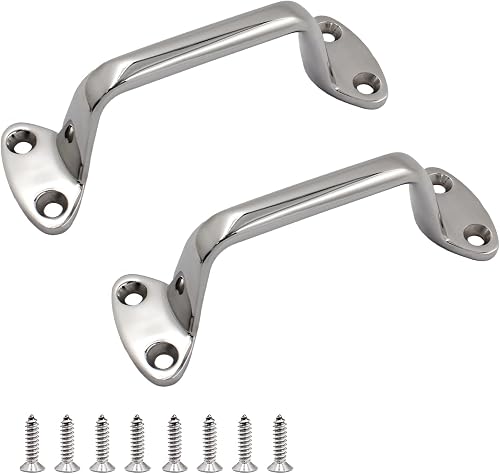
SHENGHUISS 2 Pack 5.8 INCH (148MM) Solid 316 Stainless Steel Marine Grade Boat Grab Handle Polished Marine Heavy Duty…
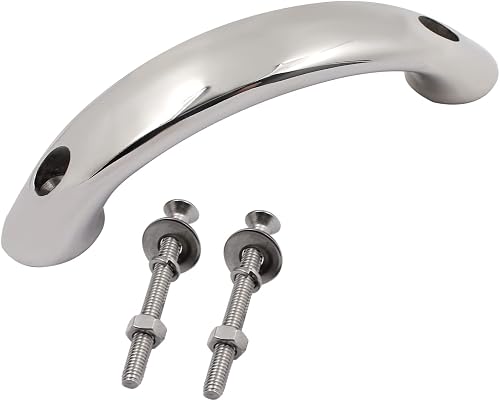
SHENGHUISS 6.5"(165MM) Boat Grab Handle Solid 316 Stainless Steel Marine Grade Heavy Duty Grab Bar Handrail W/Screws

2PCS Boat Handrail Grab Handle Polished Stainless Steel Round Tube - 12" Long Marine Grab Handle
ISURE MARINE Marine Large Cleat Door Grab Handle Handrail Pull Replacement 316 Stainless Steel 150mm for Boat Yacth
8-1/4" Boat Grab Bar 316 Stainless Steel Polished Grab Handle Handrail Hardware Multipurpose

Boat Grab Handle, 12" Polished 316 Stainless Steel Handle Handrail, Round Tube Boat Grab Bar, Marine Grab Handle for…

2 Pack Boat Grab Handle, 12" Polished 316 Stainless Steel Handle Handrail, Round Tube Boat Grab Bar, Heavy Duty Marine…
BarcoEquipado score: combines the average rating and the number of buyer reviews on Amazon. No brand pays to be featured.
How to choose stanchions and handrails
Stainless stanchions, lifelines and handrails are your boat's railing: they separate the crew from the water when the deck is moving. They look like simple tubes, but on deck they are structural parts. A stanchion works like a lever, and its base takes very high loads when someone falls against the lifeline.
These are the points that weigh most in the choice:
- Material: 316 stainless for boats that live in salt water. See our guide to 304 vs 316 stainless.
- Tube diameter: the most common on recreational boats are 7/8 and 1 inch (22 and 25 mm), and 1-1/4 inch (30 mm) or more on bigger boats. Measure with calipers before you buy bases, end fittings or accessories.
- Height: as a reference, World Sailing's Offshore Special Regulations call for lifelines at least 18 inches (450 mm) above the deck on boats under about 28 feet (8.5 m) and 24 inches (600 mm) on larger boats. They are sensible numbers to size to even if you do not race.
- Base: the most important piece. A wide, properly mounted base spreads the load.
- End fittings and turnbuckles: the whole system is only as strong as its weakest link.
Tip: before buying a replacement, measure the diameter of the existing tube and the hole spacing of the base. A 1 inch base will not fit a 7/8 inch tube.
Components: stanchion, base, lifeline and handrail
Stanchion
The upright tube that supports the lifeline. It may be straight or have bends. Some have one or two line passes, and there are special versions for boarding gates.
Stanchion base
The piece that bolts to the deck. Straight, angled (for hulls with tumblehome) and various other shapes. It is the critical point of the whole system.
Lifeline
The wire or line that links the stanchions. Traditionally it is bare 316 stainless wire, 1x19 or 7x7 strand; PVC-coated wire is used less and less because it hides corrosion. High-modulus fiber line such as Dyneema is also used, light and easy to inspect.
Handrail
Stainless bars bolted to the deck or cabin top to hold on to while moving around. Different from grab handles, which are shorter and fitted at specific points. Handrails are fixed with a backing plate and through-bolts.
Height, diameter and spacing between stanchions
| Item | Typical value |
|---|---|
| Tube diameter | 7/8 or 1 in (22 or 25 mm); 1-1/4 in (30 mm) or more on larger boats |
| Lifeline height (racing reference) | 18 in (450 mm) under about 28 ft; 24 in (600 mm) on bigger boats |
| Stanchion spacing (reference) | Up to about 7 ft (2.2 m) |
| Lifeline material | 316 stainless, 1x19 or 7x7, or fiber line |
| Base fasteners | A4 through-bolts with backing plate |
These are guide values: for a specific boat, follow the manufacturer's recommendations and the requirements where you sail. If you carry kids or pets aboard, safety netting between stanchions is worth adding.
Installing the base without leaks
A base pulls out or drips if it is badly mounted. The right way:
- Use A4 stainless through-bolts with nylon-insert locknuts, never sheet-metal screws. More in our marine stainless fasteners guide.
- Fit a backing plate under the deck, in stainless, aluminum or laminate, to spread the load.
- If the deck is cored, seal the core with epoxy before mounting.
- Seal each hole and the base with marine polyurethane or butyl; see which marine sealants suit best.
- Check that the stanchion is vertical and the lifeline is tight after installation.
Warning: stanchions and lifelines prevent falls. They are not for lifting, mooring or towing. Do not tie the boat to them or hang heavy loads from them. For mooring, use deck cleats.
Care and common mistakes
The stanchion base is where stainless corrodes most: between the base, the tube and the sealant, salt water gets trapped without oxygen, the passive layer of the steel cannot repair itself and stains and pitting appear. This is crevice corrosion, and it happens more on 304 than on 316. The fix is to use 316, seal well and inspect each season.
Also check:
- Lifeline end fittings and turnbuckles, looking for broken strands or corrosion.
- The tightness of the bases and the condition of the sealant.
- Rust stains: a stainless steel cleaner removes them.
Common mistakes: choosing the wrong diameter, screwing into fiberglass only, using coated wire that hides corrosion and forgetting to inspect the end fittings before the season.
Frequently asked questions
How tall should boat stanchions be?
As a reference, World Sailing's Offshore Special Regulations call for lifelines at least 18 inches (450 mm) above the deck on boats under about 28 feet and 24 inches (600 mm) on larger boats, with stanchions spaced no more than about 7 feet (2.2 m) apart. For non-racing boats those are very sensible numbers.
What diameter are stanchions and handrails?
On recreational boats the most common tube sizes are 7/8 and 1 inch (22 and 25 mm), and 1-1/4 inch (30 mm) or more on larger boats. Before buying a base, an end fitting or a clamp-on rod holder, measure the tube with calipers.
What wire should I use for lifelines?
Traditionally bare 316 stainless wire, 1x19 or 7x7 strand; PVC-coated wire has fallen out of favor because it hides corrosion. High-modulus fiber line like Dyneema is increasingly used, light and easy to inspect. In all cases, check end fittings and turnbuckles each season.
How do you fix a stanchion base to the deck?
With A4 stainless through-bolts, a backing plate underneath and marine polyurethane or butyl sealant. A stanchion acts as a lever: if someone falls against the lifeline, the base takes a huge load. Screwing it only into fiberglass or with sheet-metal screws is a leak path and a hazard.