If you buy through our links, Amazon pays us a small commission at no extra cost to you. That’s how we keep the site running. How we choose.
Contents
Our top 3 picks
Stock checked on October 6, 2026


boat rod holders comparison, in stock
SeaSense 3-Rack Fishing Rod Holder for Your Boat, Pontoon, Garage – Convenient Storage for Fishing Poles, Pliers, Filet…

Cannon Three-Position Adjustable Rod Holder for Boat Trolling and Downriggers
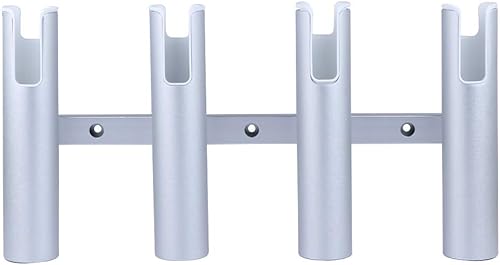
Aluminium Wall-Mounted Fishing Rod Holder for Boat, Garage & Marine - Holds Rods & Poles
Scotty #230 Powerlock Rod Holder with #241 Side/Deck Mount, Adjustable Boat Fishing Rod Holder, Universal Cradle…
Berkley Twist Lock Fishing Rod Rack, Stores 4 Rods, Black, Soft Foam Grip Pads Protect Rod Finishes, Durable…

Amarine Made 4pcs Boat Fishing Rod Holder for Rails 7/8" to 1"

PLUSINNO 1/2/4 Pack Fishing Rod Holders for Boat, Fishing Rod Holder

PLUSINNO 1/2/4 Pack Fishing Rod Holders for Boat, Fishing Rod Holder
BarcoEquipado score: combines the average rating and the number of buyer reviews on Amazon. No brand pays to be featured.
How to choose a rod holder for your boat
A rod holder does three jobs: it frees your hands to drive the boat, it takes the load when a fish hits a trolled lure and it keeps rods organized so they do not roll around the cockpit. The right pick depends on three things: where you will mount it, which rods you carry and how much load it will take.
The criteria that decide it:
- Mounting system: clamp-on (no drilling), flush mount in the gunwale, surface-mount bolted down, or a storage rack.
- Material: 316 stainless for salt water. Reinforced nylon versions are light and do not rust, but handle less load.
- Tube size: for clamp-ons, measure your rail with calipers before you buy.
- Size of the holder: it has to accept the butt of your rods, trolling or spinning, and have a cross pin or retaining strap to keep them in.
- Drainage: on flush mounts it is essential so the gunwale does not fill with water.
Tip: think about the type of fishing first. For trolling or heavy bottom fishing you need the strength of a flush mount. For spinning or light, occasional fishing, a clamp-on is more convenient and moves around as needed.
Types of rod holder: clamp-on, flush mount and rack
Clamp-on for rails and stanchions
They grip a railing tube, with no drilling. They go on in minutes and can be moved around. They are the practical solution for boats with 7/8 or 1 inch rails. The limit is that they depend on how rigid the tube is: for heavy fishing, mind the load on your stanchions and rails.
Flush mount in the gunwale
The strongest option: it goes into a hole cut in the gunwale or cockpit, with a flange and a drain tube. It is used for serious trolling. Available at 0, 15 and 30 degrees.
Surface mount, bolted down
Fixed to the deck or the side with through-bolts. It sits between the clamp-on and the flush mount.
Vertical or overhead racks
For storing rods while you run. They hold several rods in order, usually in a rack under the cabin top or along the arch.
Angle, tube size and which rods fit
This table sums up which type tends to fit each case:
| Use | Recommended type | Angle or key detail |
|---|---|---|
| Trolling | Flush mount in gunwale | 30 degrees aft and outboard |
| Heavy-rod fishing | Heavy-duty 316 flush mount | 15 degrees |
| Spinning or light fishing | Rail clamp-on | 7/8 to 1 inch tube (22 to 25 mm) |
| Storage while running | Multi-tube rack | 0 degrees (horizontal) or vertical |
For tube size on clamp-ons, most adjust between about 3/4 and 1 inch (19 to 26 mm). Measure with calipers, because a 1 inch base will not fit a 7/8 inch tube. Also check the inside diameter of the holder itself: it must take the rod butt without excess play.
If you are still picking gear, see our selection of fishing rods and our fishing boat equipment guide.
Installing without leaks
A flush-mount holder is a hole in your boat. To keep it from becoming a problem:
- Choose the spot: angled aft and outboard, clear of the line and the hull.
- Cut the hole with a hole saw of the exact diameter, without forcing it so the gelcoat does not chip.
- If the gunwale is cored, seal the core with epoxy before mounting.
- Fit the flange with A4 stainless screws and seal with marine polyurethane or butyl. See how with our marine sealants.
- Connect the drain tube to the self-bailing cockpit or an overboard outlet.
- When not in use, cap the holder with its rubber plug.
Warning: a rod holder with no drain and no cap can fill the space below the deck with water. Check it every season.
Care and common mistakes
Rinse rod holders with fresh water after each trip, especially if you fish with bait. 316 stainless holds up well, but regular cleaning prevents stains. Check screws and flange each season, and make sure the drain tube is not clogged.
Mistakes to avoid:
- Buying a clamp-on holder without measuring the tube.
- Choosing a light one for heavy fishing and watching it bend.
- Installing a flush mount with no drain and no sealant.
- Putting all the rods on one side and unbalancing a small boat.
For materials and differences, the comparison of 304 vs 316 stainless helps you decide whether it is worth paying a bit more.
Frequently asked questions
What type of rod holder is best for a boat?
It depends on the structure and the fishing. If you have rails or stanchions, a clamp-on is the most practical because you do not have to drill. For trolling or serious fishing, a flush mount in the gunwale is the strongest. For storage, multi-tube racks.
What tube diameter does a clamp-on rod holder fit?
Most adjust to tubes of roughly 3/4 to 1 inch (19 to 26 mm), which covers the most common 7/8 and 1 inch rails. Measure your tube with calipers before buying and check the range listed for the product.
What angle should a flush-mount rod holder be?
The most common is 30 degrees, suited to trolling and fishing off the side. 15 degrees holds the rod more upright and works better with heavy rods, and 0 degrees is mostly for storage. Aim them aft and outboard so the line does not rub the hull.
Does water get in through a flush-mount rod holder?
Yes, if it has no drained bottom. Good ones have an outlet to connect a tube to the self-bailing cockpit or overboard. The flange should be bedded in marine polyurethane and capped with its plug when not in use.