If you buy through our links, Amazon pays us a small commission at no extra cost to you. That’s how we keep the site running. How we choose.
Contents
Our top 3 picks
Stock checked on October 6, 2026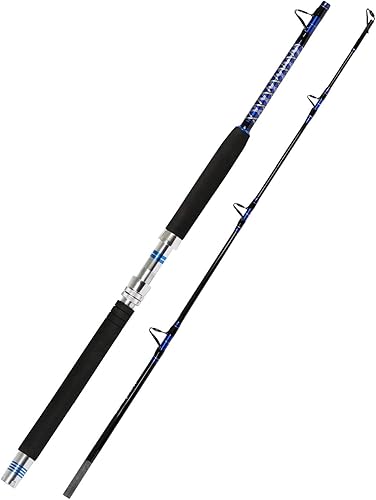

boat fishing rods comparison, in stock
Fiblink 1-Piece/ 2-Piece Saltwater Offshore Trolling Rod Big Game Rod Conventional Boat Fishing Pole

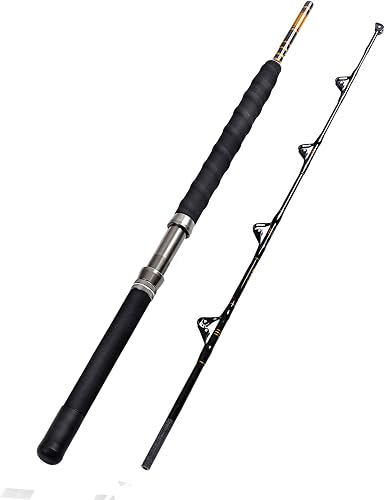
Fiblink Bent Butt Fishing Rod 2-Piece Saltwater Offshore Trolling Rod Big Game Roller Rod Conventional Boat Fishing Pole
Fiblink 1-Piece/2-Piece Saltwater Offshore Heavy Trolling Rod Big Game Roller Rod Conventional Boat Fishing Pole with…
PLUSINNO Fishing Rod and Reel Combos - Carbon Fiber Telescopic Fishing Pole - Spinning Reel 12 +1 Shielded Bearings…

KastKing Spartacus Passage Travel Fishing Rods with Extra Twin-Tip

Jenseits Fishing Rods, Fishing Pole & Reel Combos for Freshwater Fishing

Ugly Stik GX2 Spinning Reel and Fishing Rod Combo

KastKing Spartacus II Plus Twin-Tip Spinning & Casting Fishing Rods
BarcoEquipado score: combines the average rating and the number of buyer reviews on Amazon. No brand pays to be featured.
How to choose a rod for fishing from a boat
Fishing from a boat is a different game than fishing from shore: you don't need to cast 80 yards, but you do need to control a fish in tight quarters, in a chop, and often straight below the boat. That's why boat rods are usually shorter and sturdier than surf or pier rods.
Three specs define any rod, and they're worth reading on the listing before you buy:
- Length: between 6 and 9 ft (1.8-2.7 m) for most boat uses. Shorter gives more leverage and less chance of snagging on a T-top or canopy.
- Action: where the rod bends. Fast action (tip) for feeling light bites and setting the hook; moderate or parabolic to absorb surges and work lures with treble hooks.
- Power and lure/line rating: the lure or sinker weight (in ounces) and line (in pounds test) it's built for. Going past those ratings is the number one cause of broken rods.
Tip: choose the rod for the line and weight you'll actually use. If you're fishing 200 ft down with a 7 oz sinker, a rod rated for 1 oz won't do the job.
Rod types by technique
Spinning and lures
For striped bass, redfish, bluefish or mackerel from a drifting or moving boat. Rods of 7 to 9 ft, fast action, 1/4 to 1-1/2 oz lure rating, paired with a spinning reel.
Jigging
For vertical fishing with metal jigs at 130-500 ft. Short rods (6 to 6.5 ft), powerful and fast-tip, built to work the jig with sharp lifts and drops.
Trolling
Heavy-duty rods of 6 to 8 ft with reinforced guides and a long butt, for conventional reels with a strong drag. They sit in rod holders while the boat moves.
Bottom fishing and bait
Rods of 7 to 10 ft with sensitive tips to detect bites with 3 to 10 oz sinkers. Solid carbon tips transmit what's happening down below more clearly.
Telescopic and travel rods
Handy when space is limited or you fish from an inflatable or a kayak: they store in under 3 ft. They're less precise than a quality two-piece rod, but convenient for occasional trips.
Quick reference by technique
| Technique | Length | Lure/weight rating | Reel |
|---|---|---|---|
| Light spinning | 7-8 ft | 1/8-1 oz | Spinning 2500-4000 |
| Heavy spinning | 8-9 ft | 3/4-2 oz | Spinning 4000-6000 |
| Jigging | 6-6.5 ft | 2-9 oz | Spinning 6000+ or conventional |
| Trolling | 6-8 ft | 20-50 lb line | Conventional |
| Bottom fishing | 7-10 ft | 3-10 oz | Spinning 4000-8000 |
These are common starting points; always check the rating printed by the manufacturer.
Materials and components that matter on saltwater
- Blank (the rod body): graphite is light and sensitive; fiberglass takes knocks better and costs less; composites blend both. For heavy boat use, a quality composite often outlasts a very thin graphite.
- Guides: stainless steel frames with ceramic inserts reduce friction and resist salt. Check that none are loose.
- Reel seat: metal or reinforced graphite beats plastic, with a locking nut that won't back off from vibration.
- Handle: cork feels great but gets dirty; EVA foam holds up better against water, sun and bait.
Maintenance after every trip
Salt is what kills a rod. After each outing, rinse it with fresh water, especially guides, reel seat and joints. Dry it before storing and never leave it wet inside the tube or sleeve.
Apply a light film of ferrule wax or grease on two-piece joints and check the guides by pulling a cotton swab through each one: if it snags, there's a crack that will fray your line.
Watch out: don't step on rods or lean them on the gunwale, and never close a hatch or door with a rod sticking out. Most rods break on the boat, not while fishing.
Common buying mistakes
- Buying a long-casting rod for fishing straight down.
- Going too heavy: a rod that's too stiff doesn't load with light line and loses fish in the fight.
- Ignoring the reel: rod and reel should balance, or your wrist will pay for it.
- Forgetting transport: measure your rod tube and the space you have aboard.
If you're building a full setup, see our guide to gearing up a fishing boat and portable fish finders to locate the fish.
Frequently asked questions
What is the best rod for fishing from a boat?
It depends on the technique. To start, a 7 to 8 ft spinning rod rated for 1/4 to 1-1/2 oz lures is the most versatile: it works for lures, small baits and medium-sized fish.
What rod length is best on a small boat?
Between 6 and 8 ft. Shorter rods are easier to handle in tight spaces, snag less on canopies and give good leverage when fishing straight down.
Can I use a freshwater rod in saltwater?
Occasionally, yes, but salt eats guides and reel seats that aren't built for it. If you fish saltwater regularly, buy a rod with corrosion-resistant components and always rinse it with fresh water.
How many rods should I carry on board?
Two or three are enough to start: a spinning rod for lures, one for bottom fishing or bait, and a trolling rod if that's your thing. More rods mean more rod holders and more storage space.