If you buy through our links, Amazon pays us a small commission at no extra cost to you. That’s how we keep the site running. How we choose.
Contents
Our top 3 picks
Stock checked on October 6, 2026
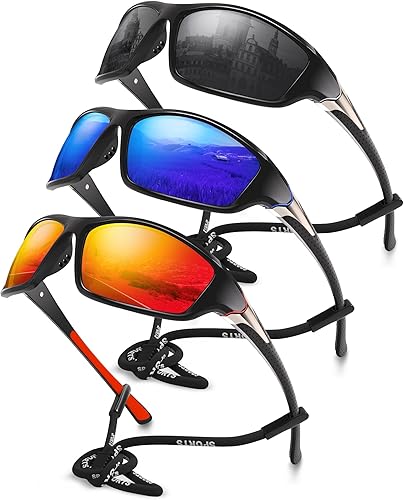
polarized sunglasses comparison, in stock

goodr OG Polarized Sunglasses Women & Men
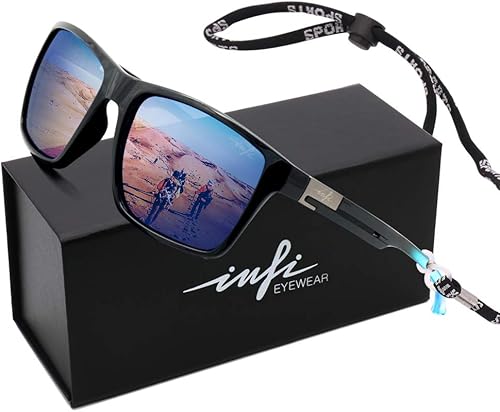
INFI Fishing Polarized Sunglasses for Men Driving Running Golf Sports Glasses Square UV Protection Designer Style Unisex

Fishoholic Polarized Fishing Sunglasses - All Day UV400 Sun Protection
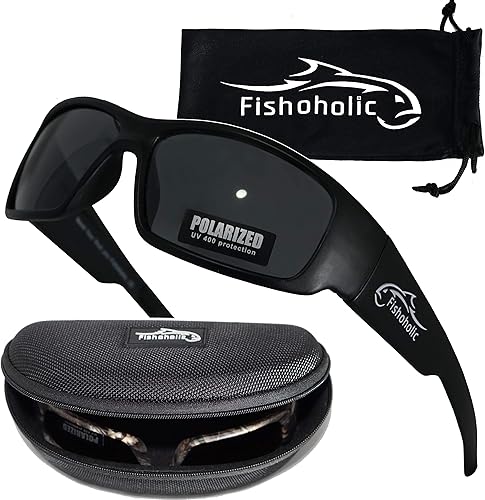
Fishoholic Polarized Fishing Sunglasses - All Day UV400 Sun Protection
Polarized Sports Wrap Around Sunglasses Men Fishing Running Golf

suoso Sports Polarized Sunglasses for Men: Womens UV400 Protection Sun Glasses Wrap Around Goggles for Fishing Driving…

KALIYADI Sports Polarized Sunglasses Men UV400 Protection for Fishing Driving Cycling
KastKing Skidaway Polarized Sport Sunglasses for Men and Women, Wrap Design
BarcoEquipado score: combines the average rating and the number of buyer reviews on Amazon. No brand pays to be featured.
Why polarized on the water
Water acts like a mirror: it reflects sunlight horizontally and produces glare that tires your eyes, reduces contrast and makes it harder to see buoys, bottom contours, shoals or fish. A polarized lens has a filter that blocks that reflected light, so you see what's below the surface and work with less eye fatigue for hours.
Polarization is not the same as UV protection. Make sure the sunglasses state UV400 or 100% UVA/UVB protection, whatever the lens color.
Lens type: glass, polycarbonate or TAC
| Material | Pros | Cons |
|---|---|---|
| Glass | Best optics and scratch resistance | Heavier and can shatter |
| Polycarbonate | Light and very impact resistant | Scratches more easily |
| TAC / triacetate | Good clarity and light | Less impact resistant than polycarbonate |
Aboard a boat, where knocks and spray are common, scratch-resistant polycarbonate is usually the best balance of weight and toughness.
Lens color for each situation
- Brown or amber: boosts contrast, ideal for fishing and for coastal or shallow water where you want to see the bottom.
- Gray: keeps colors true and cuts light evenly. A good choice for open water and bright sun.
- Green: a balance of contrast and neutrality, pleasant in changing light.
- Mirrored (blue, silver): reflect more light and work best in very strong sun or offshore. Look for the mirror coating on the outer surface.
Tip: lenses with a dark or anti-reflective inner coating prevent sun coming from behind from bouncing off the inside of the lens.
Frame, fit and flotation
The most commonly lost item on a boat is sunglasses that drop overboard. So look at:
- Flotation: floating frames (with foam or light materials) can be recovered if they fall. Some include a retainer cord.
- Fit: non-slip rubber on the temples and an adjustable nose bridge, so they don't shift in a rolling boat.
- Side coverage: wraparound frames or side shields block glare coming from the side.
- Hinges: reinforced metal or flex hinges beat simple plastic ones.
Watch out: when operating a boat, make sure the lens doesn't distort the colors of navigation lights and buoys at night. If in doubt, don't wear very dark lenses at dusk or after dark.
Use for fishing and sailing
For fishing, favor brown or amber lenses with strong polarization and a wraparound frame: you'll spot fish, shoals and depth changes more easily. Add a cap with a dark underbrim to cut glare from above. If you also scan for distant objects, pair them with good marine binoculars.
For sailing, a lightweight model on a retainer cord with gray or mirrored lenses performs best. Avoid heavy frames that slide down with sweat.
Care on the water
- Rinse the lenses with fresh water before wiping: dried salt acts like an abrasive.
- Use a clean microfiber cloth, never your T-shirt.
- Store them in a hard case away from direct sun and a hot dashboard.
- Check the screws and temple rubbers from time to time.
Common mistakes
- Assuming any dark lens is polarized: darkening is not polarizing.
- Picking a good-looking but heavy frame that slides with sweat.
- Forgetting a retainer cord or flotation.
- Protecting your eyes but not your feet or skin: see our options for boat shoes to complete your gear.
Frequently asked questions
How can I tell if sunglasses are really polarized?
Look at the reflection on a screen or glossy surface through the lens and rotate the glasses 90 degrees: if the reflection changes in intensity or disappears, they're polarized. The product listing should also say so.
What lens color is best for boating?
For coastal water and fishing, brown or amber for contrast; for open water and bright sun, gray or mirrored. Choose based on your usual light and what you want to see.
Is it worth getting floating sunglasses?
Yes. It's easy to lose a pair leaning over the rail, and a floating frame lets you scoop them out of the water. A retainer cord is cheap extra insurance.
Do polarized sunglasses protect against UV?
Polarization cuts glare, but UV protection is a separate treatment. Look for UV400 or 100% UVA/UVB labeling and, ideally, a sunglasses category rating that suits bright conditions.