If you buy through our links, Amazon pays us a small commission at no extra cost to you. That’s how we keep the site running. How we choose.
Contents
towable tubes comparison, in stock
We don’t currently have verified in-stock products on Amazon.com. Here are all the available options:
BarcoEquipado score: combines the average rating and the number of buyer reviews on Amazon. No brand pays to be featured.
How to choose a towable tube
Towable tubes (donuts, bananas, lounges or «tubes») are among the most popular summer activities behind a boat. To choose well, start with three facts: how many people will ride, their age and weight, and how much horsepower your motor has. A small, simple tube is enough to start; models for 3 to 5 riders or banana-shaped ones need more power and more experience.
Think about space too: even deflated, they take up room, so check that it fits in your boat's locker and that you have an electric or foot-operated inflation pump to fill it without wearing yourself out.
Types of towable tubes
- Donut or round tube: circular, for 1 to 3 riders. Simple, no extreme thrills; the best for first-timers and older kids.
- Banana: elongated, for 3 to 6 riders sitting in a row. More stable in a straight line and more fun in a group.
- Lounge or sofa: with a backrest and handles, ridden sitting or lying down. More comfortable and relaxed.
- Sport deck tube: lets you ride on your stomach or kneeling, with more speed and sharp turns. For teenagers and experienced adults.
- Relaxation or clear-bottom: for easy cruises, with no pretense of speed.
Capacity and horsepower needed
Manufacturers list the number of riders and the total weight limit. Always stay within these limits. A rule of thumb: your boat should have enough power to pull the tube up easily and hold a moderate speed, not to run flat out.
| Tube | Riders | Typical engine power | Towing speed |
|---|---|---|---|
| Donut, 1 rider | 1 | 15-40 hp | 10-15 mph (15-25 km/h) |
| Donut or lounge, 2 riders | 2 | 30-70 hp | 12-18 mph (20-30 km/h) |
| Banana, 3-4 riders | 3-4 | 50-100 hp | 12-18 mph (20-30 km/h) |
| Banana, 5-6 riders | 5-6 | 90-150 hp | 12-18 mph (20-30 km/h) |
Tip: more speed doesn't mean more fun, just more risk. At 12 to 15 mph most tubes already deliver plenty of thrills with far less danger of hard falls.
Materials, tow rope and attachment points
A tube's quality depends on the outer fabric and the seams. Look for thick PVC (0.5 to 0.9 mm) or a reinforced nylon cover, which protects against water and abrasion. The handles should be large, padded and reinforced at the seams: they're the only thing holding the riders on.
- Tow rope: it should be floating, made of polypropylene or similar, with a breaking strength well above the tube's rating. The usual length is 60 to 65 feet (18 to 20 m).
- Attachment point: use a solid stern tow point, never a decorative cleat or a rail. A tow arch helps keep the rope away from the propeller.
- Valves: double-seal safety valves reduce air loss and allow quicker inflation and deflation.
Safety: the most important part
Being towed behind a boat carries a real risk of impacts, drowning and collisions. Two measures do more than any accessory: an experienced driver and a spotter.
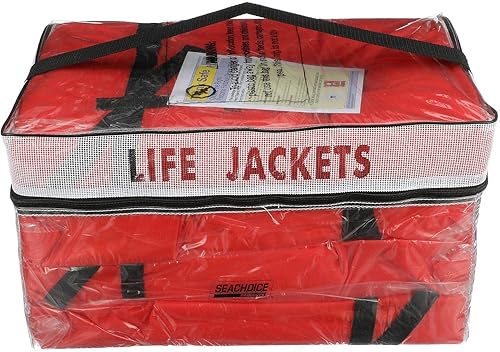
- A USCG-approved life jacket for every rider: a life jacket for adults and a children's life jacket sized to their weight.
- Two people aboard: one drives and the other watches the rider constantly.
- Clear water: away from swimmers, anchorages, rocks, buoys and traffic. Always leave wide margins to the sides and ahead.
- Agreed hand signals: stop, faster, slower and return. Practice them before you go.
- Never tow with the engine in gear while someone is getting in or out of the water.
Watch out: check the rules in your state or country on towing people, minimum age, distance from shore and required equipment. They vary from place to place, and marine patrol or the Coast Guard can issue fines.
Maintenance and common mistakes
Rinse the tube with fresh water after each use, dry it completely before folding and store it somewhere cool. Avoid prolonged direct sun, which weakens PVC, and rubbing against the deck or transom.
The most frequent mistakes: overinflating under the sun, using a short or worn rope, towing more riders than the limit and taking tight turns. For small punctures, the procedure is the same as for a boat: how to repair an inflatable boat.
Frequently asked questions
How much horsepower do I need to tow a tube?
For a 1 or 2-rider donut, 30 to 70 hp is usually enough. For a multi-rider banana you want more power, but always stay within the tube's limits and the recommended speed.
How fast should I tow a tube?
Most are enjoyed between 12 and 18 mph (20 to 30 km/h). Going faster raises the risk of falls and injuries without adding much fun; with kids, stay under 12 mph.
Do I need a license to tow a tube?
It depends on your state or country. Check local rules on towing people, minimum age and safe distances before you go, and always follow the instructions of marine authorities.
What tow rope should I use?
A floating rope of about 60 to 65 feet, with a breaking strength above the tube's rating and no damage or fraying. Replace it if worn: it's a safety item.