If you buy through our links, Amazon pays us a small commission at no extra cost to you. That’s how we keep the site running. How we choose.
Contents
Our top 3 picks
Stock checked on October 6, 2026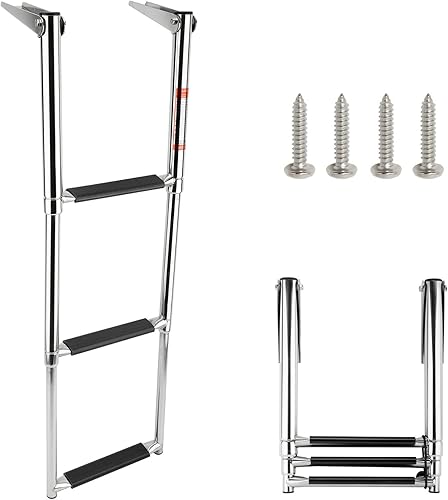


boat swim ladders comparison, in stock
Amarine Made 3 Step Stainless Steel Telescoping Boat Ladder Swim Step

3 Steps Pontoon Boat Ladder, Stainless Steel Folding Telescoping Rear Entry Inboard Ladder Heavy Duty Custom Swim Deck…
4 Step Boat Ladder, Stainless Steel Telescopic 4 Step Pontoon Boat Ladder, Extendable Dock Ladder for a Pontoon, Max.…

3 Step Boat Ladder, 304 Stainless Steel Telescoping Folding Pontoon Boat Ladder Dock Swim Ladder for Marine Boat Yacht
2 Step Boat Ladder Stainless Steel Telescoping 2 Step Pontoon Boat Ladder Folding Ladder Dock Swim Ladder for Marine…

Amarine Made 4 Step Stainless Steel Telescoping Boat Ladder Swim Step

Amarine Made Boat Ladder 4 Steps Removable Premium Stainless Folding Rear Entry Pontoon Boat Ladder w/Extra Wide Step

4 Step Pontoon Boat Ladder, 316 Stainless Steel Folding Telescoping Ladder Rear Entry Inboard Ladders All Welded…
BarcoEquipado score: combines the average rating and the number of buyer reviews on Amazon. No brand pays to be featured.
How to choose a boat swim ladder
A swim ladder looks like a minor accessory until the day you try to climb aboard from the water, with a high platform, the boat moving and no solid step under your feet. It is also the main reboarding route if someone falls overboard, so this is about safety as much as comfort.
Before you buy, check these points:
- Enough steps: when deployed, at least two steps should be below the waterline so you can put your foot on one without hauling yourself up with your arms.
- Deploys from the water: you should be able to release it from the water, unassisted. A ladder that only unfolds from the deck loses most of its purpose.
- Material: 316 stainless for boats that live in salt water. Steps should have a non-slip surface.
- Step width and shape: wide, rounded steps are easier on bare feet and when you are wet and tired.
- Weight rating: check the manufacturer's number and leave a margin. Wet, and with the boat moving, the load is higher than the static weight.
Tip: test the ladder from the water, with the boat at the dock or at anchor, before the season. If you cannot release it and climb out on your own, it does not work as a reboarding device.
Types of swim ladder: telescoping, folding and hook-on
Telescoping
Collapses into itself and stows compactly under the platform. The most common choice on powerboats and sailboats with a swim platform. Usually 3 or 4 steps, held by a bolted base.
Folding
Folds in sections and is usually stiffer, with wider steps. It takes up a bit more room but feels more solid when climbing.
Hook-on or rope
For inflatable boats and dinghies: a narrow ladder of 2 or 3 steps that hangs from the tube or transom, or a rope ladder with rigid steps. No drilling, light, and it fits in any bag.
With platform or wide top step
On very low platforms, or for anyone with limited mobility, an extra wide step at the top helps with the first move.
Steps, length and material
The number of steps depends on how high the platform sits above the water, and whether you have one:
| Situation | Typical number of steps |
|---|---|
| Platform 8 to 12 in (20 to 30 cm) above the water | 3 or 4 |
| Transom with no platform | 4 or 5 |
| High platform on a yacht or catamaran | 4 or 5, sometimes more |
| Inflatable or dinghy | 2 or 3 (hook-on) |
For material, 316 stainless steel resists pitting corrosion much better than 304, which matters on a fitting that lives half submerged and dries in the sun. 304 ladders are fine if you rinse them with fresh water after each outing and inspect them now and then. The full comparison is in our guide to 304 vs 316 stainless.
Plastic or reinforced nylon steps weigh less and do not get hot in the sun, but check the fastenings: that is where they usually fail.
Installing on the swim platform
A badly mounted ladder is a hazard and a leak path. The right installation goes like this:
- Hold the ladder in place to check that it deploys without touching the hull or the outboard's lower unit, and that it is within reach from the water.
- Mark the holes and drill with the right bit, without forcing it so the gelcoat does not chip.
- Bolt through with A4 stainless bolts, a nylon-insert locknut and a backing plate or oversize washers underneath.
- Seal each hole with marine polyurethane or butyl tape before tightening.
- Load-test the ladder with your own weight, deployed, and watch for movement at the base.
Warning: never screw the base into fiberglass alone with sheet-metal screws. If the platform is cored, seal the core with epoxy before bedding the fastener.
Care and common mistakes
Rinse the ladder with fresh water after each outing and dry the hinges. A drop of marine lubricant on the pivots stops them seizing, and if rust stains show up on stainless, a good stainless steel cleaner removes them without harming the passive layer.
Mistakes to avoid:
- Buying a ladder with too few steps and having nothing to stand on under the water.
- Picking a model that does not deploy from the water.
- Leaving the base holes unsealed so water gets into the platform.
- Not rechecking the bolts after the first season: use loosens fastenings.
Remember that a ladder does not replace the rest of your safety gear: a life ring within reach and life jackets worn on deck come first when someone goes in the water.
Frequently asked questions
How many steps should a boat swim ladder have?
Enough that, once deployed, at least two steps sit below the waterline. With a platform 8 to 12 inches above the water, 3 or 4 steps are usually enough; on a transom without a platform, 4 or 5 is normal.
Telescoping or folding swim ladder?
A telescoping ladder collapses into itself and stows compactly under the platform, which is why it is the most common. A folding ladder is usually stiffer with wider steps, but takes more room. Inflatable boats use hook-on or rope ladders that come off after the swim.
316 or 304 stainless steel ladder?
For salt water, 316: it contains molybdenum and resists pitting and salt staining much better. 304 ladders cost less and work if you rinse them with fresh water and inspect them, but they stain sooner.
How do you install a swim ladder on the platform?
Bolt it through with A4 stainless bolts, a locknut and a backing plate or oversize washers beneath, and seal every hole with marine polyurethane or butyl. First hold the ladder in place to check that it deploys clear of the hull and stays within reach from the water.