If you buy through our links, Amazon pays us a small commission at no extra cost to you. That’s how we keep the site running. How we choose.
Contents
Our top 3 picks
Stock checked on October 6, 2026
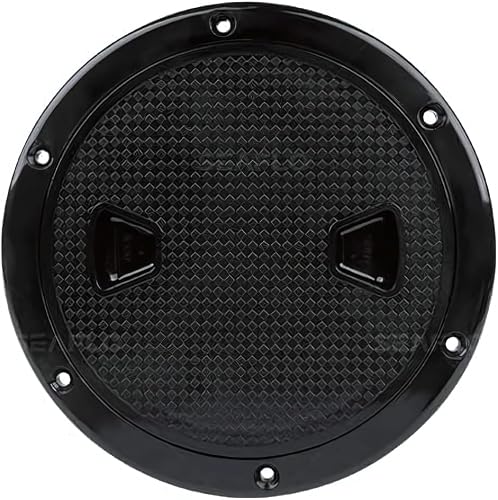

boat deck plates and portlights comparison, in stock
Smartmarine Boat Hatch White 4" 6" 8" Round Non Slip Inspection Hatch w/Detachable Cover for Marine Boat Yacht (8 inch)
Smartmarine Boat Hatch White 4"6"8" Round Non Slip Inspection Hatch w/Detachable Cover for Marine Boat Yacht (4 inch)
SEAFLO Marine Circular Non-Slip Screw Out Deck Plate Inspection Access Hatch 4"/6"/8" White/Black/Tan
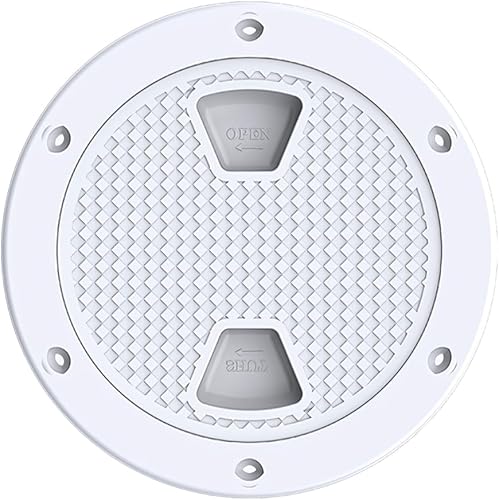
SEAFLO 4" - 8" White Circular Non Slip Inspection Hatch w/Detachable Cover
SEAFLO 4" - 8" White Circular Non Slip Inspection Hatch w/Detachable Cover

Hoffen Boat Hatch, 4" 6" 8" Round Non Slip Inspection Hatch w/Detachable Cover for Marine Boat Yacht

Smartmarine Boat Hatch Black 4" 6" 8" Round Non Slip Inspection Hatch w/Detachable Cover for Marine Boat Yacht
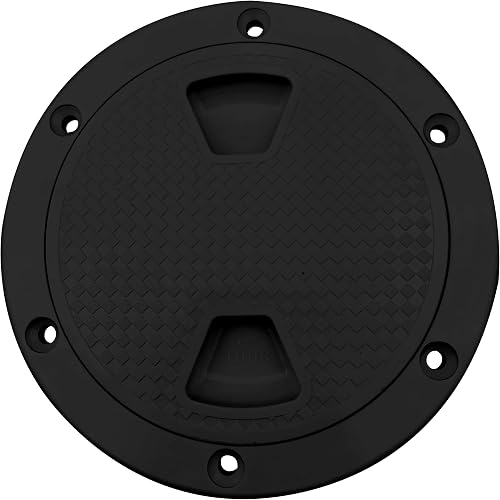
6 Inch Round Inspection Deck Plate Hatch with Detachable Cover, Black
BarcoEquipado score: combines the average rating and the number of buyer reviews on Amazon. No brand pays to be featured.
What each opening is for
Deck plates, inspection hatches and portlights let you reach a bilge, check a tank, run a cable or bring light and air into the cabin. Before buying, decide what you need to do through the opening: get a hand in, remove an object, or simply look.
| Type | Typical use | Watertightness |
|---|---|---|
| Screw-out deck plate (4-8 in) | Bilges, seats, consoles, tanks, kayaks | High, with O-ring |
| Rectangular inspection hatch | Cockpit sole, storage boxes, stern lockers | Good with gasket; check in areas that flood |
| Opening portlight | Cabin sides | High if the gaskets are sound |
| Fixed portlight | Light without ventilation | Very high |
| Deck hatch | Ventilation and emergency exit | High; needs quality hardware and latches |
The models above change with stock, so always check the cutout size and material in the listing.
Sizes: clear opening versus cutout diameter
On round deck plates, the nominal size (4, 5, 6 or 8 in) roughly refers to the clear opening. The hole you have to cut is larger, and the outside diameter of the flange larger still. Before cutting:
- Check the cutout diameter in the listing and make sure the flange sits on a flat surface.
- Make sure there is room underneath for the threaded body or the bucket.
- Remember that 4 in lets a hand through; to pull out a bilge pump or a filter, go for 6 or 8 in.
Materials
- ABS or UV-stabilized engineering plastic: most deck plates and inspection hatches. Light and corrosion-free; outdoors, white stays cooler.
- Tempered glass: in portlights, more scratch-resistant than acrylic.
- Acrylic (Plexiglas type): light and easy to form, but scratches and crazes with certain solvents and sealants.
- 316 stainless or anodized aluminum frames: on quality portlights and hatches. With stainless, insist on 316 (304 vs 316 stainless).
Installation step by step
- Mark the outline with the manufacturer's template and check both sides for wires, hoses and stiffeners.
- Cut with a jigsaw or hole saw of the exact size, holding the fiberglass firmly so the gelcoat doesn't chip.
- On a cored laminate, seal the exposed edge with epoxy so the core can't absorb water.
- Clean and degrease the surface and run butyl or marine polyurethane all around the flange (marine sealants).
- Tighten the screws in a crisscross pattern and in two stages, waiting a few minutes between them so the sealant spreads evenly.
- Wipe off the squeeze-out before it cures and hose-test the installation before calling it done.
Warning: on acrylic portlights don't use sealants that attack it, and follow the manufacturer's instructions. Overtightening also crazes the plastic.
Maintenance and common mistakes
Gaskets are the first thing to degrade. Check them every season, clean them with fresh water and replace them when they lose elasticity or take a set. A film of silicone grease on the O-ring of screw-out plates stops it sticking or twisting. Never tighten the cover with a tool; hand-tight is enough.
- Cutting the hole without checking what is behind it.
- Buying a plate smaller than you need and being unable to pull the pump.
- Installing without sealant, or with one that isn't compatible with the plastic.
- Fitting in areas that flood often without a gasketed, latching hatch.
- Forgetting that an opening portlight must be closed before you get underway.
Tip: if the boat is poorly ventilated, an opening portlight with a screen plus a 12V fan solves most humidity problems at anchor.
Frequently asked questions
What is a deck plate for on a boat?
It gives access to enclosed areas without taking anything apart: bilges, the inside of seats and consoles, tanks, cable runs or stern lockers. It also lets you ventilate and check for water or moisture in sealed compartments.
What size deck plate should I choose?
Common sizes are 4, 5, 6 and 8 in. Four or 5 in lets you get a hand in to inspect; to pull out a bilge pump, choose 6 or 8 in. Check the manufacturer's cutout diameter, which is larger than the clear opening.
What is the difference between a portlight and a porthole?
In everyday use they are nearly interchangeable. Portlight usually means the opening window on a cabin side, while porthole suggests the round window, fixed or opening. What matters is whether it opens, the material (tempered glass or acrylic) and the frame.
Are deck plates waterproof?
Screw-out plates with an O-ring resist spray and deck water, but they are not meant to sit underwater continuously. Hatches with a removable lid are normally watertight against rain and spray; in areas that flood, choose gasketed models with a latch.