If you buy through our links, Amazon pays us a small commission at no extra cost to you. That’s how we keep the site running. How we choose.
Contents
Our top 3 picks
Stock checked on October 6, 2026

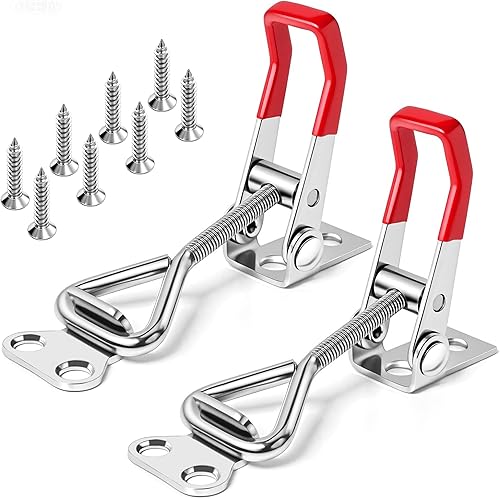
boat hinges and latches comparison, in stock
316 Stainless Steel Boat Hinges, Square Hinge 2 x 2 in, 2 Pack

Marine 316 Stainless Steel Anti-Rattle Lockable Hatch,Hold Down Clamp Latch,Marine Hatch Locker (2 PCS)

316 Stainless Steel Hinges Marine Grade 3" x 1.5" Heavy Duty Boat Hatch Hinge (76 mm X 38 mm) 4 Pack Casting Cabinet…

SHENGHUISS Stainless Steel Boat Hatch Hinge - Heavy Duty 3 Inch 2 Pack with Screws for Doors/Windows/RVs
Thorn Boat Cam Latch Stainless Steel Marine Hatch Pull with Back Plate
2 Pack Toggle Latch Clamp 4001 Adjustable 304 Stainless Steel Toggle Hasp Latches for Smoker Lid Jig Freezer Door…

Marine Grade 304 Stainless Steel Piano Hinge, 16.5"X2" Continuous Boat Hinge, 0.06'' Thickness Heavy Duty Polished…

Marine Grade 304 Stainless Steel Piano Hinge, 16.5"X2" Continuous Boat Hinge, 0.06'' Thickness Heavy Duty Polished…
BarcoEquipado score: combines the average rating and the number of buyer reviews on Amazon. No brand pays to be featured.
How to choose hinges and latches for your boat
This is the least glamorous hardware aboard, but you notice it the moment it fails: lockers that won't stay shut, seat lids that bang with every wave, latches seized by salt, or hinges streaked with rust after a few months. Three criteria cover most of the decision.
- Material: 316 (A4) stainless on deck, in the cockpit and anywhere that sees spray. Type 304 holds up in a dry cabin but tea-stains quickly outside. For the difference, see 304 vs 316 stainless.
- Load: a cabinet door is one thing; a cockpit seat that people sit on is another. More weight means more bearing surface and thicker plate or cast metal.
- Function: the hinge carries the lid, the latch holds it in place while the boat moves. You often need both.
The models shown above change with stock, so check the size and material in the listing rather than relying on the photo.
Hinge types and where to use them
| Type | Typical use | Advantage |
|---|---|---|
| Small flat (1.5 x 1.5 in) | Cabinet doors, light lids | Neat and inexpensive |
| Rectangular (about 1.5 x 3 in) | Console doors, mid-size hatches | More bearing surface |
| Strap hinge | Cockpit seats and hatches | Spreads the load along the lid |
| T-hinge | Large lids and heavy doors | Very strong with a long leaf |
| Cast hinge with stop | Deck hatches | Rugged, with a limited opening angle |
| Piano (continuous) | Long lids on storage boxes | No weak points, but needs good sealing |
Getting the size right
- Lid length: beyond about 2 ft (60 cm), use three hinges or a long strap hinge.
- Lid thickness: the screw must not break through. On 5/8 to 3/4 in panels, short self-tapping screws; on thin panels, through-bolts with acorn nuts.
- Clearance: leave room for the rubber gasket if the hatch has one.
Latches, slam latches and pulls
An anti-rattle latch holds the lid pressed against its frame with a spring or cam so it doesn't bang when you run in a chop. It's close to essential on cockpit hatches of powerboats. A slam latch closes by itself when you drop the lid and opens with a pull, which is very handy on floor hatches. For access from outside, flush pulls or recessed ring pulls sit level and don't catch lines or toes.
Tip: on lids you open often, choose latches you can work with one hand. When the boat is heeled over you'll be glad not to need a tool.
If the latch has to keep people out, look for keyed models. Keep in mind that a lock doesn't replace a solid lid mounting: the weak link is usually the fiberglass the hardware is screwed into.
Installing hinges and latches so they last
- Mark the holes with the hinge in place and check the lid closes without strain before drilling.
- If the laminate core is exposed, seal the hole with epoxy or a little marine sealant so water can't get in.
- Use A4 fasteners of the right length. On thin panels, use through-bolts with wide washers and acorn nuts (stainless fasteners guide).
- Run a thin bead of butyl or polyurethane under the base, especially on horizontal surfaces where water collects.
- Tighten gradually and wipe off the squeeze-out before it cures.
Warning: don't mix plain steel screws with stainless parts. Galvanic corrosion damages the laminate and leaves rust streaks on the gelcoat.
Maintenance and common mistakes
A stainless hinge seizes (galling) when pin and barrel rub dry against crystallized salt. It takes little effort to prevent: rinse with fresh water after a trip, apply a marine lubricant or PTFE grease now and then, and cycle the lid occasionally so salt doesn't weld it shut.
Mistakes we see over and over:
- Installing 304 hinges outside and wondering about the stains.
- Using a small hinge on a lid people sit on.
- Skipping the anti-rattle latch and letting the lid pound itself to pieces.
- Using sheet-metal screws in an unreinforced panel that eventually pulls out.
- Not sealing deck holes, which lets water into the laminate.
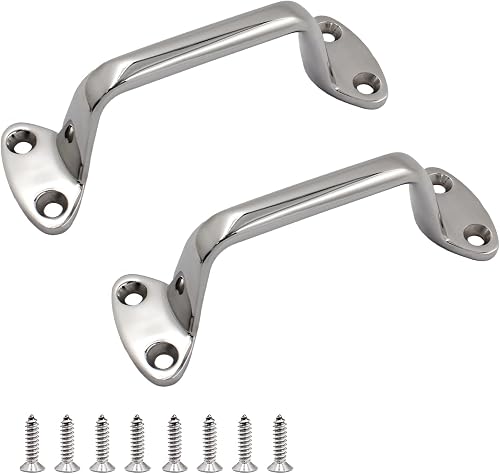
For other small deck hardware, see our boat grab handles and handrails and the deck hardware section.
Frequently asked questions
What hinges should I use on boat hatches?
Use 316 stainless hinges, cast or heavy-gauge, with a stainless pin. Small 1.5 x 1.5 in hinges are fine for light lids. For cockpit seats or any lid that carries weight, choose strap or T-hinges that spread the load over more surface.
Why do stainless hinges seize up?
Pin and barrel are both stainless and rub dry against crystallized salt until they lock. Rinsing with fresh water, lubricating now and then with a marine product, and choosing 316 prevents most cases.
What is an anti-rattle latch?
A latch that keeps the lid pressed against its frame with a spring or cam so it doesn't bang when you run in a chop. It's the usual choice for cockpit hatches and console compartments.
What kind of pull should I fit on a floor hatch?
A recessed or ring pull that sits flush, so you won't trip on it and it won't snag lines. Flush pulls with a built-in latch also keep the hatch shut as the boat moves.