If you buy through our links, Amazon pays us a small commission at no extra cost to you. That’s how we keep the site running. How we choose.
Contents
Our top 3 picks
Stock checked on October 6, 2026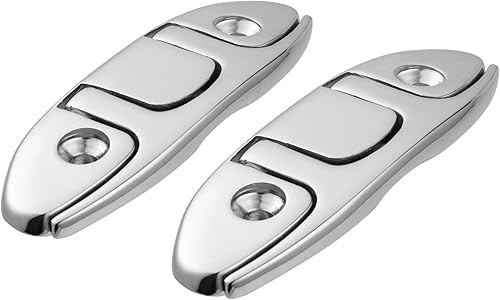

stainless steel boat cleats comparison, in stock
Boat Folding Cleat 4-1/2" 316 Stainless Steel Marine Flip Up Dock Cleat
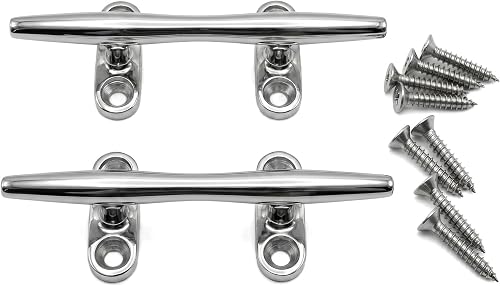
MIZUGIWA Boat Cleats 316 Stainless Steel,4 inch 5 inch 6 inch 8 inch Marine Dock Cleat Open Base with Fasteners for…
MIZUGIWA Boat Cleats 316 Stainless Steel,4 inch 5 inch 6 inch 8 inch Marine Dock Cleat Open Base with Fasteners for…
MIZUGIWA Boat Cleats 316 Stainless Steel,4 inch 5 inch 6 inch 8 inch Marine Dock Cleat Open Base with Fasteners for…
ZOMCHAIN Boat Cleat Open Base Boat Cleat 4/5/6/8 inch, Dock Cleat All 316 Stainless Steel Boat Mooring Accessories…

ZOMCHAIN Boat Cleat Open Base Boat Cleat 4/5/6/8 inch, Dock Cleat All 316 Stainless Steel Boat Mooring Accessories…

ZOMCHAIN Boat Cleat Open Base Boat Cleat 4/5/6/8 inch, Dock Cleat All 316 Stainless Steel Boat Mooring Accessories…

ZOMCHAIN Boat Cleat Open Base Boat Cleat 4/5/6/8 inch, Dock Cleat All 316 Stainless Steel Boat Mooring Accessories…
BarcoEquipado score: combines the average rating and the number of buyer reviews on Amazon. No brand pays to be featured.
How to choose a cleat for your boat
A cleat holds your dock lines for months, takes the jerk of every blow in the marina and endures constant chafe. That is why you do not buy hardware like this by eye: what matters is the material, the size against the line and, above all, how it is mounted. A beautiful cleat fixed poorly will rip out just like a cheap one.
What to look at:
- Material: 316 stainless for boats that live in salt water. Budget 304 stains sooner and can pit, especially at the base. We explain the difference in 304 vs 316 stainless.
- Size: the classic rule is that the cleat should be about 1 inch long for every 1/16 inch of line diameter, roughly 16 times the diameter. A small cleat cannot hold the turns you need.
- Base and holes: wide bases spread the load better. Check hole spacing and bolt size (1/4 to 3/8 inch depending on the cleat).
- Finish: mirror polished or satin. Polished is easier to keep clean; both work.
- Rounded horns: sharp edges chafe the line quickly.
Tip: size the cleat for the thickest line you expect to use, not the one you use today. If you move up in line diameter later, you will not have to change the hardware.
Types of cleat: fixed, open-base and pop-up
Classic fixed cleat
The traditional style: two horns and a base with two or four holes. Strongest and simplest, and best at standing up to continuous mooring loads.
Open-base
The base is hollowed out, so you can see the line passing under it, and it saves weight. It demands good material and good installation.
Pop-up (folding)
Folds flat to the deck when not in use. It avoids stubbed toes and snagged lines or clothes, which is why it is common on bows and gunwales of modern powerboats. Strength depends on the pivot pin and the mounting, so choose 316 stainless models and fit them with a backing plate.
Nylon or aluminum
Handy for thin lines, kayaks, fender lines or light halyards. Not for primary mooring in wind.
Size by line and number by boat length
This table is a guide, based on the one-inch-per-sixteenth rule:
| Line diameter | Cleat length | Typical boat length |
|---|---|---|
| 5/16 in (8 mm) | about 5 in (130 mm) | 16 to 23 ft |
| 3/8 in (10 mm) | about 6 in (160 mm) | 23 to 30 ft |
| 1/2 in (12 mm) | about 8 in (200 mm) | 30 to 36 ft |
| 9/16 in (14 mm) | about 9 in (230 mm) | 36 to 43 ft |
| 5/8 in (16 mm) | about 10 in (250 mm) | 43 to 52 ft |
For how many, you need at least one at the bow and two at the stern (one on each side), plus two spring cleats amidships from about 24 to 26 feet. When docking stern-to, the stern cleats carry the whole pull of the boat against the dock, so reinforce them. Then pick dock lines with the diameter that matches the cleat.
Installing it so it does not pull out
A cleat is only as strong as its fastening. The rules:
- Always use A4 stainless through-bolts, never sheet-metal screws.
- Underneath, fit a backing plate in stainless, aluminum or treated wood, or at least wide DIN 9021 washers.
- Use nylon-insert locknuts. More detail in our stainless fasteners guide.
- Seal each hole with polyurethane marine sealant or butyl, without overdoing it so it does not squeeze out.
- On cored (sandwich) decks, seal the core with epoxy before mounting.
- Angle the cleat about 10 to 15 degrees off the line of the rope coming from the chock.
Warning: cleats are not towing or lifting points. If you plan to tow or take extraordinary loads, you need hardware sized for that, not a standard cleat.
Care and common mistakes
Rinse cleats with fresh water now and then and clean them with a stainless-specific product if stains appear. Check the nuts after the first season, because use loosens the fastenings, and look for water around the base.
The mistakes we see most:
- A cleat too small for the line, which cannot hold the turns.
- Short bolts or no backing plate.
- Sharp edges that chafe the line.
- Choosing a pop-up without checking the pivot pin and its lock.
When you secure the line, use the right hitch. In our basic boating knots guide you will find the cleat hitch step by step.
Frequently asked questions
What size boat cleat do I need for my line?
The classic rule is about 1 inch of cleat for every 1/16 inch of line diameter. For 3/8 inch line, a 6 inch cleat; for 1/2 inch, 8 inches; for 9/16 to 5/8 inch, 9 to 10 inches. A cleat that is too small cannot hold the turns you need.
How many cleats does a boat need?
At least one at the bow and two at the stern (one per side), plus two spring cleats amidships from around 24 to 26 feet. When docking stern-to, reinforce the stern cleats because they take the full pull.
Stainless steel or nylon cleats?
For primary mooring, 316 stainless: stronger, does not break down in the sun and handles chafe better. Nylon or aluminum cleats work for thin lines, kayaks or fender lines, but not for tying up a boat in wind.
How do you install a cleat so it does not pull out?
Use A4 stainless through-bolts, locknuts and a backing plate or wide washers underneath, sealing each hole with marine polyurethane or butyl. On cored decks, seal the core with epoxy. Never use sheet-metal screws.