If you buy through our links, Amazon pays us a small commission at no extra cost to you. That’s how we keep the site running. How we choose.
Contents
outboard motor tools comparison, in stock

Shoreline Marine Motor Flusher


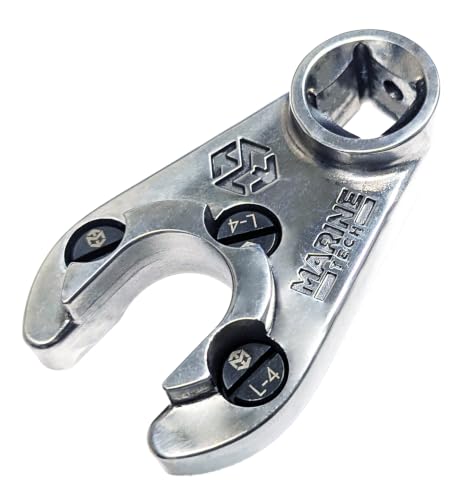


Sea Dog 531112 Prop Wrench , 1-1/16"

The basic outboard maintenance kit
A small or mid-size outboard allows nearly all routine maintenance with a handful of tools. What matters is that they fit your engine: plug size, prop nut size and lubrication points vary by brand and horsepower.
| Tool | What it does | When you use it |
|---|---|---|
| Spark plug socket | Removes and installs plugs without damaging the threads | Annual service or hard starting |
| Plug gap gauge | Sets the electrode gap | When changing plugs |
| Spark tester | Checks for spark without pulling the wire | Engine will not start |
| Prop wrench or holder | Holds the prop while loosening the nut | Prop changes and shaft inspection |
| Grease gun and marine grease | Lubricates the prop shaft and grease points | Each season or after a set number of hours |
| Flushing muffs (ear muffs) | Rinse the cooling circuit with fresh water | After each day in salt water |
| Oil filter wrench and drain tools | Change the oil filter and lower unit oil | Annual service |
Add a headlamp, rags, nitrile gloves and a dry bag to keep everything together. To round out your general kit, see our boat tool kits.
How to choose each tool
Spark plug socket
Check your plug size (usually 5/8 in, 13/16 in or 21 mm, depending on engine) and whether you need a socket with an inner rubber insert to hold the ceramic. On a small engine, an articulated wrench avoids forcing the plug at an angle.
Prop wrench
It must fit your engine's prop nut and, on many models, pairs with a wood block to lock the prop. Plastic or light aluminum wrenches work for occasional use; for frequent maintenance a steel one is better.
Flushing muffs
They connect to a hose and cover the cooling water intake on the lower unit. Make sure the cup size fits your engine. This is the tool that does the most for pump and cooling circuit life when you boat in salt water.
Grease gun
A small grease gun lets you lubricate without mess. Use water-resistant marine grease that is compatible with your engine maker's recommendation.
Tip: keep a spark plug socket, a spare plug, a prop wrench and a spare cotter pin in a dry bag. They solve most on-the-water failures.
Step-by-step use and care
- Disconnect the spark plug lead and the kill switch lanyard before touching the prop.
- Lock the prop with a wood block or the wrench and loosen the nut.
- Inspect the shaft: if there is fishing line or rope wrapped around it, remove it and check the seal.
- Clean, grease and refit the prop and cotter pin.
- Replace the plugs if fouled or worn, setting the gap as the manual states.
- At the end of a day on salt water, flush the circuit through the muffs for a few minutes.
For the complete service plan, read our guide to outboard motor maintenance and, if it will not start, why an outboard will not start.
Warning: never work on the prop with the key in or the plug lead connected. An accidental turn can cause serious injury.
Common mistakes
- Using nearly-right tool sizes: they round off nuts and plugs.
- Tightening plugs by feel; use a torque wrench or follow the manual.
- Skipping a fresh water flush after salt water use.
- Using general-purpose grease on the prop shaft instead of marine grease.
- Forgetting a spare cotter pin for the prop.
Frequently asked questions
What tools do I need to maintain an outboard motor?
A spark plug socket with a gap gauge, a spark tester, a prop wrench, a grease gun with marine grease and flushing muffs. That covers plug changes, prop changes and rinsing the cooling circuit.
What are flushing muffs used for?
They connect to a garden hose and the lower unit to run fresh water through the cooling system. They remove salt and deposits after saltwater use and extend the life of the pump and passages.
What spark plug socket does my outboard need?
It depends on the engine; common sizes are 5/8 in, 13/16 in and 21 mm. Check the plug type in your manual and choose a suitable socket, preferably with an inner rubber insert to hold the ceramic.
How often should outboard parts be greased?
Follow the engine manufacturer's manual. In general, the prop shaft and grease fittings are serviced at the start of each season and after a set number of running hours, using water-resistant marine grease.
 iPhone and Android app Marine Tools: everything a skipper works out on board Anchor alarm, GPS, wind and wave forecast, animated knots and 45 marine calculators. Free download · no sign-up · works offline App Store
You may also like
- ComparisonGas outboard motorsFor an inflatable, a dinghy or a fishing skiff, the goal is not the most horsepower but the right power, the right shaft length and a motor you can maintain yourself. These are the criteria that matter before you buy.
 ComparisonOutboard propellersThe right prop improves acceleration, fuel economy and top speed without touching the engine. Here is how to read the numbers, which material suits you and how to confirm it fits your shaft before you order.
 ComparisonOutboard motor oilThe right oil depends on whether your outboard is a 2-stroke or a 4-stroke, and the lower unit takes a different oil altogether. Here is which specification to look for, what viscosity to use and how to avoid costly mistakes.
 ComparisonWater pump impellersThe impeller is the most worn part of your cooling system and the one that ruins the most engines when it fails. Here is how to identify yours, how often to replace it and what to check before you buy.
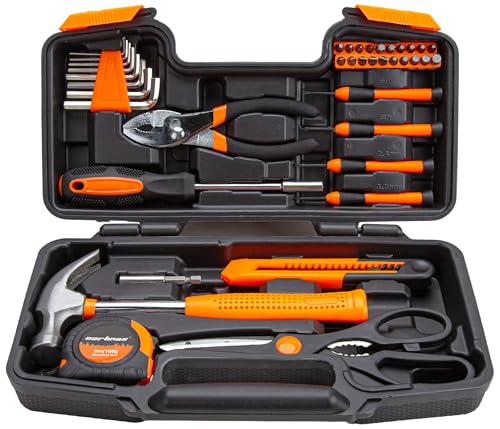 ComparisonBoat tool kitsA good onboard kit is compact, protected against corrosion, and covers what actually fails offshore: fasteners, wiring, hoses and the engine. Here is how to choose without paying for tools you will never touch.
- GuideOutboard Won't Start: Causes and Fixes, Step by StepOutboard motor won't start? Follow the mechanic's diagnostic order, with a symptom, cause and fix table and the spares to keep aboard.
- GuideOutboard Motor Maintenance: Schedule and Steps (2026)Outboard motor maintenance step by step: flushing, lower unit oil, spark plugs, impeller and anodes, with an interval schedule you can follow yourself.
- GuideEssential Boat Tools to Carry Aboard: What to PackWhich tools to carry aboard for your boat: basic kit, electrical kit, emergency repairs, spares and how to keep corrosion from destroying your tools.