If you buy through our links, Amazon pays us a small commission at no extra cost to you. That’s how we keep the site running. How we choose.
Contents
Our top 3 picks
Stock checked on October 6, 2026

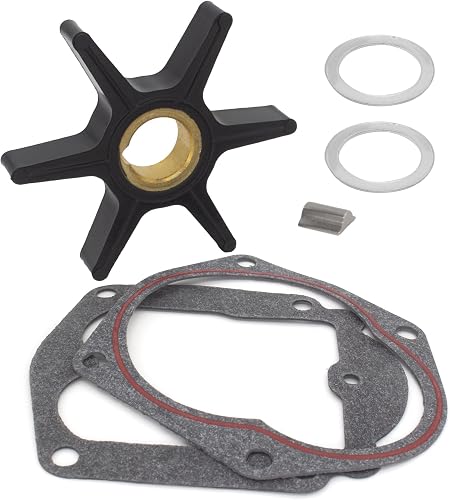
water pump impellers comparison, in stock
Sierra 18-3214 Impeller Repair Kit for Chrysler/Force, Honda, MerCruiser/Mariner/Mercury Marine Engines, Non-Retail…
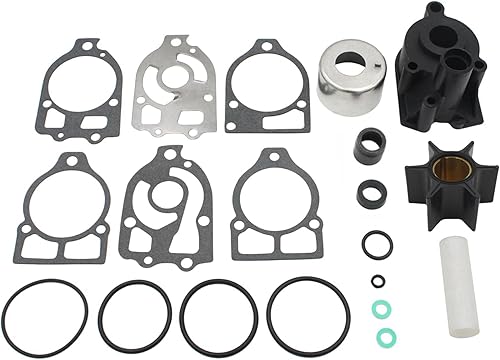
96148A8 Water Pump Impeller Kit Compatible with MerCruiser alpha one gen 1 Stern Drives 46-96148A8 96148Q8
8508910 Outboard Water Pump Impeller Kit for Mercury Marine Force 25-50 HP
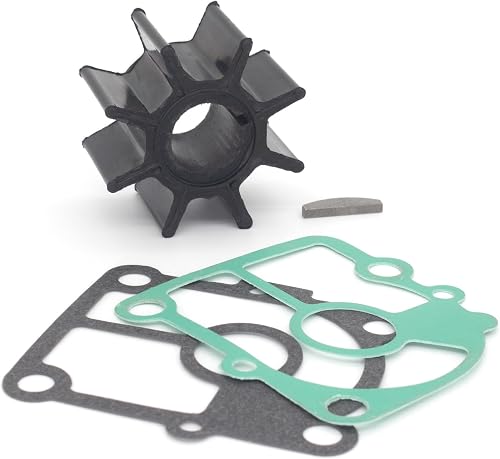
803748 Outboard Water Pump Impeller Kit for Mercury & Tohatsu 8-20 HP Motor

393630 Outboard Water Pump Impeller Kit for Evinrude Johnson 20-35 HP Motor
984461 Water Pump Impeller Kit for OMC Cobra 1986-1993 SternDrives

43026Q06 Water Pump Impeller Kit for MerCruiser Alpha 1 Gen 2 Sterndrives Replacement 47-43026Q06 8M0100526

394711 Water Pump Impeller Kit for Johnson Evinrude 8-15HP Outboard with Housing 1974-UP 18-3327
BarcoEquipado score: combines the average rating and the number of buyer reviews on Amazon. No brand pays to be featured.
What the impeller does and why it fails
The impeller is a rubber wheel with flexible vanes that spins inside the water pump housing and pushes raw water through the engine. It works by rubbing against the housing, and that same friction is what wears it out.
When an impeller loses vanes or cracks, flow drops, the engine runs hot and, in the worst case, loses cooling altogether. A warped cylinder head costs far more than any impeller kit, which is why this is the cheapest and best-value spare you can carry.
Common causes of failure
- Running dry: starting the engine out of the water, or with a blocked intake, can burn an impeller in seconds.
- Age: rubber hardens and loses its spring even when the engine hardly runs. A new impeller left sitting in a pump for two years ages too.
- Sand, weed and debris: they score the housing and chew the vanes.
- Heat: a stuck thermostat or a clogged water passage speeds up damage.
Choosing the right part number
There is no universal size. The correct impeller depends on the make, model and horsepower of your engine. To get it right:
- Find the exact make, model and year of your engine (engine plate or owner's manual).
- Look up the manufacturer's (OEM) part number for the impeller or the complete water pump kit.
- Match that number against the product listing or the cross-reference chart from the aftermarket brand.
- If you pull the old one, measure outside diameter, width, vane count and shaft type (splined, keyed or set-screw).
Warning: two impellers that look alike can differ by a millimeter in width or in the hub shape. If it does not fit precisely, do not force it. It is the wrong part.
Full pump kit or impeller only
A complete kit includes the gasket, wear plate and sometimes the housing or cartridge. It is worth it when the wear plate is scored or the engine has a lot of hours. A bare impeller is fine when the pump itself is in good shape.
Materials and types
| Type | Advantage | Limitation |
|---|---|---|
| Standard neoprene | Inexpensive, good flow, the most common on outboards | Hardens with heat and age |
| OEM-grade or equivalent neoprene | More stable rubber compound, tighter tolerances | Slightly higher cost |
| Nitrile | Better resistance to fuels and oils | Less flexible in cold water; not right for every engine |
| Polyurethane / special compounds | Very abrasion-resistant (sandy water) | Only if the manufacturer allows it; can be stiffer |
On a small outboard, a good neoprene impeller with the exact part number is the normal choice. Well-known aftermarket brands (Sierra, Johnson/Jabsco) and the OEM parts from Yamaha, Mercury or Tohatsu publish cross-reference charts. Use them instead of judging by looks.
When to replace it
The rule of thumb most mechanics repeat is every season or every 100 hours, whichever comes first, and always after a long layup. If the engine is your only way back to the dock, this is not the place to save money.
Replace it right away if you see:
- A weak or intermittent telltale stream from the outboard.
- Rising temperature or an overheat alarm.
- Pieces of rubber when you open the pump, or vanes permanently bent over.
Tip: if a vane is missing from the old impeller, look for the pieces downstream (thermostat, water jacket). A loose fragment can block a passage and repeat the failure.
Installing it step by step
- Close the seacock (inboards) or lift the outboard clear of the water, and disconnect the spark plug lead or battery.
- Remove the pump cover and pull the old impeller with pliers or a puller.
- Clean the housing and check the wear plate. Replace it if it has deep grooves.
- Lubricate the new impeller with silicone grease or glycerin. Avoid petroleum grease, which attacks rubber.
- Push it in while turning in the direction of engine rotation so the vanes fold the right way.
- Close up with a new gasket and start the engine in the water or on a flushing hose.
Keep the old impeller if it is still in good shape as an emergency spare, and always carry a complete kit with gasket. More on routine checks in our guide to outboard maintenance.
Common mistakes when buying and fitting
- Buying by appearance rather than by part number.
- Installing dry or with the wrong grease.
- Reusing the old gasket, which lets air in and cuts flow.
- Leaving the impeller in the pump all winter with an unflushed engine: the vanes take a permanent set. See how to winterize a boat.
- Forgetting to inspect the sacrificial anodes and the water intake while the cooling system is open.
Frequently asked questions
How often should I replace an outboard impeller?
Most mechanics say once a season or every 100 hours, and always after a long layup. Rubber ages even if the engine barely runs. If your manual gives a different interval, follow the manufacturer.
How do I know which impeller fits my engine?
Identify the make, model and year of the engine, then find the OEM part number for the impeller or pump kit and match it to the listing. If you remove the old one, measure the diameter, width and vane count.
What happens if the impeller fails while the engine is running?
The engine loses cooling and can overheat within minutes. Shut it down at the first overheat alarm or when the telltale stream disappears, and do not restart until the impeller is replaced and you are sure no rubber pieces are left in the passages.
Can I use regular grease to install a new impeller?
It is better not to. Petroleum-based grease can damage rubber. Use silicone grease or glycerin, which also washes away in water without leaving residue in the cooling system.


