If you buy through our links, Amazon pays us a small commission at no extra cost to you. That’s how we keep the site running. How we choose.
Contents
boat tool kits comparison, in stock
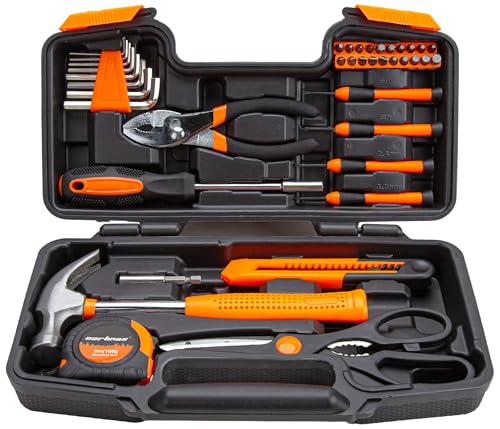
CARTMAN 39-Piece Household Tool Set, Orange Hand Kit With Storage Case



What a boat tool kit should include
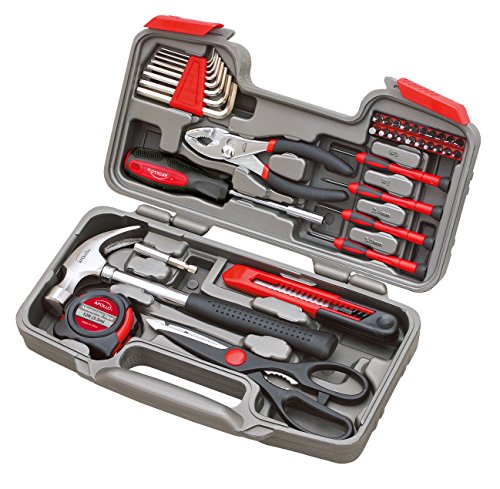
There is no hardware store out on the water. A boat kit is built to fix small failures and get you back to the dock, not to do a full overhaul. A sensible set for a powerboat or cruising sailboat includes:
- Screwdrivers, flat and Phillips in several sizes, plus interchangeable bits (Torx, Pozidriv and hex).
- Combination wrenches in both metric and SAE sizes, and an adjustable wrench. They are the most-used tools on engines, hose clamps and deck hardware.
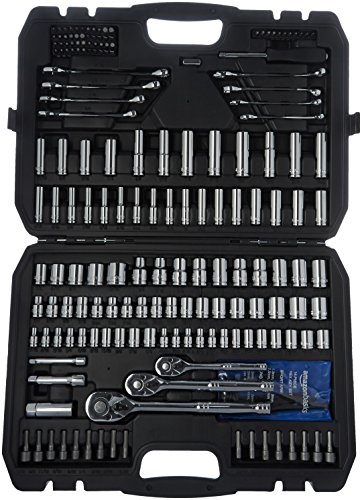
- Socket set and ratchet in 1/4 and 3/8 inch drive, with an extension and a spark plug socket for gasoline engines.
- Allen keys in metric and SAE, essential for blocks, shackles and many deck fittings.
- Pliers: slip-joint, needle-nose, side cutters and locking pliers.
- Tape measure, headlamp and electrical tape, which take no room and are missed immediately.
Round it out with a multimeter, a wire crimper and a good rigging knife to cover wiring and lines.
Materials and corrosion resistance
Salt air is the number-one enemy of tools. A cheap kit in untreated steel rusts within a season, even if it never leaves the locker. Look for:
- Chrome-vanadium (Cr-V) steel with a chrome or nickel finish: it handles torque and resists moisture better than plain carbon steel.
- Two-material handles (hard plastic and rubber) that stay grippy with wet hands.
- A case that seals: a gasketed plastic case or a waxed canvas bag protects better than an open metal box.
- Stainless tools (304 or 316) cost more and are softer, so they only pay off for individual pieces, such as pliers that live in the deck box.
Tip: toss a couple of silica gel packs or a moisture absorber into the case, and wipe tools with a rag and light oil after every trip.
Case, bag or box: which format to pick
| Format | Pros | Cons |
|---|---|---|
| Hard plastic case | Keeps pieces organized, protects from impact, stows well | Bulky; check that the latches seal |
| Canvas or nylon bag | Fits odd lockers, will not mar the gelcoat | Soaks up moisture unless waterproof; less organized |
| Toolbox with tray | Quick access, great for loose wrenches and supplies | Heavier; metal ones rust |
| Mini deck kit | Always at hand for emergencies | Covers only the basics |
On smaller boats a full case in a dry locker plus a small emergency kit on deck works well.
How many pieces you actually need
Sets of 150 or 300 pieces look impressive, but most of that is bits and sockets you will never use. Aboard, the quality of the twenty tools you reach for every time matters more than the total count. As a guide:
- Small powerboat or inflatable: a 40 to 60 piece kit with the essentials and a good pair of pliers.
- Cruising sailboat or inboard-powered boat: 100 to 130 pieces, plus loose combination wrenches and engine-specific tools.
- Offshore passages: a complete kit, spares and special tools for each system.
Watch out: metric and SAE tools are not interchangeable. Check which fasteners your engine and hardware use before buying a set in a single system.
Common buying mistakes
- Buying on piece count rather than steel quality and ratchet mechanism.
- Forgetting engine-specific tools (oil filter wrench, plugs, impeller puller) and basic spares.
- Storing tools wet, or next to the battery and bilge.
- Not keeping a separate emergency kit for wiring and lines.
For more ideas, our guide to tools aboard explains what to carry by boat type, and the tools category gathers the rest of the gear. Compare the models above: we review spec sheets and verified customer reviews, not our own hands-on tests.
Frequently asked questions
What tool kit should I buy for a boat?
For a recreational powerboat or sailboat, a set of about 100 pieces with screwdrivers, bits, Allen keys, sockets, pliers and an adjustable wrench is enough. Chrome-vanadium steel and a case that seals matter more than the piece count.
Is a bag or a hard case better aboard?
A bag fits awkward lockers and will not scratch the gelcoat, but it holds moisture if it is not waterproof. A hard case protects and organizes better. Many boaters carry a main case and a small emergency bag on deck.
How do I keep tools from rusting on a boat?
Store them dry in a closed case with silica gel, and wipe them with light oil or a corrosion inhibitor after use. Avoid leaving them in the bilge or on damp surfaces.
Which tools are essential on a sailboat?
Screwdrivers, combination wrenches, an adjustable wrench, pliers, Allen keys, a rigging knife, electrical tape and a multimeter. Add whatever your engine and winches specifically require.
 iPhone and Android app Marine Tools: everything a skipper works out on board Anchor alarm, GPS, wind and wave forecast, animated knots and 45 marine calculators. Free download · no sign-up · works offline App Store
You may also like
 ComparisonBoat multimetersA multimeter prevents more onboard breakdowns than any other tool: it measures voltage, continuity and current on batteries and 12V circuits. Here is which features matter and which are filler.
 ComparisonWire crimpers and marine terminalsA well-made crimp is the foundation of reliable boat wiring. The right crimper and tinned copper heat-shrink terminals prevent most loose connections and corrosion.
 ComparisonSailing knivesA sailing knife must cut a loaded line, open with one hand and not rust on its first trip. Here is which steel, blade and lock suit the way you use it.
 ComparisonMarine lubricants and corrosion inhibitorsSalt turns winches, locks and screws to stone. The right lubricant and corrosion inhibitor, applied on time, extend the life of all your hardware. This guide tells you which product goes where.
 ComparisonOutboard motor toolsMost outboard problems are avoided with four well-chosen tools: a prop wrench, a spark plug socket, a grease gun and flushing muffs.
- GuideEssential Boat Tools to Carry Aboard: What to PackWhich tools to carry aboard for your boat: basic kit, electrical kit, emergency repairs, spares and how to keep corrosion from destroying your tools.
- GuideHow to Repair Boat Gelcoat Step by StepLearn how to repair gelcoat scratches, chips and cracks: diagnosis, materials, catalyst ratios, wet sanding and polishing for a repair you can't see.
- GuideHow to Repair an Inflatable Boat: Punctures, Valves, SeamsHow to find and fix air leaks in an inflatable boat: PVC, Hypalon, patches, adhesive, valves, seams and when to take it to a repair shop.