If you buy through our links, Amazon pays us a small commission at no extra cost to you. That’s how we keep the site running. How we choose.
Contents
Our top 3 picks
Stock checked on October 6, 2026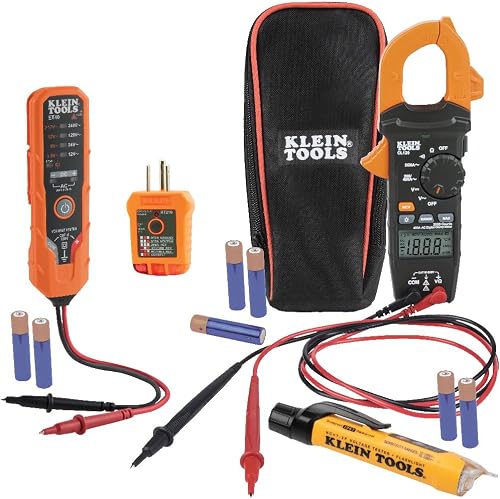
boat multimeters comparison, in stock
Klein Tools CL120VP Electrical Voltage Test Kit with Clamp Meter

Fluke 17B+ Digital Multimeter, for Electrical Applications, Measures AC/DC Voltage 1000V, Current Measurements to 10A…
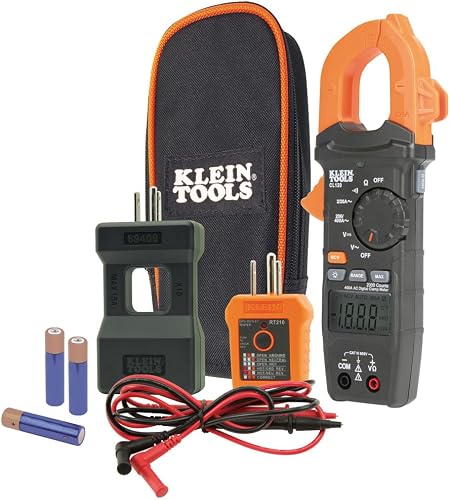
Klein Tools CL120KIT Clamp Meter Electrical Test Kit
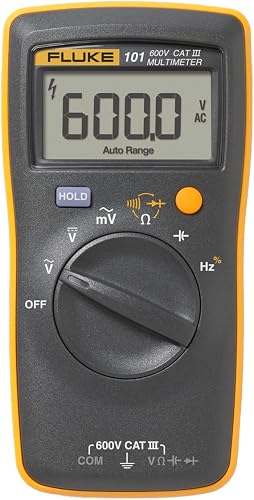
FLUKE-101 Digital Multimeter

Klein Tools 69355 Digital Multimeter Premium Electrical Test Kit with Non-Contact Voltage Tester, Receptacle Tester…
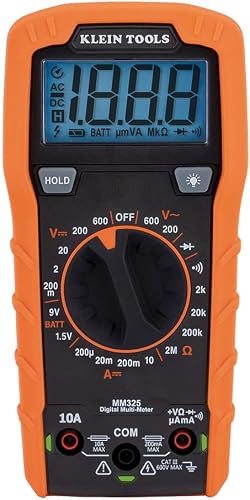
Klein Tools MM325 Multimeter, Digital Manual-Ranging 600V AC/DC Voltage Tester, Tests Batteries, Current, Resistance…

Fluke 107 AC/DC Current Handheld Digital Multimeter, Gray
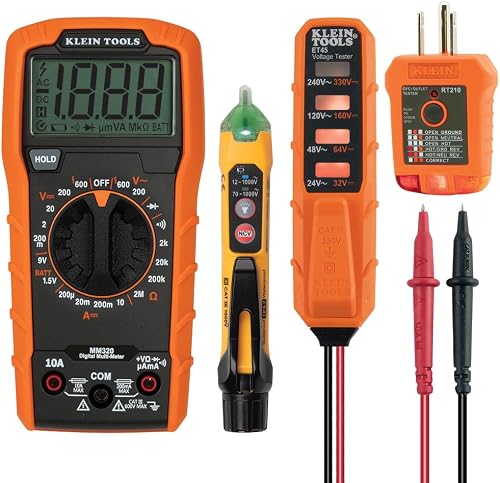
Klein Tools MM320KIT Digital Multimeter Electrical Test Kit, Non-Contact Voltage Tester, Receptacle Tester, Carrying…
BarcoEquipado score: combines the average rating and the number of buyer reviews on Amazon. No brand pays to be featured.
What a multimeter does aboard
Most electrical problems on a boat are simple: a weak battery, a corroded terminal, a blown fuse or a broken wire. A multimeter lets you find the fault in minutes instead of swapping parts blindly. Typical uses:
- Check battery condition by measuring resting voltage and voltage under load.
- Confirm the alternator or charger is actually charging (13.8 to 14.8 V on a lead-acid battery).
- Find voltage drop in long cable runs, connections and battery switches.
- Test continuity in fuses, switches and wiring.
- Track down parasitic draws that drain the battery while docked, using a clamp meter or the amp setting.
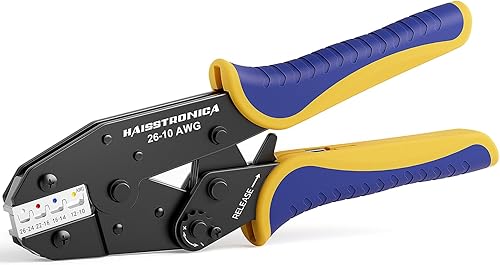
Pair it with a good crimper and terminals and most wiring repairs can be handled with a basic tool kit.
Features that really matter
| Feature | Use aboard | Essential |
|---|---|---|
| DC voltage (V DC) | Batteries, chargers, solar panels | Yes |
| Continuity buzzer | Fuses, wires, switches | Yes |
| DC current (A DC) | Loads and parasitic draws | Yes (10 A minimum) |
| Resistance (Ω) | Sensors, pumps, grounds | Yes |
| DC clamp meter | Measure current without cutting the wire | Highly recommended |
| AC voltage (V AC) | Shore power, 120V inverter output | Useful |
| Auto-ranging | No need to pick a scale | Handy for beginners |
| True RMS | Accurate on noisy AC | Only with inverters and chargers |
Safety and measurement category
Aboard, you may have lead-acid batteries with very high cranking currents, lithium banks and shore power wiring. Choose a meter rated CAT III or higher with shrouded probe tips. A meter without proper internal fuses can be damaged or become dangerous if you measure current by mistake.
Watch out: never measure voltage with the leads plugged into the amp jack. That creates a short circuit through the meter and can destroy it or hurt you. Always check lead position before measuring.
How to test a battery step by step
- With the boat at rest and everything switched off, wait a few hours after the last charge.
- Set the meter to V DC, red probe to positive and black probe to negative.
- Read the voltage: a full lead-acid battery sits around 12.6 to 12.8 V, and below 12.0 V it is badly discharged.
- Start the engine and measure again: it should climb toward 13.8 to 14.5 V if the alternator is charging.
- Also check voltage drop across the main cables under load: more than 0.3 to 0.5 V usually points to a dirty terminal or undersized cable.
Tip: lithium batteries hold nearly flat voltage during discharge, so voltage says little about state of charge. Use the BMS monitor or a shunt for those, not just a multimeter.
Care and common mistakes
- Keep the meter in a closed, dry case: moisture ruins contacts and the display.
- Replace the battery in time; a weak cell gives false readings.
- Do not use damaged test leads or probes with cracked insulation.
- Always test under real conditions (with a load) to reveal voltage drop.
- Write down normal readings for your boat so you can compare when something fails.
To organize the whole installation, also see battery switches and electrical panels. The models above were chosen from spec sheets and verified customer reviews, not our own tests.
Frequently asked questions
Which multimeter is best for a boat?
A digital model that measures DC voltage, continuity, resistance and at least 10 A of current, with a CAT III rating. If you can, one with a DC clamp lets you measure high currents without cutting wires.
What voltage should a 12V boat battery read?
At rest, a charged lead-acid battery reads about 12.6 to 12.8 V. With the engine running and the alternator charging it should be 13.8 to 14.8 V. Below 12 V at rest means it is badly discharged.
What is a clamp meter used for?
It measures the current through a wire without cutting it or opening the circuit. It is handy for seeing how much a device draws or finding parasitic loads that drain the battery when the boat is idle.
Can I use my car multimeter on a boat?
Yes, as long as it meets basic safety and measurement needs. The difference is moisture: keep it dry and protected, because salt and condensation damage the contacts and the display.