If you buy through our links, Amazon pays us a small commission at no extra cost to you. That’s how we keep the site running. How we choose.
Contents
Our top 3 picks
Stock checked on October 6, 2026

pressure washers for boats comparison, in stock
Westinghouse ePX3100v Electric Pressure Washer, 2100 Max PSI 1.76 Max GPM, Built-in Carry Handle, Detachable Foam…
Westinghouse ePX3500 Electric Pressure Washer, 2500 Max PSI 1.76 Max GPM with Anti-Tipping Technology, Onboard Soap…

Westinghouse WPX3000e Electric Pressure Washer, 3000 Max PSI and 1.76 Max GPM, Induction Motor, Onboard Soap Tank…

Westinghouse ePX3100 Electric Pressure Washer, 2300 Max PSI 1.76 Max GPM with Anti-Tipping Technology, Onboard Soap…

Westinghouse ePX3050 Electric Pressure Washer, 2100 Max PSI 1.76 Max GPM with Foam Cannon and Turbo Nozzle, for…
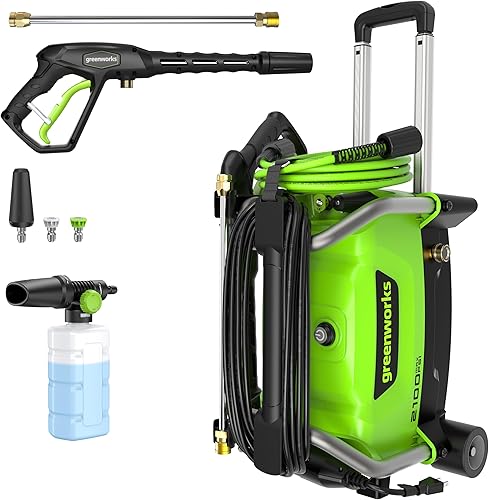
Greenworks 2100 PSI (1.2 GPM) Electric Pressure Washer

Westinghouse WPX3400e Electric Pressure Washer, 3400 Max PSI and 2.0 Max GPM, Brushless Motor, Onboard Soap Tank, Spray…
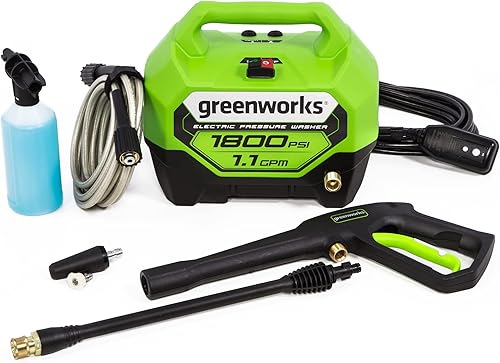
Greenworks 1800 PSI (1.1 GPM) Electric Pressure Washer PWMA Certified
BarcoEquipado score: combines the average rating and the number of buyer reviews on Amazon. No brand pays to be featured.
Where to use a pressure washer on a boat, and where not to
A pressure washer turns an afternoon of scrubbing into half an hour: blasting growth off the bottom at haul-out, washing the trailer, bringing fenders back to life. But a boat has plenty of parts that cannot take high-pressure water.
| Area | Pressure wash? | How |
|---|---|---|
| Bottom at haul-out | Yes | Right after the boat comes out, before it dries; fan tip at 8-12 in. |
| Smooth gelcoat on topsides and cockpit | Yes, carefully | Wide fan at 12-20 in., never dwell on chips or seams |
| Non-skid deck | Sparingly | Low pressure and a brush |
| Trailer and cradle | Yes | Hit the underside, rollers and brakes to flush out the salt |
| Fenders and inflatables | Yes, from a distance | Low pressure; never a rotary nozzle on PVC |
| Teak and caulked seams | No | Soft brush and teak cleaner |
| Canvas, bimini, upholstery and vinyl | No | Dedicated cleaner and a brush |
| Hatches, ports, seals, wire pass-throughs | No | Water without pressure |
| Engine: air intakes, seals, electronics | No | Damp cloth; flush the cooling system with earmuffs |
Watch out: high-pressure water tears the soft wood out between the grain of teak and can lift the caulking. It is the fastest, costliest damage you can do to a deck. See how to care for teak.
How to choose a pressure washer for your boat
Pressure: more is not always better
For gelcoat, 1,500-1,900 PSI is enough. Units at 2,000 PSI and up save time on the bottom and the trailer but demand more care everywhere else. What really carries dirt away is flow: around 1.5-2 GPM is a good range.
Nozzles
- Fan tip (adjustable wand): the one you will use 90% of the time on a boat.
- Rotary or turbo: only for concrete, trailers and heavily fouled bottoms. On gelcoat it can mark the surface, and it tears vinyl off.
- Foam nozzle: very handy for laying boat wash over the whole hull and letting it work before rinsing.
Corded or cordless
Corded (120 V) units give more pressure and flow and will not die halfway down the hull. Cordless models suit trailer boats, quick rinses and spots without a power outlet, and many can draw from a bucket. At haul-out they fall short of a corded washer in the 1,700-1,900 PSI class.
Hose, water supply and electrical safety
Around a boat on the hard, 20 ft of high-pressure hose or more is welcome. Always plug into a GFCI-protected outlet and keep connectors out of puddles: a poorly protected extension cord and salt water do not mix.
Which washer for which boat
| Boat and use | Pressure | Flow | Type |
|---|---|---|---|
| Kayak, inflatable, fenders | 500-900 PSI | Low | Cordless |
| Trailer boat up to 20 ft | 1,500-1,700 PSI | 1.4-1.6 GPM | Corded or strong cordless |
| Boat of 20-33 ft, yearly haul-out | 1,600-1,900 PSI | 1.6-1.9 GPM | Corded |
| Boat over 33 ft or frequent use | 1,900-2,100 PSI | 1.8-2.2 GPM | Corded, mid to high range |
Brands such as Kärcher, Bosch, Sun Joe or Greenworks cover all of these ranges. Compare pressure, flow and hose length on the spec sheet rather than just motor wattage or amps.
How to wash a boat without damaging it
- Start with the wand on a wide fan and well away from the surface; move in gradually.
- Lay boat wash on with the foam nozzle, let it work without drying, and rinse from top to bottom. Options in hull cleaners.
- Keep the wand moving; never dwell on one spot or aim at the edge of damaged gelcoat.
- Stay clear of seams, pass-throughs, vinyl, rubber rub rails and electronics.
- On the bottom, wash right at haul-out. If hard growth remains, finish with a plastic scraper before applying antifouling paint.
- Rinse the trailer and launch dolly with fresh water after every saltwater outing.
Tip: many marinas limit water use and ban chemicals that end up in the basin. For a deep clean, use the wash-down area and check with the marina office first.
Common mistakes and companion jobs
- Turbo nozzle on gelcoat: it can leave marks and lift gelcoat that is already weak.
- Canvas and stitching: pressure opens the seams and strips the water repellent.
- Aiming at seals and hatches: water gets in where rain never would.
- Wetting fresh bottom paint: respect the drying times.
- Spraying the outboard carelessly: the cowling is fine from a distance; air intakes, seals and electrical connections are not.
A pressure washer does not replace a brush: on a non-skid deck, a medium-bristle brush on a telescopic pole works better (how to clean a non-skid deck). After washing, protect the gelcoat with a gelcoat polish. And if the boat is coming out for winter, pressure washing is the first step in how to winterize a boat.
Frequently asked questions
Is it a good idea to pressure wash a boat?
Yes, for the bottom at haul-out, the trailer, fenders and smooth gelcoat, always from a distance with a fan nozzle. Not on teak, caulked seams, canvas stitching, vinyl upholstery, hatch seals or electronics: there, high-pressure water does more harm than good.
How much pressure does a boat pressure washer need?
Roughly 1,600-1,900 PSI is enough for most recreational boats. More pressure does not clean gelcoat any better and raises the risk of damage. For removing growth from the bottom, more flow (about 1.5-2 GPM) helps most, since flow is what carries the dirt away.
Is a cordless pressure washer good enough for a boat?
For a quick rinse, fenders, an inflatable or a small skiff, yes, and it needs no outlet. Many can draw from a bucket. For the bottom at haul-out they fall short on pressure and flow compared with a corded 1,700-1,900 PSI washer.
Can I pressure wash an outboard motor?
The outer cowling and lower unit, yes, from a distance and without aiming at air intakes, gaskets, seals or electrical connections. Flush the cooling system with fresh water from a hose and flush muffs, not with a pressure washer.

