If you buy through our links, Amazon pays us a small commission at no extra cost to you. That’s how we keep the site running. How we choose.
Contents
Our top 3 picks
Stock checked on October 6, 2026
rivet guns for boats comparison, in stock
Astro 1442 13" Nut/Thread Hand Riveter Kit

GIANTISAN 16" Rivet Nut Tool Kit with 15 Mandrels and 406Pcs Rivnuts

GIANTISAN 16" Rivet Nut Tool Kit with 12 Mandrels and 316Pcs Rivet Nuts

RZX 16" RIVET NUT TOOL Hand Blind Riveter,RIVNUT Riveting Tools with Nut Setting System M3 M4 M5,m6,m8,m10 M12, 10-24…
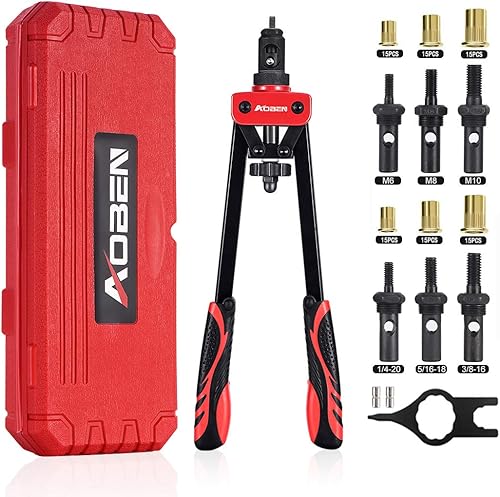
AOBEN 14" Rivet Nut Tool, Professional Hand Rivet Nut Setter Kit Labor-Saving and Compact Design Including 6…
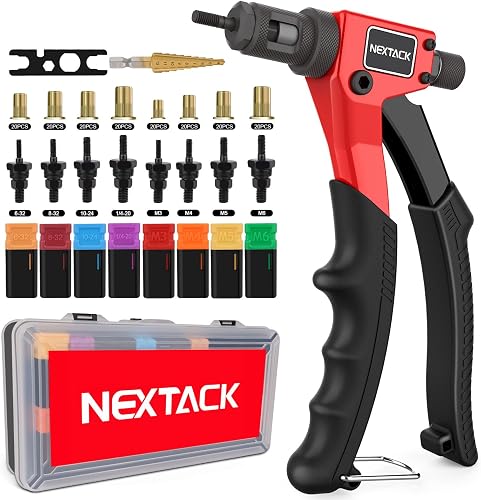
NEXTACK 8" Rivet Nut Tool Kit with 160pc Nutserts & Step Drill Bit
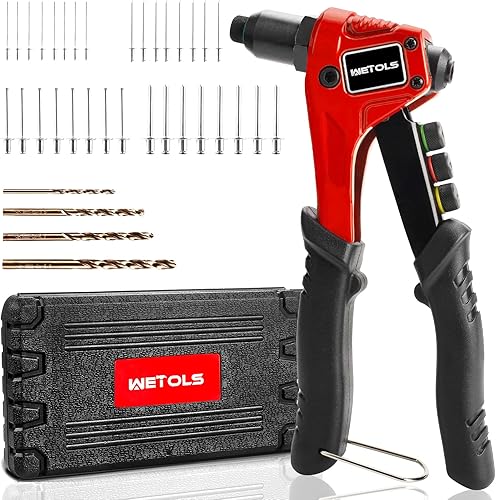
WETOLS Pop Rivet Gun Kit with 200 Blind Rivets,Upgraded Pop Rivet Tool Kit

WETOLS Rivet Nut Tool Kit, 14'' Rivnut Tool with 7 Metric and SAE Mandrels
BarcoEquipado score: combines the average rating and the number of buyer reviews on Amazon. No brand pays to be featured.
How to choose a rivet gun for boat work
Aboard, a rivet gun fastens hardware to aluminum extrusions (masts, booms, tracks), bimini brackets, hatches and console accessories. The right tool depends mostly on the diameter and material of the rivets you plan to set.
- Short-handle manual: small and inexpensive, fine for aluminum rivets up to 5/32 in (4 mm). Fits in any tool bag.
- Long-handle manual (lever type): multiplies your grip force. The sensible choice for 3/16 in (4.8 mm) rivets, especially stainless.
- Rivet nut tool: sets a threaded insert in a tube or panel you can reach from one side only. Great for removable hardware.
- Cordless: fast and comfortable if you rivet often or work up the mast with one hand free.
Check that nosepieces for 3/32, 1/8, 5/32 and 3/16 in (2.4 to 4.8 mm) are included and that they store inside the tool. A steel body and a firm return spring last longer in salt air.
The rivet matters as much as the tool
A great rivet gun loaded with zinc-plated hardware-store rivets is an expensive mistake: within months you get rust streaks and weakened joints. For boats, look for aluminum rivets with stainless mandrels, Monel, or A4 (316) stainless. Where water can get in, use sealed closed-end rivets.
| Material | Recommended rivet | Watch out for |
|---|---|---|
| Aluminum mast or boom | Aluminum with stainless mandrel, Monel, or stainless with isolating compound | Tef-Gel type paste on hole and rivet |
| Stainless tubing | A4 or A2 stainless | Cobalt bit, slow speed |
| Fiberglass and gelcoat | Wide-flange stainless or with a washer | Countersink the gelcoat and seal |
| Plastic and panels | Aluminum or wide-flange stainless | Do not overtighten |
| Hull and wet areas | Sealed closed-end | A through-bolt with sealant is better |
If you are unsure between rivets and screws, see our marine stainless fasteners guide and the comparison of 304 vs 316 stainless.
How to rivet a fitting to the mast
- Hold the fitting in place, mark the holes and center-punch so the bit does not wander.
- Drill with a bit slightly larger than the rivet (about 0.192 in for a 3/16 in rivet).
- Deburr the holes and vacuum the chips: inside the mast they can chafe halyards and wiring.
- When fitting stainless to aluminum, put isolating paste in the hole and on the rivet body.
- Choose the length from the total thickness you are joining; rivet makers publish a grip range chart.
- Hold the nosepiece square to the work and squeeze until the mandrel snaps.
Tip: practice on an offcut of the same thickness before you rivet on the mast. You will confirm rivet length and hole size without any risk to the spar.
Rivet nuts and working aloft
A rivet nut leaves a strong thread in a tube or panel with no rear access. It is the clean answer for removable antenna, light or bimini mounts. Look for a rivet nut tool with mandrels from M4 to M8 and use stainless inserts wherever there is moisture.
Up the mast, tether the tool with a lanyard and carry rivets in a zippered pouch. A cordless gun lets you work one-handed and saves effort, but it is heavier, so weigh that against how often you will use it.
Looking after the tool
- Rinse with fresh water and dry it after use near salt water.
- Lubricate pivots and jaws with a light marine lubricant.
- Clear mandrel debris from the jaws: if they cannot grip, the rivet will not snap cleanly.
- Store it with the nosepieces inside, in a box with desiccant or in your boat tool kit.
Common riveting mistakes on boats
Warning: setting stainless rivets in aluminum without isolating them causes galvanic corrosion. The aluminum pits around the rivet and the fitting works loose.
- Using zinc-plated steel rivets: they rust and stain.
- A rivet that is too short: the back head does not form properly.
- Leaving chips inside the mast or boom.
- Riveting structural hardware (winch bases, spinnaker gear) without following the manufacturer's instructions.
- Not sealing the rivet head on deck, which lets water into the core.
To seal and protect the joint, see our range of marine sealants.
Frequently asked questions
What rivets should I use on a boat?
On aluminum masts and booms, use aluminum rivets with stainless mandrels, Monel, or A4 stainless with isolating paste. On decks and wet areas, choose sealed closed-end rivets in A4 (316) stainless. Avoid zinc-plated steel rivets.
What rivet size do I need for mast hardware?
For light hardware such as tracks, light brackets and eyes, 3/16 in (4.8 mm) rivets are the usual choice. For heavier loads like winch bases, follow the hardware manufacturer's specification for rivet count, diameter and spacing.
What is a rivet nut and when do you use one?
A rivet nut is a threaded insert set into a hole from one side, like a rivet, leaving a thread you can bolt into. It is handy for removable hardware on aluminum extrusions or panels with no rear access.
Manual or cordless rivet gun for a boat?
If you only rivet a few times a year, a long-handle manual gun is enough. Cordless pays off if you set a lot of 3/16 in stainless rivets or work up the mast with only one hand free.
How do I remove a rivet from a mast?
Center-punch the head, then drill it with a bit the size of the rivet body. When the head pops off, tap the rest through with a punch. Use a fresh bit and slow speed, especially on stainless.


