If you buy through our links, Amazon pays us a small commission at no extra cost to you. That’s how we keep the site running. How we choose.
Contents
Our top 3 picks
Stock checked on October 6, 2026
boat compasses comparison, in stock

IRIS 50 - Hand Bearing Compass (Blue)
Proster Lensatic Sighting Compass IP65 Waterproof with Clinometer Bag

Ritchie Navigation Ritchie Explorer Flush Mount Compass, White (F-50W)

Ritchie Navigation RA-91 Angler Compass - Bracket Mount, Gray with Blue Dial, 2-3/4"

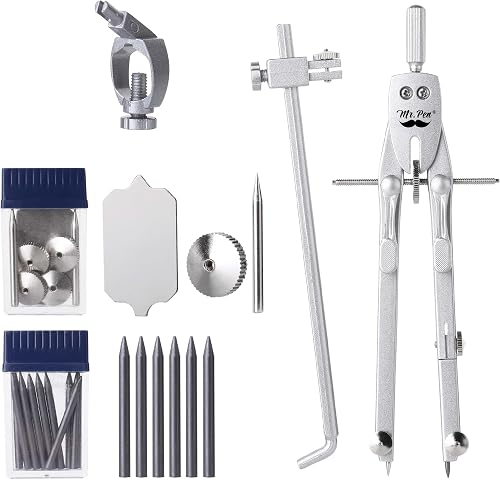
Mr. Pen- Professional Metal Compass with Wheel
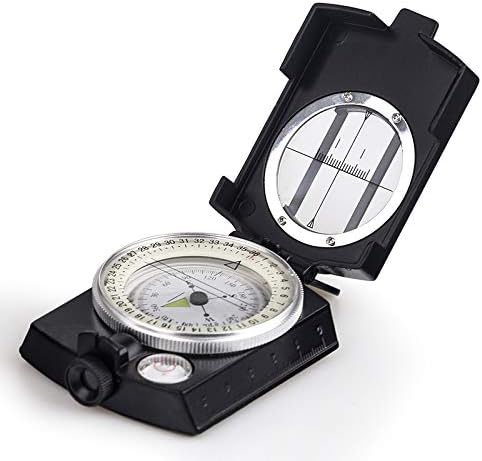
COSTIN Multifunctional Compass, Metal Military Waterproof High Accuracy Compass with Map Measurer, Distance…
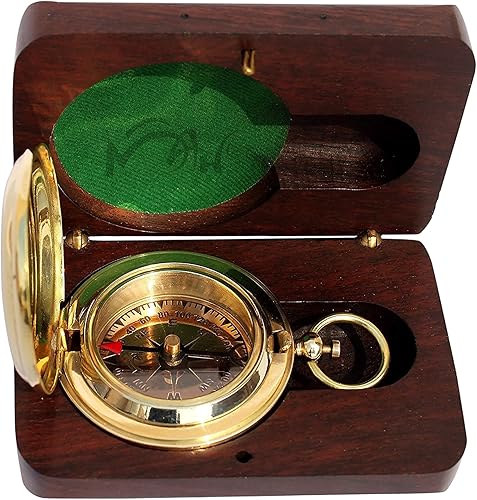
Brass Compass Gift – Push Button Compass Keepsake Gift for Son, Boys, Men, Graduation Gift, Birthday Gift Idea…
BarcoEquipado score: combines the average rating and the number of buyer reviews on Amazon. No brand pays to be featured.
Types of marine compass
Two different jobs share the cockpit: holding a heading and taking bearings. Each calls for its own instrument.
- Steering compass: fixed near the helm, on the binnacle or a bulkhead. It has a card in damping fluid, a lubber line and usually a light.
- Hand bearing compass: portable, for sighting lighthouses, buoys and other vessels. You hold it in one hand and read it through a prism.
- Pocket or wrist compass: a useful backup, but not a substitute for a steering compass.
- Dividers and parallel rules: chart tools for plotting courses. They are separate from the compass itself.
If your binoculars have a built-in compass, see our guide to marine binoculars.
How to choose a steering compass
Three things decide the purchase: where it will mount, what card diameter you need and how it is lit.
| Mount type | Best for | Consider |
|---|---|---|
| Binnacle or flush mount | Sailboats and boats with a fixed helm station | Needs a cutout and deviation compensation |
| Surface mount (bulkhead or console) | Powerboats, tenders and RIBs | Often plastic; check waterproofing |
| Dome (readable from above) | Closed cabins or low helm | Check the viewing angle |
| Hand bearing compass | Every boat as a companion instrument | No metal nearby when sighting |
- Card: a card of about 3 to 4 in (75 to 100 mm) is fine for small boats; on cruising sailboats, a larger and well-damped card reads more steadily in a seaway.
- Fluid and damping: a good compass handles pitching without swinging excessively.
- Lighting: red or dimmable light to protect night vision. Make sure it dims.
- Heel: pick a compass designed for boats that heel, with gimbals or a well-compensated card.
Installation and deviation
A badly placed compass is unreliable. Mount it on the centerline or where the lubber line sits parallel to the boat's fore-and-aft axis, away from iron masses and magnetic fields.
- Keep the compass at least 3 ft (1 m) from engines, speakers, power cables and phones.
- Check that the lubber line is parallel to the keel using a taut string or a fixed reference.
- Run a test: steer toward a known mark and compare with the chart.
- Work out the deviation on several headings and write it in a table near the helm.
- Repeat the check any time you add iron or electronics nearby.
Warning: magnets in speakers, phones or flashlights can deflect a compass by several degrees. Keep them away and revisit your deviation card after changes to the boat.
How to take a bearing with a hand bearing compass
- Stand where you are away from metal, clear of the mast step or the engine.
- Aim at the object and read the heading on the scale through the prism.
- Correct for local magnetic variation and for the compass's deviation.
- Take at least two or three bearings from different marks to cross on the chart.
- Log time and value for each: they are your backup if the electronics quit.
To round out your navigation and safety gear, see our pre-departure checklist.
Care and maintenance
- Check for air bubbles in the fluid; a tiny one can be serviced by the maker, a large one means a leak.
- Clean the dome with fresh water and a soft cloth, no solvents that could cloud it.
- Protect the compass with its cover when the boat sits in the sun.
- Test the lighting and replace batteries or bulb before the season.
- Compare against GPS once a year in steady steaming.
Tip: the compass is the backup for your electronics. Learn to use it calmly on a good-weather day, not when the chartplotter fails.
Common mistakes
- Mounting the compass next to speakers, engines or cables without checking deviation.
- Relying on a hiking compass to steer the boat.
- Forgetting to correct for variation and deviation when transferring a course to the chart.
- Leaving the compass uncovered in the sun, where it can cloud and lose fluid.
Frequently asked questions
What compass do I need for my boat?
A fixed steering compass at the helm and, as a companion, a hand bearing compass. On a small powerboat a surface-mount compass is enough; on a cruising sailboat a binnacle model with good damping and lighting is the better fit.
Can I use a hiking compass on a boat?
As an occasional backup, yes, but not for steering. A marine compass has a fluid-damped card built to cope with motion and heel, which a hiking compass does not offer.
What is compass deviation?
It is the error caused by iron and magnetic fields on your own boat, such as the engine, speakers and hardware. You measure it by steering on several headings and record it on a card near the helm so you can correct for it on the chart.
Where should a steering compass be installed?
On the centerline or with the lubber line parallel to the boat's axis, easily seen from the helm and away from engines, speakers, power cables and iron parts. After installing, check the deviation on several headings.