If you buy through our links, Amazon pays us a small commission at no extra cost to you. That’s how we keep the site running. How we choose.
Contents
Our top 3 picks
Stock checked on October 6, 2026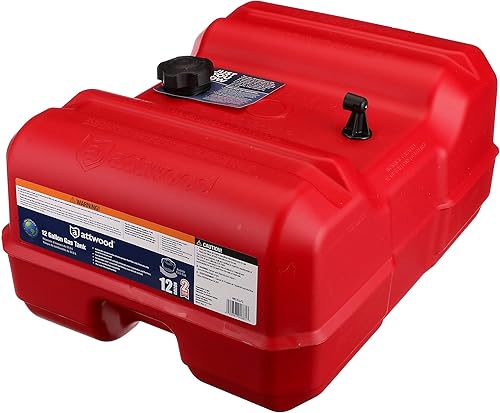
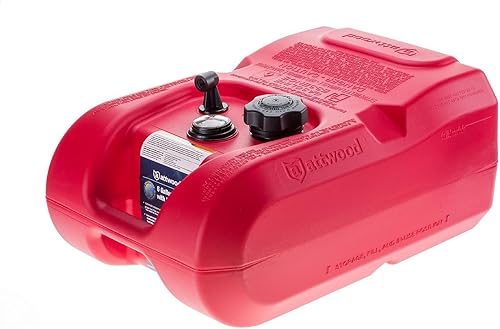

outboard fuel tanks comparison, in stock
Attwood EPA and CARB Certified Portable Marine Fuel Tanks
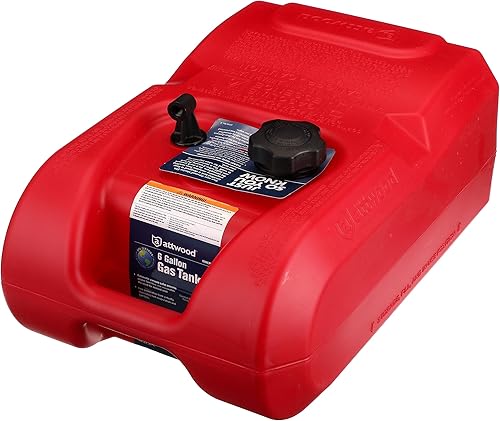
Attwood EPA and CARB Certified Portable Marine Fuel Tanks

Attwood EPA and CARB Certified Portable Marine Fuel Tanks
Attwood EPA and CARB Certified Portable Marine Fuel Tanks

Attwood EPA and CARB Certified Portable Marine Fuel Tanks
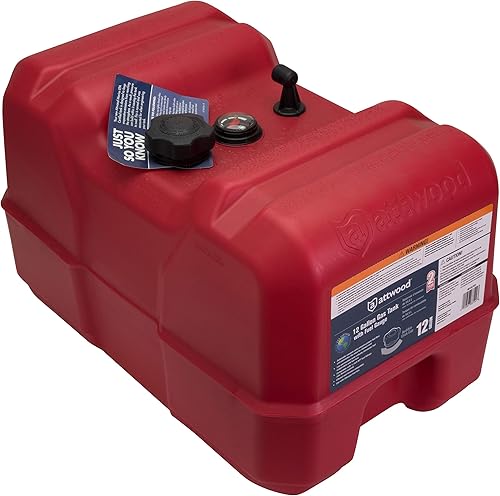
Attwood EPA and CARB Certified Portable Marine Fuel Tanks

Attwood EPA and CARB Certified 6-Gallon Portable Marine Boat Fuel Tank
attwood 8803LP2 EPA and CARB Certified 3-Gallon Portable Marine Boat Fuel Tank
BarcoEquipado score: combines the average rating and the number of buyer reviews on Amazon. No brand pays to be featured.
How much capacity do you need?
The old rule of boating applies to fuel: one third out, one third back and one third in reserve. To size a tank, estimate your cruising fuel burn and multiply by the hours you plan to be out.
Real consumption depends on the engine, load and hull. As a very rough guide, an outboard at full throttle can burn roughly 0.05 to 0.08 gallons per hour per horsepower (0.2 to 0.3 liters); at cruising speed, it drops a lot. Check your owner's manual.
| Engine size | Typical tank size | Typical use |
|---|---|---|
| 2.5-6 hp | Built-in (1/4-1/2 gal) or portable 1.5-3 gal | Dinghy kicker, short trips |
| 8-20 hp | 3-6 gal | Inflatable, jon boat, day trips |
| 25-60 hp | 6-13 gal (or fixed) | RIB, open skiff |
| Over 60 hp | Fixed tank recommended | Larger boats |
Tip: two 3-gallon tanks beat one 6-gallon tank. They are lighter, easy to carry one-handed and give you a real backup if one runs into trouble.
Materials: plastic or metal
- High-density polyethylene (HDPE): the most common. Light, rustproof and resistant to salt water. It is the usual choice for portable outboard tanks.
- Stainless steel or aluminum: heavier and more expensive; mostly used for fixed tanks under the console. Very durable.
With E10 gasoline (ethanol blend), the plastic should be one the manufacturer designs for fuel, not a generic container. If the tank will hold gas, make sure the maker states it is intended for fuel.
Connectors, hose and primer bulb
A tank is useless if the connector does not fit your engine. Outboard brands use different systems:
- Each manufacturer (Yamaha, Mercury, Tohatsu, Suzuki and others) uses its own quick-connect.
- Within one brand the fitting can change by model or model year.
The easiest path is to buy a tank-and-hose set with primer bulb and the right connector for your brand, or a replacement hose with the correct end if you already own a tank. Also check hose diameter and clamps.
Warning: if the connector does not match, do not improvise with homemade adapters. A gasoline leak in a closed space is a fire hazard.
What to look for in a good tank
- A cap with a vent valve you can close for transport and open for use.
- A sturdy handle that will not crack when the tank is full.
- A fuel gauge (sight or float type) so you are never surprised by an empty tank.
- A wide mouth or spout to fill without spilling.
- A flat, stable base so it does not tip over in the cockpit.
Safe refueling and storage
- Always refuel with the engine off and no smoking. Fill portable tanks on the dock or on shore, not in the boat.
- Keep the nozzle in contact with the tank to prevent static sparks.
- Do not fill to the brim. Leave room for expansion (about 5%).
- Close the vent when transporting and open it when connected to the engine.
- Store the tank in a ventilated, shaded place away from heat sources.
- Strap the tank down while underway so it cannot slide or tip.
Use only containers approved for gasoline, and follow local and national rules for transporting and storing fuel. In the US, look for tanks built to current EPA and CARB requirements. If your engine is a 2-stroke, the fuel is premixed with oil. See outboard motor oil for how to choose.
Maintenance and storage
Gasoline goes stale within weeks, and E10 goes faster because it absorbs moisture. To avoid trouble:
- Do not carry gas from one season to the next. If you must, add a fuel stabilizer.
- Empty the tank or run it low and add stabilizer before layup. More in how to winterize a boat.
- Inspect the hose and bulb: cracks, hardening or leaks at the connectors.
- Rinse the tank exterior and connectors with fresh water if they get splashed with salt water.
- Replace the fuel filter according to the engine manual.
If the engine will not start after sitting, old fuel is one of the first suspects. The rest of the checklist is in why an outboard will not start.
Common mistakes
- Buying a tank without checking the connector fits your engine.
- Using household or water jugs for gasoline.
- Leaving the tank in the sun on deck without controlled venting.
- Refueling aboard with a hot engine.
- Not securing the tank. A loose tank can tip and spill fuel as soon as there is a chop.
Frequently asked questions
How big a fuel tank does an outboard need?
It depends on the engine and how long you will be out. Use the rule of one third out, one third back and one third reserve. For 8 to 20 hp engines, a 3 to 6 gallon (12 to 25 liter) tank is typical.
Will any portable tank work with any outboard?
No. The tank needs the right connector for your brand and model, and the hose with primer bulb must fit your engine's inlet. Check compatibility before you buy.
How long can I keep gas in a portable tank?
Only a few weeks without stabilizer, especially ethanol-blended gas. To store it longer, add a fuel stabilizer and keep the tank closed, full and in a cool place.
Is it safe to refuel a portable tank on the boat?
It is better to fill it on the dock. If you have no choice, do it with the engine off and cool, no smoking, the tank on a stable surface, and take care to avoid spills on deck or in the bilge.


